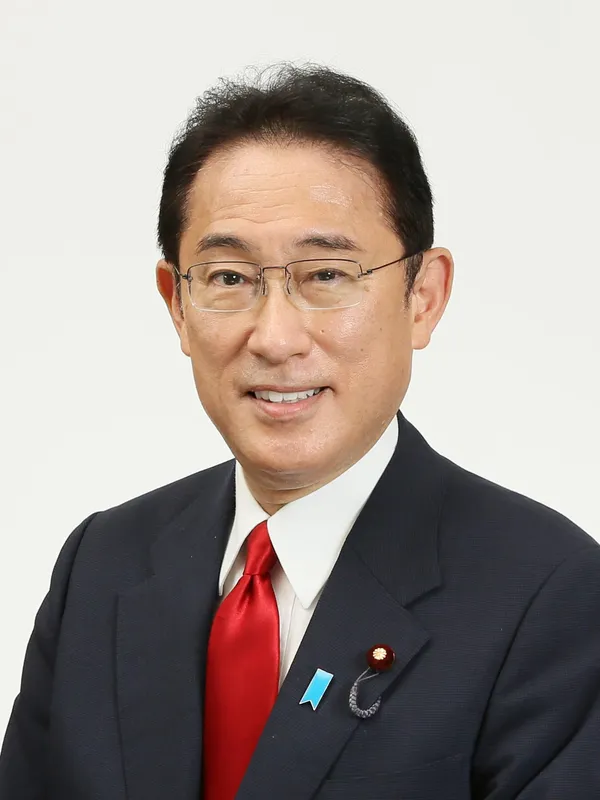
Fumio Kishida
Former Prime Minister of Japan
Fumio Kishida is a Japanese politician who served as Prime Minister of Japan and as president of the long-dominant Liberal Democratic Party. A veteran lawmaker with deep roots in the country's political establishment, he previously served as Japan's longest-serving postwar foreign minister, and his leadership coincided with significant shifts in the nation's security and economic policies.
Background and Early Career
Kishida was born in Tokyo into a family with a political lineage; both his father and grandfather were members of parliament. He spent part of his childhood in the United States, an experience that gave him early international exposure. He studied law at university and worked in banking before entering politics, winning a seat in the lower house of the national legislature from a constituency in Hiroshima, the city devastated by the atomic bomb, a connection that shaped his strong personal interest in nuclear disarmament.
He rose steadily within the Liberal Democratic Party, holding a series of government and party posts. His most prominent early role was as foreign minister, a position he held for an extended period during which he was involved in major diplomatic efforts, including managing Japan's key alliance with the United States and engaging on regional security challenges in East Asia.
Premiership
Kishida became prime minister after winning the leadership of his party. He framed his economic vision around the idea of a "new form of capitalism," emphasizing both growth and a wider distribution of its benefits, with attention to wages, investment, and support for households. His government navigated the later stages of the coronavirus pandemic and grappled with rising prices and longstanding structural challenges in the Japanese economy.
In foreign and security policy, his tenure marked a notable evolution. Against the backdrop of a more tense regional environment and global instability, his administration moved to substantially strengthen Japan's defense capabilities and increase defense spending, steps widely seen as among the most significant shifts in the country's postwar security posture. He worked to deepen ties with allies and partners and played an active role in international summitry, including hosting major gatherings of world leaders.
Challenges and Legacy
Kishida's time in office was not without difficulty. His government faced public scrutiny over various political and party-related controversies, as well as the persistent pressures of inflation and demographic decline, including a shrinking and aging population. These challenges weighed on his popularity over time and shaped the political environment in which he governed.
Reflecting his Hiroshima roots, Kishida consistently emphasized the cause of nuclear nonproliferation and disarmament, using his international platform to advocate for a world free of nuclear weapons. This long-held commitment became one of the defining personal themes of his public life.
As a steady, establishment figure who guided Japan through a period of economic uncertainty and a reorientation of its defense strategy, Fumio Kishida occupies an important place in the country's recent political history. His leadership of one of the world's major economies and democracies, and the security decisions taken during his premiership, are likely to influence Japan's direction for years to come.
Videos
FAQ
Fumio Kishida — Frequently asked questions
How old is Fumio Kishida?+
Fumio Kishida was born on July 29, 1957, which makes 69 years old.
Where is Fumio Kishida from?+
Fumio Kishida is from Japan.
What is Fumio Kishida known for?+
Fumio Kishida is best known as Politician, Minister, Diplomat. Notable work includes Prime Minister of Japan, LDP leader, former Foreign Minister, defense and economic policy.
Is Fumio Kishida on social media?+
Yes — Fumio Kishida is on Instagram, X (Twitter), Facebook, YouTube. You can find the official links on this page.