Politics
Sarwar Takes Lords Seat in Burnham Government, Triggering Scottish Backlash
Anas Sarwar's abrupt departure as Scottish Labour leader to join Andy Burnham's cabinet has drawn fierce criticism from rivals and rattled his own party.
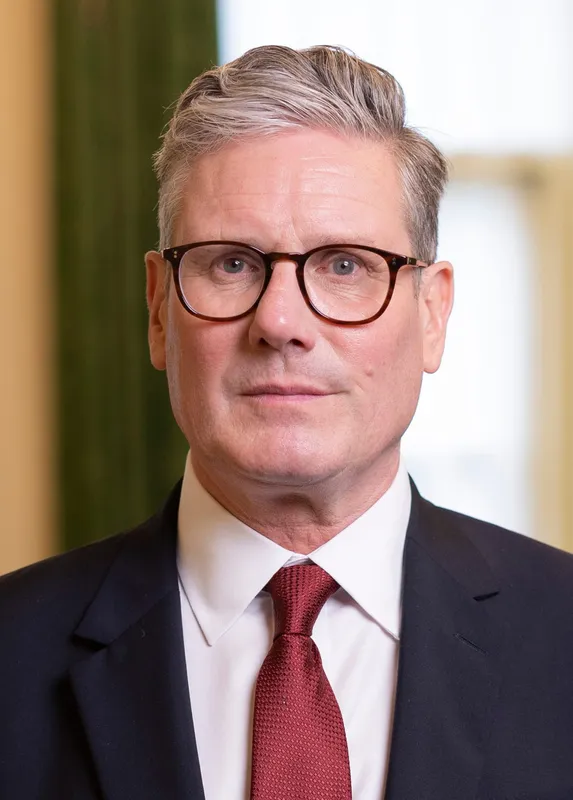
Prime Minister of the United Kingdom
Sir Keir Starmer is a British politician and former lawyer who serves as Prime Minister of the United Kingdom and leader of the Labour Party. He became prime minister in 2024 after leading Labour to victory in the general election, having previously built a notable career in law before entering Parliament.
Starmer was born in London in 1962 and grew up in Surrey. He studied law at the University of Leeds and later completed postgraduate legal study at the University of Oxford. He went on to become a barrister specializing in human rights and criminal law, taking on a range of cases over his legal career and developing a reputation in the field.
He later served as Director of Public Prosecutions, the head of the Crown Prosecution Service for England and Wales, from 2008 to 2013. In this role he oversaw the public prosecution system during a period that included high-profile cases and reforms. For his contributions to law and criminal justice, he was appointed a Knight Commander of the Order of the Bath, which is the origin of his title "Sir."
Starmer was first elected to the House of Commons in 2015 as the Member of Parliament for Holborn and St Pancras in London. He quickly took on senior roles within the Labour Party. He served in the shadow cabinet, including as the party's spokesperson on matters related to the United Kingdom's withdrawal from the European Union, a prominent and contested issue during that period.
Following Labour's defeat in the 2019 general election and the subsequent resignation of the party leader, Starmer ran to become leader of the Labour Party. He won the leadership contest in 2020. As leader of the opposition, he worked to reposition the party and broaden its electoral appeal, emphasizing themes such as economic stability, public services and party unity.
Under Starmer's leadership, the Labour Party won the 2024 general election, securing a substantial majority in the House of Commons and ending a long period of Conservative government. He became prime minister, taking responsibility for the government's agenda across domestic and international affairs.
As prime minister, Starmer leads on a wide range of policy areas, including the economy, public services such as health and education, housing, and the United Kingdom's relationships with other countries. His approach has generally been described as pragmatic and focused on competence and delivery, though, as with any head of government, his decisions and priorities are the subject of ongoing public and political debate.
Starmer's background as a lawyer rather than a long-standing career politician is often noted as a distinctive feature of his profile. His rise from legal practice and public prosecution to the leadership of a major political party and then to the office of prime minister within a relatively short span of parliamentary experience has attracted considerable attention. As the sitting head of the UK government, he continues to shape national policy and represents the United Kingdom in international forums, and his tenure remains a central topic in contemporary British political discussion.

Anas Sarwar's abrupt departure as Scottish Labour leader to join Andy Burnham's cabinet has drawn fierce criticism from rivals and rattled his own party.

Incoming Labour leader Andy Burnham plans to terminate Keir Starmer's digital ID scheme, reallocating funds to address the cost-of-living crisis.

Less than two years after Labour's landslide, Keir Starmer is stepping down as prime minister after his own MPs withdrew their confidence in his leadership.
FAQ
Keir Starmer was born on September 2, 1962, which makes 64 years old.
Keir Starmer is from United Kingdom.
Keir Starmer is best known as Politician, Jurist, Barrister. Notable work includes Leading the Labour Party, serving as UK Prime Minister, former Director of Public Prosecutions.
Yes — Keir Starmer is on Instagram, X (Twitter), Facebook, YouTube, TikTok. You can find the official links on this page.