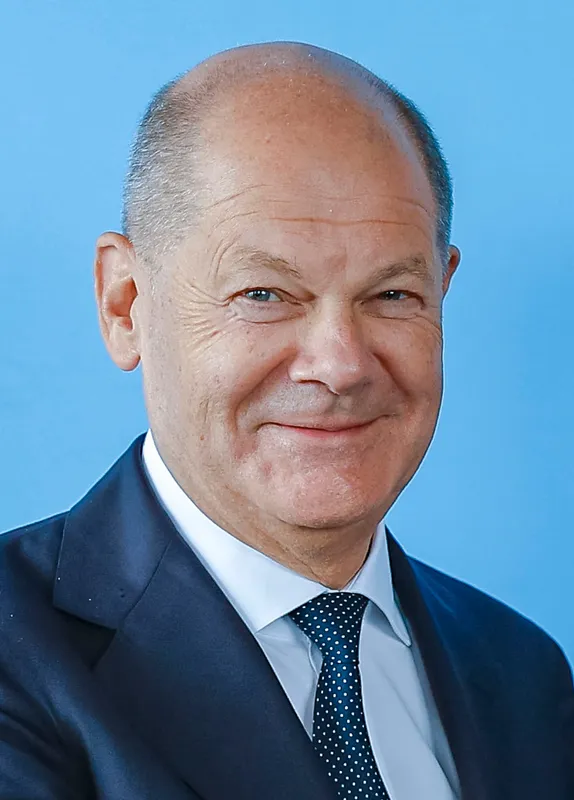
Olaf Scholz is a German politician of the Social Democratic Party (SPD) who served as Chancellor of Germany. A lawyer by training, he held a series of senior offices over a long career, including mayor of Hamburg and federal finance minister, before becoming chancellor and leading the federal government.
Early Life and Legal Career
Scholz was born in 1958 in Osnabrück, in what was then West Germany, and grew up in the Hamburg area. He studied law and worked as a lawyer specializing in labor and employment matters before fully committing to a political career. His professional background in law informed his measured and detail-oriented public style.
He became active in the SPD at a young age and rose through the party's ranks over time, holding various positions within its organization. His early political work established him within one of Germany's major parties and set the stage for the national roles he would later assume.
Rise Through German Politics
Scholz was first elected to the Bundestag, the German federal parliament, and went on to hold a range of significant offices. He served as general secretary of the SPD and later as federal minister of labour and social affairs, a role in which he was involved in employment and social policy during a period of coalition government.
He subsequently became First Mayor of Hamburg, leading the city-state government for several years. In this role he gained executive experience managing a major German city. He later returned to national government as federal minister of finance and vice chancellor, positions in which he played a central part in economic and fiscal policy, including the government's response to significant economic challenges.
Chancellorship and Legacy
Following the 2021 federal election, Scholz led the SPD to become the largest party and formed a coalition government with the Greens and the Free Democratic Party, a three-party alliance sometimes described by the colors associated with its members. He became chancellor in December 2021, succeeding Angela Merkel and bringing the SPD back to the head of the federal government.
His time as chancellor coincided with major challenges, including the war in Ukraine and its consequences for European security and energy supplies, as well as economic pressures such as inflation. In response, his government announced significant shifts in defense and energy policy, a reorientation he described using the German term "Zeitenwende," meaning a turning point or change of era. These developments were among the defining issues of his chancellorship.
Over time, his governing coalition faced internal tensions and disagreements, particularly over budgetary and economic matters, which ultimately contributed to the breakup of the alliance and led to early federal elections. Following these events, Scholz's tenure as chancellor came to an end, and he transitioned out of the role while remaining a figure within his party and German political life.
Scholz is generally characterized as a pragmatic and reserved politician, often emphasizing stability, continuity and careful decision-making. His career, spanning local, regional and national government over several decades, reflects a steady ascent through Germany's political institutions, and his chancellorship is widely discussed in the context of how Germany responded to a period of considerable geopolitical and economic change in Europe.