Russia Votes for New Duma as Putin Tightens Hold on Political System
Russians are casting ballots in a three-day State Duma election that offers no meaningful opposition and little uncertainty about its outcome.

Russians are casting ballots in a three-day State Duma election that presents no meaningful challenge to Vladimir Putin's grip on power. With the only openly anti-war party barred from the ballot, the vote — spanning Friday through Sunday — is widely expected to deliver another commanding parliamentary majority for United Russia, the party that has dominated Russian politics for more than two decades.
A Foregone Conclusion
United Russia has held its parliamentary stronghold for 23 years, and nothing in the current contest is expected to disrupt that record. Alongside it on the ballot sit a cluster of tolerated parties — ranging from the Communists to the far-right Liberal Democrats — that Russian analysts describe as the "systemic opposition." These groups are permitted to voice minor criticism but consistently back the Kremlin on matters of consequence, according to reporting by The Guardian World.
Farida Rustamova, a political analyst and founder of the independent Vlast newsletter, observed that the campaign has been unusually inert even by Russian standards. Televised debates took place in studios that were half-empty because candidates simply did not show up. United Russia's promotional material leaned on low-budget artificial intelligence, producing little in the way of memorable messaging.
"In most elections, candidates compete for attention. In Russia this year, many are doing the opposite," Rustamova said.
Yabloko Barred, Leaving No Anti-War Voice
The most consequential pre-election development was the removal of Yabloko, Russia's liberal anti-war party, from the ballot last month. It was the last remaining political force in Russia that openly opposed the invasion of Ukraine. Initial Kremlin calculations apparently held that Yabloko would perform so poorly it would demonstrate the marginality of anti-war sentiment — but when polling suggested the party was gaining traction, authorities moved to exclude it rather than allow an unpredictable outcome.
The suppression of dissent runs parallel to the broader pressure Russia has faced from the conflict itself. Ukrainian drone strikes have targeted oil refineries, factories, and logistics infrastructure across Russia throughout the summer — pressure that has been creating measurable economic strain and fuelling public anxiety about the war's trajectory.
Putin Frames the Vote as a Show of Unity
In a televised address ahead of the election, Putin drew an explicit line between participation in the vote and support for the military campaign in Ukraine. "Your choice and your will will once again demonstrate that millions of people stand behind our soldiers," he said, casting the election as a referendum on national solidarity rather than a competition between policy platforms.
Vladimir Gelman, a professor of Russian politics at the University of Helsinki, said the elections serve a structural purpose for the Kremlin regardless of their competitive merit. "Even though these elections are neither free nor fair, they are still the only source of legitimacy," he said. The latest Duma vote follows Putin's own re-election in 2024, which extended his rule until at least 2030 after genuine opposition candidates were kept off the presidential ballot. Observers have also noted signs of parallel intelligence operations tied to Moscow extending well beyond Russia's borders.
Fear of Mobilisation Overshadows the Ballot
For a significant segment of the Russian population, the election itself is secondary to what may follow it. Persistent rumours of a new large-scale military mobilisation — to be announced once a compliant Duma is safely installed — have prompted some young men to leave the country in recent weeks. The anxiety echoes the flight of hundreds of thousands of Russians after Putin announced the first wartime draft in September 2022.
One man, identified only as Dmitry, flew to Yerevan, Armenia last week. "I'll just wait a few weeks after the elections," he said, describing the risk of mobilisation as too significant to dismiss. "Let's see if anything changes after the vote."
Putin has twice dismissed suggestions of an imminent new draft in recent weeks. Even so, a person with Kremlin access — speaking anonymously — acknowledged that several of their own associates had sent sons abroad, a candid signal that uncertainty runs deep even inside Russia's political establishment. Meanwhile, the situation on the front lines continues to apply pressure on both sides, leaving the post-election policy landscape genuinely unclear.
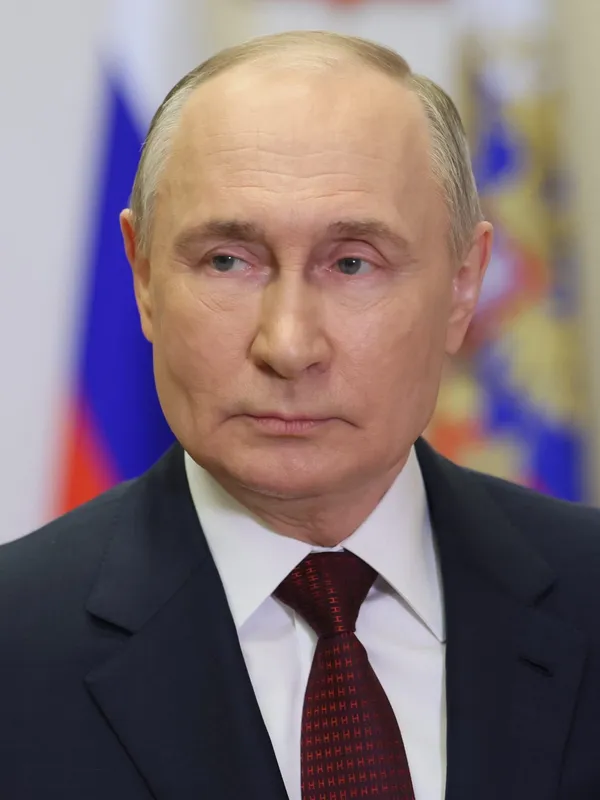 ProfileVladimir PutinPresident of Russia
Related
California Senate Passes Post-Production Tax Bill; Newsom Must Act
SB 2319 cleared the California State Senate 33-5, creating a dedicated post-production tax incentive as the L.A. film industry continues to shrink.
Netanyahu Condemns West Bank Attack on NBC News Team as Settler Violence Escalates
Masked settlers assaulted an NBC News crew and a Palestinian woman in Jalud, injuring four journalists and drawing condemnation from Israel's prime minister.
Park Service Backs Trump Arch Despite Threat to DC Landmark Sightlines
A federal report endorses the proposed 250-foot gilded arch while acknowledging it will disrupt the visual integrity of dozens of historic Washington sites.