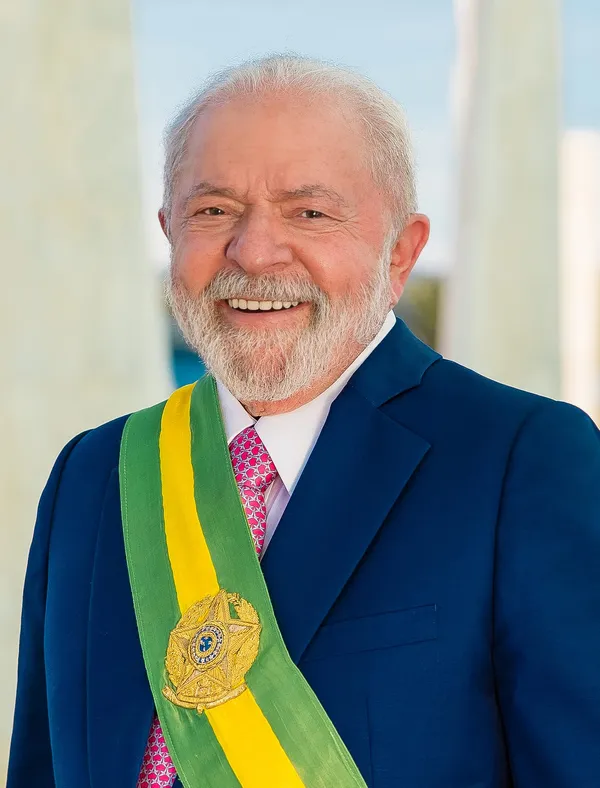
Luiz Inacio Lula da Silva
President of Brazil
Luiz Inacio Lula da Silva, universally known as Lula, is a Brazilian politician and former trade unionist who has served multiple terms as President of Brazil. Rising from extreme poverty to the nation's highest office, he is one of the most consequential and recognizable figures in modern Latin American politics, celebrated by supporters for social progress and criticized by opponents amid corruption controversies.
From Poverty to Union Leadership
Lula was born into a poor family in the northeastern state of Pernambuco. As a child his family migrated to the industrial region of Sao Paulo in search of work, and he received little formal schooling. He trained as a metalworker and lost part of a finger in an industrial accident, an experience that connected him to the realities faced by Brazil's working class.
During the years of military rule, Lula emerged as a charismatic and combative labor leader, organizing major strikes in the automobile manufacturing sector. His activism made him a national symbol of resistance and worker empowerment. Out of this movement he helped found the Workers' Party, which became one of the most important political forces in the country and a vehicle for left-leaning and progressive causes.
Presidency and Social Programs
After several unsuccessful campaigns, Lula won the presidency and took office in the early 2000s, a landmark moment as a former factory worker assumed leadership of one of the world's largest economies. His government became internationally known for ambitious social programs aimed at reducing poverty and inequality, including conditional cash-transfer initiatives that helped lift millions of people out of extreme poverty and expand access to education and healthcare.
During his presidency Brazil experienced a period of strong economic growth, fueled in part by a global commodities boom, and the country gained increased prominence on the world stage. He pursued an active foreign policy, strengthening ties among developing nations and promoting Brazil's role in international forums. He left office with high approval ratings and a reputation as a transformative leader for the country's poor.
Controversy, Imprisonment, and Return
Lula's later years were marked by dramatic reversals. He became entangled in sprawling corruption investigations that swept through Brazilian politics and business. He was convicted and imprisoned, a development that removed him from a subsequent presidential race and deeply divided the nation. He consistently maintained his innocence and described the cases as politically motivated. His convictions were later annulled by the courts on procedural grounds, restoring his political rights.
In a remarkable political comeback, Lula returned to electoral politics and won the presidency again in a closely contested and polarized election, defeating the incumbent. His renewed mandate has focused on themes including poverty reduction, environmental protection of the Amazon rainforest, and reestablishing Brazil's international partnerships, while governing a deeply divided country.
Few political careers have featured such extreme highs and lows. From impoverished migrant and union firebrand to president, prisoner, and president once more, Luiz Inacio Lula da Silva remains a towering and polarizing figure whose life story is intertwined with the modern history of Brazilian democracy.
Photos
Videos
On Instagram


FAQ
Luiz Inacio Lula da Silva — Frequently asked questions
How old is Luiz Inacio Lula da Silva?+
Luiz Inacio Lula da Silva was born on October 27, 1945, which makes 80 years old.
Where is Luiz Inacio Lula da Silva from?+
Luiz Inacio Lula da Silva is from Brazil.
What is Luiz Inacio Lula da Silva known for?+
Luiz Inacio Lula da Silva is best known as Politician, Functionary, Trade unionist. Notable work includes President of Brazil, Workers' Party founder, labor union leader, social programs.
How tall is Luiz Inacio Lula da Silva?+
Luiz Inacio Lula da Silva is 0.02 m (2 cm) tall.
Is Luiz Inacio Lula da Silva on social media?+
Yes — Luiz Inacio Lula da Silva is on Instagram, X (Twitter), Facebook, YouTube, TikTok. You can find the official links on this page.