Celebrities
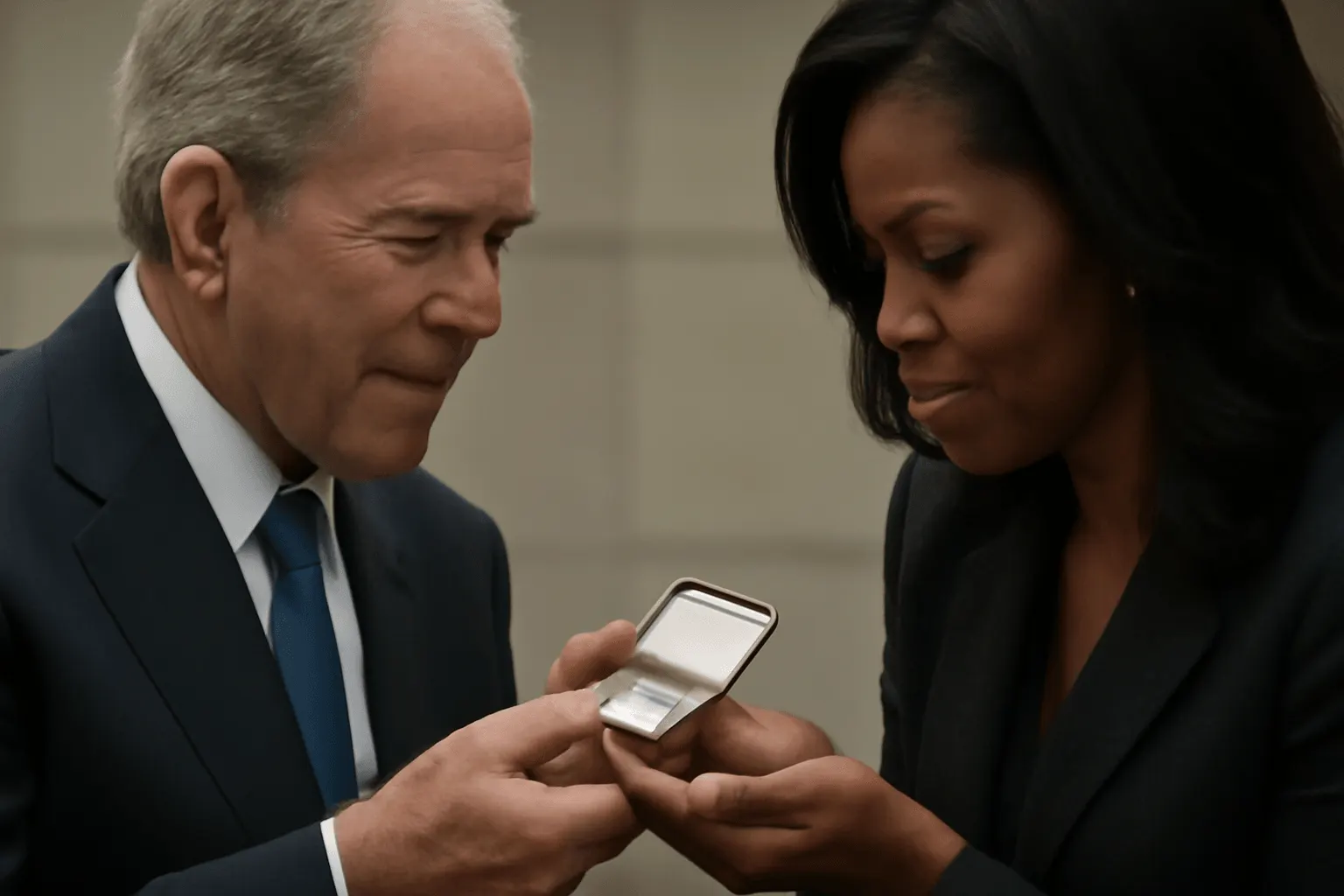
George W. Bush Slips Michelle Obama Altoids at Center Opening
A tin of mints became the feel-good image of the day as George W. Bush revived his running candy bit with Michelle Obama at the Obama Presidential Center opening.
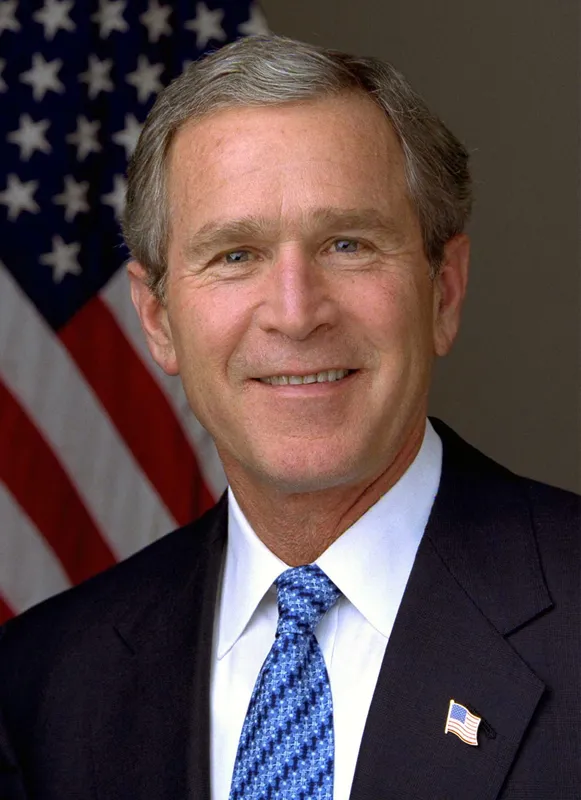
43rd President of the United States
George Walker Bush is an American politician and businessman who served as the 43rd president of the United States from 2001 to 2009. A member of the Republican Party, he was the eldest son of George H. W. Bush, the 41st president, making the two one of only a few father-and-son pairs to hold the office. Before entering national politics, he served as the 46th governor of Texas from 1995 to 2000.
Bush was born in New Haven, Connecticut, and raised largely in Texas. He earned a bachelor's degree from Yale University and later a Master of Business Administration from Harvard Business School. He served in the Texas Air National Guard during the Vietnam War era. In the 1970s and 1980s he worked in the oil industry in Texas, and he later became a managing partner of the Texas Rangers baseball team. In 1994 he was elected governor of Texas, defeating the incumbent, and he was reelected in 1998. As governor he focused on education, tort reform, and criminal justice issues.
Bush won the 2000 presidential election against Vice President Al Gore in one of the closest and most disputed contests in U.S. history; the outcome was decided after a Supreme Court ruling concerning the recount in Florida. His early agenda included significant tax cuts and the No Child Left Behind Act, an education measure aimed at standardized testing and accountability.
His presidency was profoundly shaped by the terrorist attacks of September 11, 2001. In response, his administration launched what it termed the "War on Terror," including a military campaign in Afghanistan against the Taliban and al-Qaeda. In 2003 the United States led an invasion of Iraq, citing concerns about weapons of mass destruction and the government of Saddam Hussein; such weapons stockpiles were not subsequently found, and the war became a subject of extensive debate. His administration also created the Department of Homeland Security and signed the USA PATRIOT Act, measures that supporters described as necessary for security and that critics said raised civil-liberties concerns.
Bush was reelected in 2004, defeating Senator John Kerry. His second term included efforts to reform Social Security and immigration, the federal response to Hurricane Katrina in 2005, and the appointment of Supreme Court justices John Roberts and Samuel Alito. Toward the end of his presidency, the United States entered a severe financial crisis in 2008, and his administration supported measures such as the Troubled Asset Relief Program to stabilize the banking system.
After leaving office in 2009, Bush largely withdrew from day-to-day politics. He published a memoir, "Decision Points," in 2010 and took up painting, later exhibiting portraits of military veterans and world leaders. He has supported public-health initiatives, including programs addressing HIV/AIDS in Africa that began during his presidency, an effort widely credited with saving many lives. He established the George W. Bush Presidential Center in Dallas, Texas.
Assessments of Bush's presidency remain divided. Supporters point to his response to a national crisis, tax policy, and global health initiatives, while critics focus on the Iraq War, the handling of Hurricane Katrina, and the economic downturn. Historians continue to evaluate his record as the long-term consequences of his decisions unfold. He has been married to Laura Bush since 1977, and the couple have twin daughters.
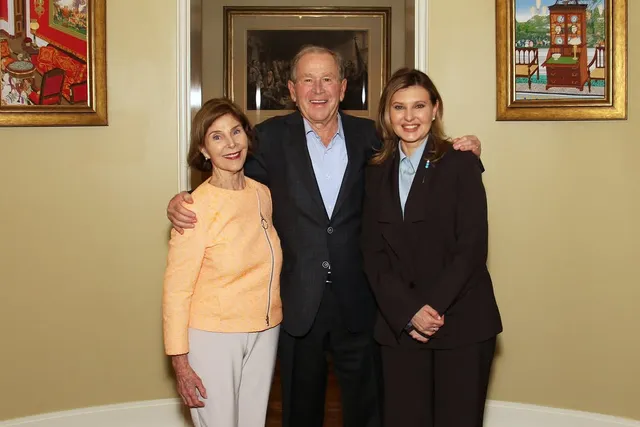
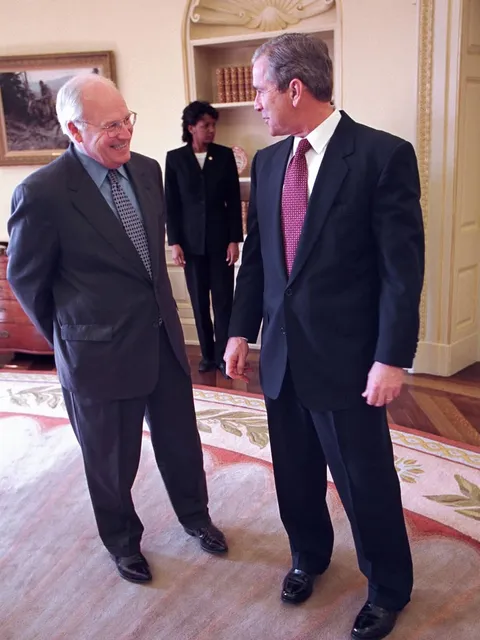
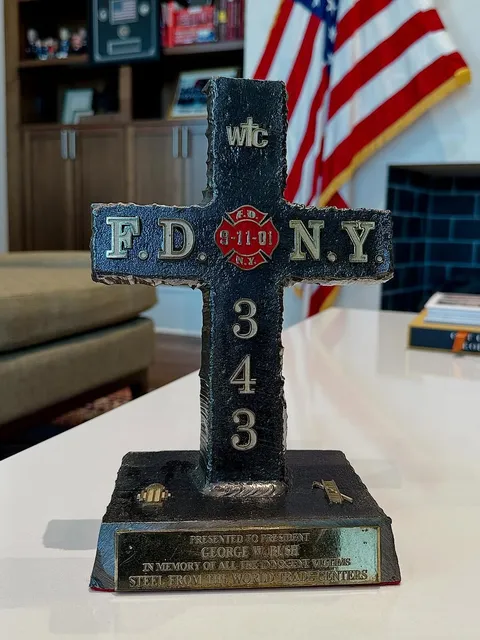
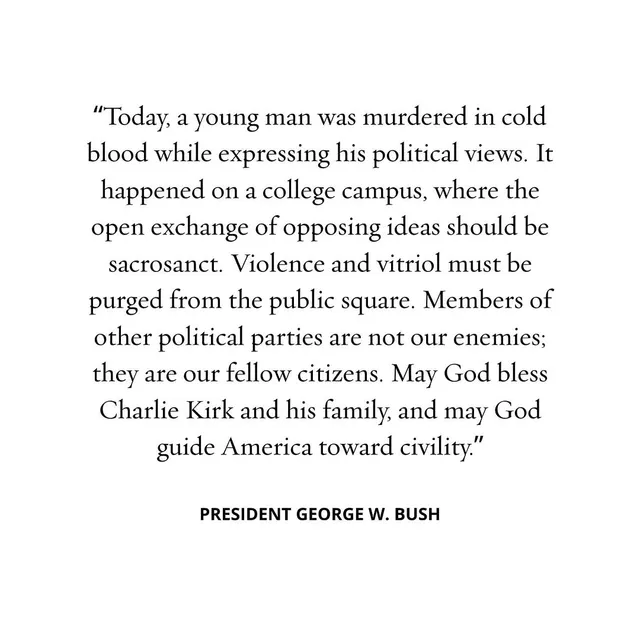
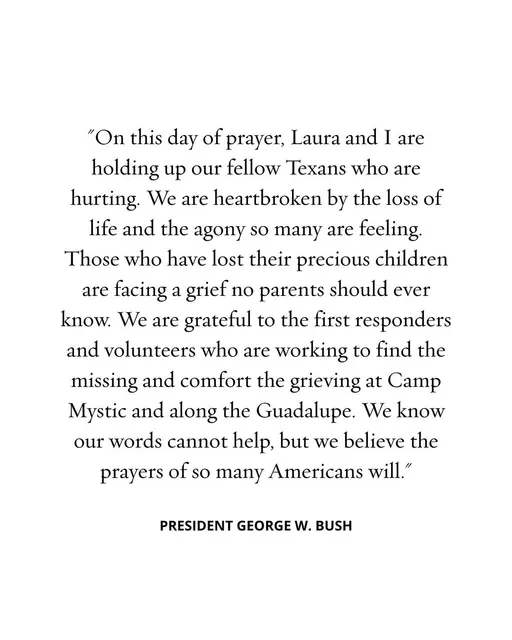
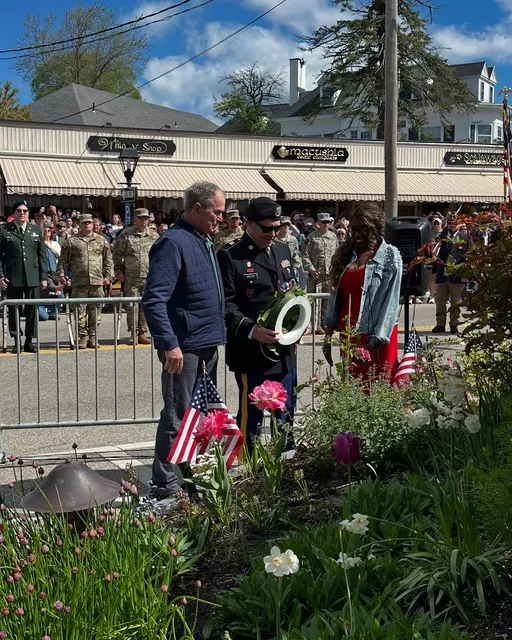
A tin of mints became the feel-good image of the day as George W. Bush revived his running candy bit with Michelle Obama at the Obama Presidential Center opening.
FAQ
George W. Bush was born on July 6, 1946, which makes 80 years old.
George W. Bush is from United States.
George W. Bush is best known as Businessperson, Politician, Governor. Notable work includes 43rd U.S. President (2001-2009), response to the September 11 attacks, wars in Afghanistan and Iraq, Governor of Texas, tax cuts and education reform.
George W. Bush is 1.83 m (183 cm) tall.
Yes — George W. Bush is on Instagram, X (Twitter), Facebook. You can find the official links on this page.