Xi Jinping Purges Hit Record High as Fifth Plenum Expels 33 Officials

China's Communist Party expelled a historic 33 members at its fifth plenum, with more than a quarter of the Central Committee absent amid Xi's anti-corruption drive.
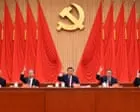
China's ruling Communist Party has expelled a record number of its own members following the conclusion of its fifth plenum this week, with the volume of vacant seats at the gathering offering a stark visual measure of how far Xi Jinping's disciplinary campaign has reached into the party's upper echelons. The scale of the purges, according to The Guardian World, is without precedent in modern Chinese political history.
Record Expulsions at the Fifth Plenum
Thirty-three full and alternate members of the Central Committee were formally expelled at this week's fifth plenum, a high-level party conclave that convenes approximately once a year. Of the 376 individuals originally named to the Central Committee in 2022, only 279 were present — meaning more than 25 percent of the body was absent, a figure that analysts describe as the highest rate of empty chairs the plenum has seen in the modern era.
Among those confirmed as expelled were Zhang Youxia, who previously held the position of second-in-command within China's military hierarchy, and Ma Xingrui, the former party secretary for the Xinjiang region. A number of other absences were not formally explained by authorities.
The Military Hit Hardest
The impact on the People's Liberation Army's senior command structure has been especially pronounced. The seven-member Central Military Commission — the body that governs China's armed forces — has been so thoroughly hollowed out by successive purges that only two members now remain: Xi himself, and Zhang Shengmin, the military's leading anti-corruption official.
Zhang Shengmin was elevated to the politburo, the party's highest governing body, during this week's plenum. He is now the sole military representative within that senior leadership tier — a concentration of military oversight in anti-graft hands that underscores how central discipline enforcement has become to Xi's governance model.
Discipline as a Governing Priority
Xi has made rooting out corruption a defining pillar of his tenure since assuming power in 2012, but the intensity of that campaign has accelerated in recent years, reaching officials at the very top of both the party and the armed forces. Earlier this year, Xi publicly framed the effort in stark terms, describing the need to uproot "sick trees" and characterizing the anti-corruption effort as a "never-ending journey."
The theme of this week's plenum was formally designated as party governance, reinforcing Xi's consistent message that internal discipline is a prerequisite for political legitimacy. Neil Thomas, a senior fellow at the Asia Society think tank, noted that the volume of empty seats "underscores the plenum's focus on Xi's vision of strict internal discipline."
Whether the campaign is driven purely by anti-corruption imperatives or also serves to neutralize political rivals and enforce personal loyalty has become a matter of growing debate among China watchers. The removal of figures as senior as Zhang Youxia has lent weight to the latter interpretation.
Implications for the 2027 Party Congress
The plenum also set preliminary groundwork for the 21st Party Congress, scheduled for the second half of 2027. That gathering, which occurs every five years, is expected to confirm Xi for a fourth term as party leader — a tenure that would make him the longest-serving ruler of Communist China since Mao Zedong. His consolidation of power has been a consistent thread across his leadership, reflected in engagements ranging from high-stakes diplomacy — including a summit with President Trump where Xi invoked the 'Thucydides Trap' — to bilateral outreach with regional partners like Cambodia.
However, several analysts have raised a practical concern ahead of 2027: the purges have been so extensive that the pool of officials eligible and qualified for promotion to the refreshed Central Committee and politburo may be dangerously thin. Rebuilding party leadership structures while simultaneously continuing to remove members from them presents a governance challenge that Xi will have to navigate as the next congress approaches.
Related on Ni4o: Xi Hosts Hun Sen to Deepen China-Cambodia Ties
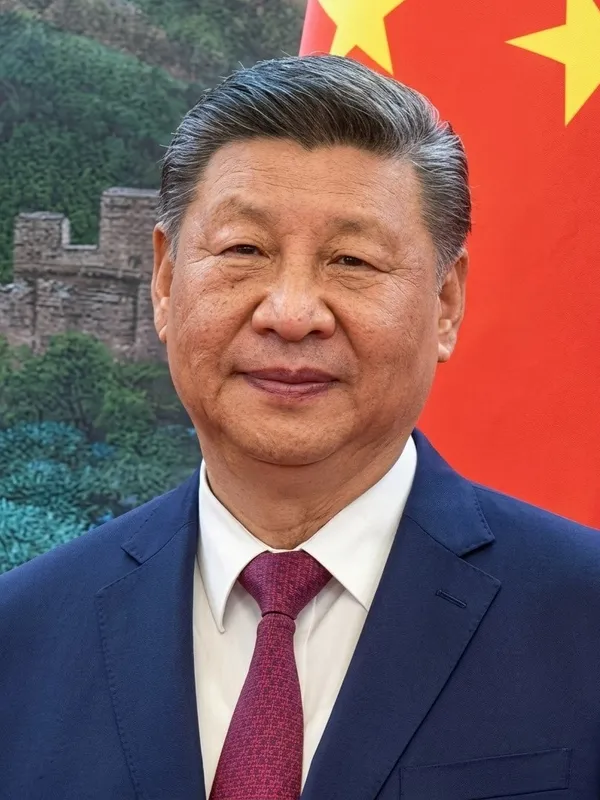 ProfileXi JinpingGeneral Secretary of the Communist Party of China
Related
California Senate Passes Post-Production Tax Bill; Newsom Must Act
SB 2319 cleared the California State Senate 33-5, creating a dedicated post-production tax incentive as the L.A. film industry continues to shrink.

Netanyahu Condemns West Bank Attack on NBC News Team as Settler Violence Escalates
Masked settlers assaulted an NBC News crew and a Palestinian woman in Jalud, injuring four journalists and drawing condemnation from Israel's prime minister.

Park Service Backs Trump Arch Despite Threat to DC Landmark Sightlines
A federal report endorses the proposed 250-foot gilded arch while acknowledging it will disrupt the visual integrity of dozens of historic Washington sites.