What the Lucas Museum Quietly Reveals About His Disney Star Wars Views

The newly opened Lucas Museum of Narrative Art offers a telling curatorial statement about which corners of modern Star Wars George Lucas actually respects.
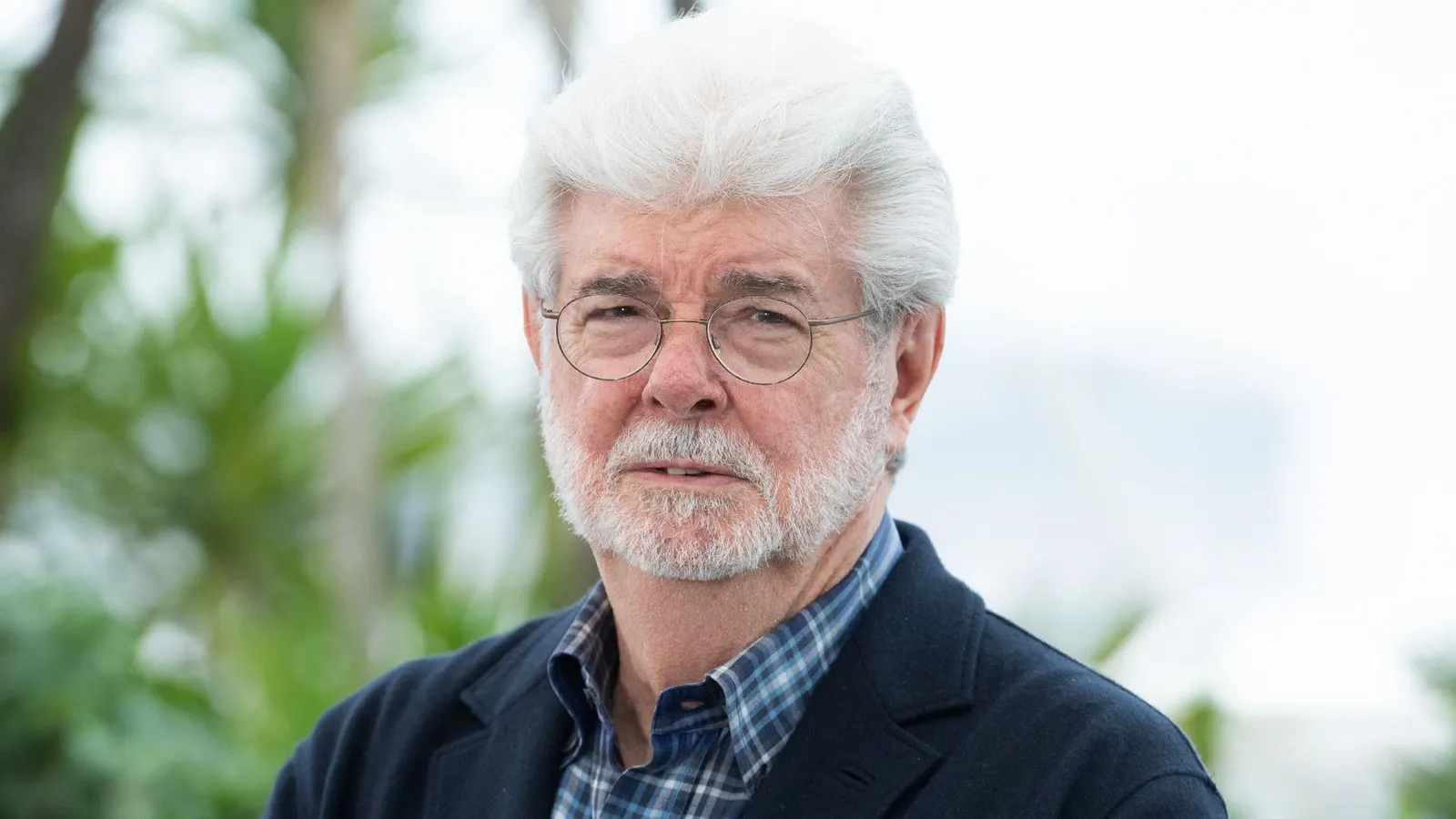
The curation of a museum is, in many respects, an act of criticism — every object chosen for display implies a value judgment, and every omission speaks just as loudly. With the Lucas Museum of Narrative Art now open to the public in Los Angeles, George Lucas has delivered what may be his most candid commentary yet on the state of Star Wars under Disney, without uttering a single word about it in public.
A Museum That Speaks Through Silence
According to ScreenRant, which surveyed the museum's Star Wars holdings in detail, the collection overwhelmingly reflects the franchise as Lucas himself shaped it between 1977 and 2005. Visitors encounter Ralph McQuarrie's legendary concept paintings, Doug Chiang's design work, meticulously preserved physical props, and full-scale vehicle models — the podracer from The Phantom Menace, Luke's landspeeder from A New Hope, General Grievous' wheel bike from Revenge of the Sith, and a stunning N1-Naboo starfighter suspended from the ceiling of the library entrance. These are objects that carry the fingerprints of Lucas' personal creative vision, the product of decades of world-building that preceded the 2012 sale of Lucasfilm to Disney.
What is conspicuously absent is nearly everything produced in the fourteen years since that transaction. The merchandise created exclusively for the museum follows the same pattern: it is a celebration of the Lucas era, with the Disney chapter almost entirely unacknowledged. For a filmmaker who has been famously restrained in his public criticism of the new regime, the selection criteria here function as a quiet but unmistakable editorial.
The Two Exceptions That Prove the Rule
There are precisely two apparent concessions to the Disney era, and each one is instructive. The first is Grogu, the character introduced in The Mandalorian, who appears alongside a Yoda figure at a museum fountain and is represented in exclusive pin merchandise. This aligns with longstanding reporting that Lucas has genuine affection for Grogu, appreciating in particular the creative commitment to bringing the character to life through practical puppetry — a craft philosophy very much in keeping with Lucas' own filmmaking values.
The second exception is arguably more revealing. The museum's Slavko Vorkapich Theater — a screening space devoted to short films, montage experiments, and Lucas' own student work — also shows episodes of Star Wars: Visions, the Disney+ anthology series produced in collaboration with various Japanese anime studios. Unlike the overwhelming majority of Disney-era Star Wars productions, Visions operates entirely outside the franchise's established canon and embraces a radically diverse range of visual idioms, storytelling structures, and aesthetic sensibilities. It is, by design, an experimental space.
Lucas famously remarked after screening The Force Awakens that there was "nothing new" in it — a complaint that cuts to the heart of his creative philosophy. Visions represents the inverse of that criticism: it actively invites artists to subvert expectations, invent freely, and reimagine the galaxy far, far away from entirely fresh perspectives. That the series has earned a place in Lucas' own museum says a great deal about the qualities he believes have been largely missing from the franchise since his departure. You can read more about the difficult journey to bring this institution to life in our piece on George Lucas: Opening His Narrative Art Museum 'Almost Broke My Will'.
The Broader Portrait of a Filmmaker's Values
Taken together, the museum's curatorial choices reinforce a coherent creative worldview. Lucas has always been as much a technologist and visual experimentalist as he has been a storyteller, and the works he has chosen to champion — from Jack Kirby's comic pages to Norman Rockwell's illustrations to the most unconventional corner of modern Star Wars — reflect an enduring fascination with narrative art as a medium of possibility rather than formula.
The museum also represents a significant civic gesture; we previously reported on how George Lucas' Museum Opens Its Doors Free to South L.A. Neighbors, an initiative that underscores the institution's ambitions beyond prestige collecting. And for those interested in the fuller arc of his creative legacy, Lucas has separately discussed the three additional Star Wars films he had planned before stepping away — a reminder of how much unfinished creative business remains in the background.
In the end, the Lucas Museum of Narrative Art functions simultaneously as a celebration and a gentle rebuke — a monument to what Star Wars was, and a quiet argument for what it could still become.
 ProfileGeorge LucasFilmmaker & producer
Related
Randy Quaid Slams Anne Hathaway Casting in Days of Thunder Sequel
Randy Quaid, who appeared in the original 1990 film, took to X to demand Nicole Kidman's return and dismiss the Hathaway announcement.

Eva Mendes' 'de Gosling' Tattoo Is the Only One She's Ever Wanted
Eva Mendes is showing off her wrist tattoo again — a small but meaningful piece of ink that carries a deep cultural significance.
Steven Spielberg's 'War of the Worlds' Returns to Streaming Amid Debate
Steven Spielberg's 'War of the Worlds' is hitting HBO Max next month, reigniting discussions on its mixed reception.