US Intelligence Chief Backs Trump's 'Friend' Label for Putin
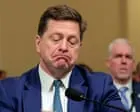
Jay Clayton defended Trump's characterization of Vladimir Putin as a friend, while lawmakers and foreign allies condemned the description.
The United States director of national intelligence, Jay Clayton, offered a full-throated defense of President Donald Trump's decision to publicly describe Russian President Vladimir Putin as a friend — a characterization that has drawn sharp rebukes from both domestic lawmakers and international allies. Clayton made his position clear during multiple Sunday television appearances, insisting the remark must be understood within the specific diplomatic context of a trilateral nuclear summit.
Clayton Backs Trump 'Completely'
Speaking on CNN's State of the Union, Clayton declined to distance himself from Trump's framing of Putin, arguing that the president had achieved something historically significant by convening a meeting between the leaders of the world's three principal nuclear powers — the United States, Russia, and China. Clayton told anchor Dana Bash that he trusts the president's judgment on foreign policy matters without reservation, describing Trump as an exceptional conductor of diplomacy during a particularly difficult era.
When pressed directly on whether he personally considers Putin a friend to the United States, Clayton sidestepped a definitive answer, noting that the same word can carry different meanings in different contexts. He reiterated that the summit produced an agreement among the three nuclear powers to avoid escalation and maintain open lines of communication — an outcome he called remarkable and historic.
On ABC's This Week, Clayton maintained a consistent line, telling host Jonathan Karl that using the term "friend" was entirely appropriate given the circumstances of the meeting. He drew a distinction, however, acknowledging that Putin is emphatically not a friend to the United States on the question of Ukraine.
Trump Doubles Down Despite Backlash
Trump had already intensified the controversy before Clayton's Sunday appearances. Following initial criticism, the president posted a photograph of himself and Putin shaking hands on Saturday, captioning it simply: "My Friend." When asked at a press briefing to clarify whether the characterization applied to America broadly, Trump declined to speak for the country, saying only that he maintains what he described as a fantastic relationship with the Russian leader — something he characterized as beneficial.
For broader context on how Trump's post-summit remarks have landed, see Trump's Curious Comments on Russia After Asia Summit, reported as the story was first developing.
Lawmakers Push Back Sharply
The reaction on Capitol Hill was swift and critical, according to The Guardian World. Senate Minority Leader Chuck Schumer issued a pointed rebuke, listing a series of actions attributed to Putin — including the alleged abduction of tens of thousands of Ukrainian children, the killing of civilians, infrastructure attacks, and the wrongful detention of American citizens. Schumer called Trump's framing embarrassing and pathetic, pledging that Senate Democrats would continue standing with Ukraine.
Senator Jeanne Shaheen expressed similar bewilderment, characterizing Putin as a war criminal and saying she cannot understand the president's evident admiration for him. The criticism arrives against a backdrop of ongoing conflict; Putin has previously conceded that Ukraine's strikes are creating serious fuel shortages inside Russia, underscoring how far the two nations remain from any stable resolution.
International Allies Voice Concern
The fallout extended well beyond Washington. Polish Prime Minister Donald Tusk issued a blunt statement asserting that Putin is not a friend to Poland and never will be. In the United Kingdom, Reform UK's deputy leader Richard Tice described Trump's remarks as a grave mistake, calling Putin a murderous dictator whose nature is not in dispute.
The diplomatic tension feeds into a broader pattern of uncertainty surrounding Putin's signals on peace talks, where analysts continue to debate whether Moscow is engaging substantively or playing for time.
Clayton Also Flags Tech Disruption Risk
Separately during Sunday's interviews, Clayton addressed a recent series of technology outages affecting the United States, warning Americans to expect continued service interruptions as aging infrastructure is replaced across both government agencies and private companies. He framed the disruptions as an unavoidable side effect of necessary modernization rather than a sign of systemic failure.
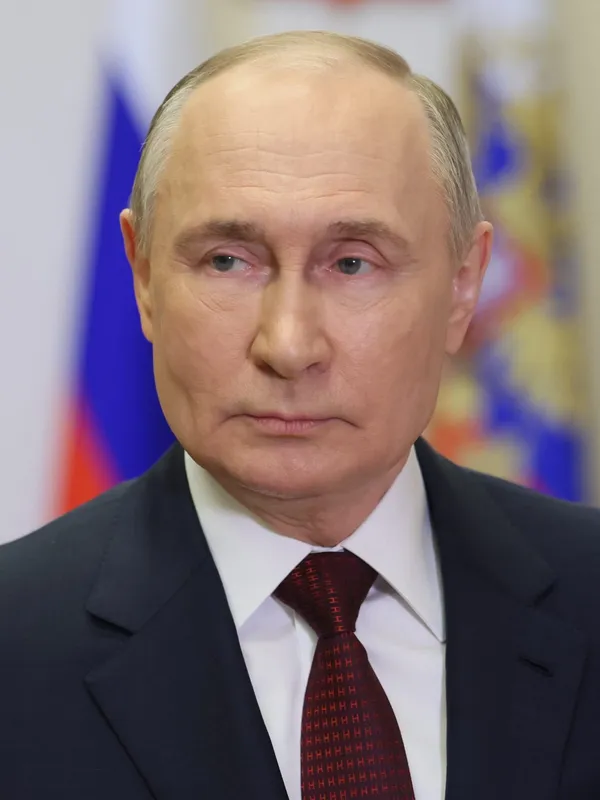 ProfileVladimir PutinPresident of Russia
Related
California Senate Passes Post-Production Tax Bill; Newsom Must Act
SB 2319 cleared the California State Senate 33-5, creating a dedicated post-production tax incentive as the L.A. film industry continues to shrink.

Netanyahu Condemns West Bank Attack on NBC News Team as Settler Violence Escalates
Masked settlers assaulted an NBC News crew and a Palestinian woman in Jalud, injuring four journalists and drawing condemnation from Israel's prime minister.
Park Service Backs Trump Arch Despite Threat to DC Landmark Sightlines
A federal report endorses the proposed 250-foot gilded arch while acknowledging it will disrupt the visual integrity of dozens of historic Washington sites.