Ray Dalio Warns of a New World Order After China Trip
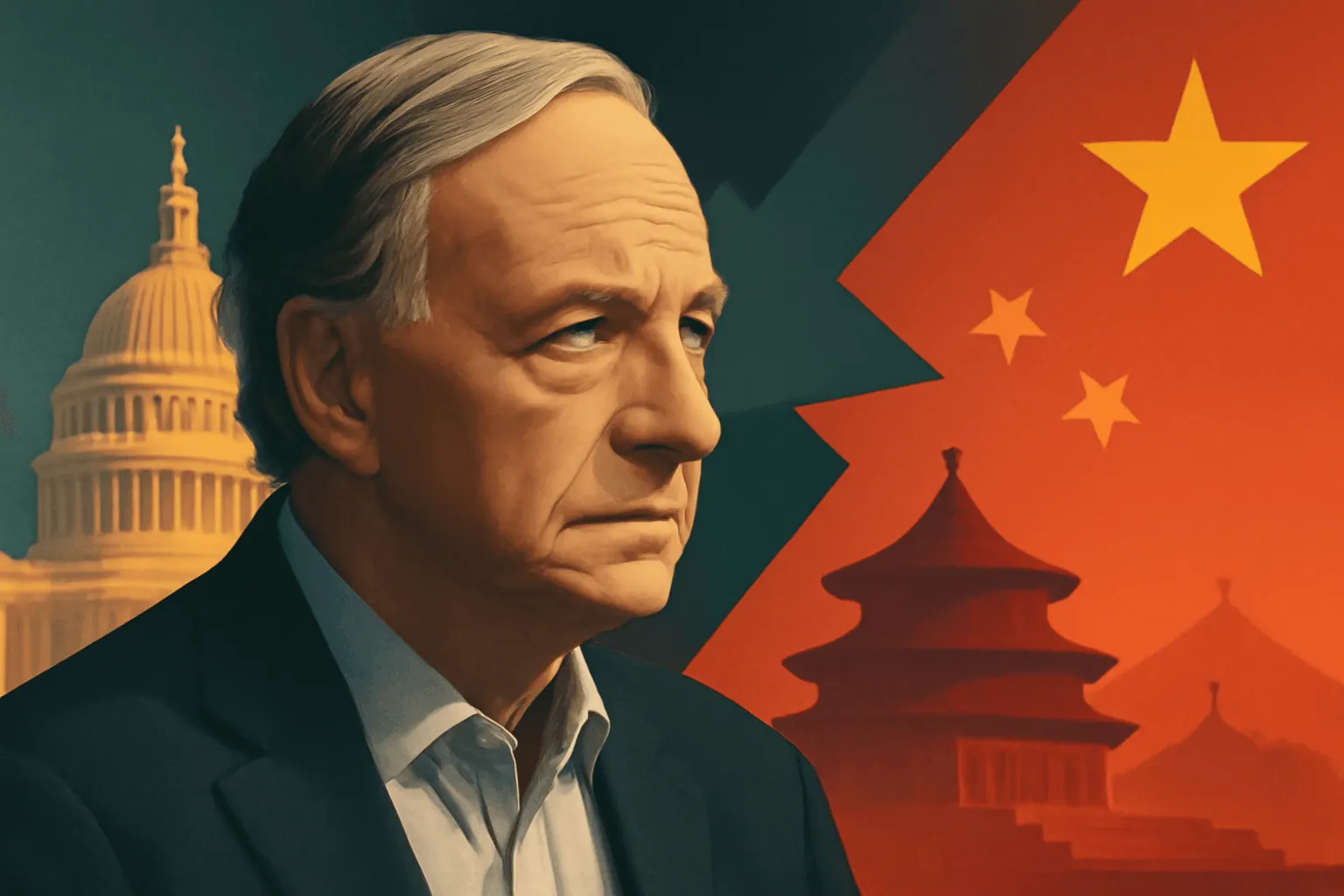
After a 10-day visit to China, Bridgewater founder Ray Dalio says global power is shifting toward Beijing and the U.S. may be facing its own 'Suez moment.'
A Shift Dalio Says He Could Feel on the Ground
Billionaire investor Ray Dalio has come home from a 10-day trip to China persuaded that the global balance of power is tilting toward Beijing faster than many in the West appreciate. In an essay highlighted by Fortune on June 24, 2026, the founder of Bridgewater Associates argued that the world is transitioning "from a U.S.-led, multilateral, rules-based order to a bipolar, power-based, hierarchical order."
Dalio is not a casual observer of these questions. He has spent years studying the rise and fall of great powers, and his latest commentary reads as the application of that long-running framework to what he says he witnessed firsthand. According to Fortune, he reported that leaders across Asia increasingly regard the United States as unable to defend its dominant position. He singled out Washington's handling of Iran's seizure of the Strait of Hormuz as a signal of weakness that regional powers did not fail to notice.
The 'Suez Moment'
Among Dalio's most arresting comparisons, per Fortune, is to Britain's 1956 Suez crisis, an episode widely understood as the moment that exposed the limits of British imperial power and accelerated its decline. Dalio suggests the United States may now be passing through a comparable inflection point, where a single, visible failure crystallizes a slower erosion that had been underway for years.
The analogy is pointed because Suez was less about military defeat than about the sudden, public revelation that an old hegemon could no longer impose its will. That, in Dalio's telling, is the danger for America: not a dramatic collapse, but a turning point that others recognize before it is fully acknowledged at home.
A Modern Tributary System
Dalio also predicts that China will revive a contemporary version of its ancient tributary system. As he describes it, this would be a hierarchical but largely nonmilitary order in which smaller nations defer to Chinese primacy in exchange for economic access and stability. The vision is notable for what it is not, namely a framework built primarily on conquest. Instead it leans on commerce, dependency and the gravitational pull of a large, growing market.
Key threads running through his argument include:
- A bipolar order replacing the post-Cold War, U.S.-anchored system
- Economic leverage, rather than purely military force, as China's primary instrument
- Perceptions of American resolve eroding among Asian leaders
Taiwan, Chips and the AI Stakes
Dalio places Taiwan at the heart of the story. Its commanding position in advanced semiconductors, he argues, hands Beijing enormous potential leverage over global markets and the trajectory of artificial intelligence. Fortune reports that Dalio expects reunification discussions could surface by 2028, potentially through diplomatic rather than military channels, a scenario that would reshape supply chains underpinning the entire technology industry.
A Pattern, Not a Panic
Dalio frames all of this through the lens of his study of empires, in which debt cycles, internal political division and shifting global leadership) tend to move in concert rather than independently. Critics may dismiss his warnings as overly dramatic, and his track record as a forecaster, like any investor's, is mixed. Yet his essay restates a thesis he has advanced consistently for years: that investors and policymakers should brace for a more contested, multipolar era instead of assuming the familiar order will simply persist. Whether or not his specific predictions hold, the underlying message is a call to prepare for change rather than to assume continuity.
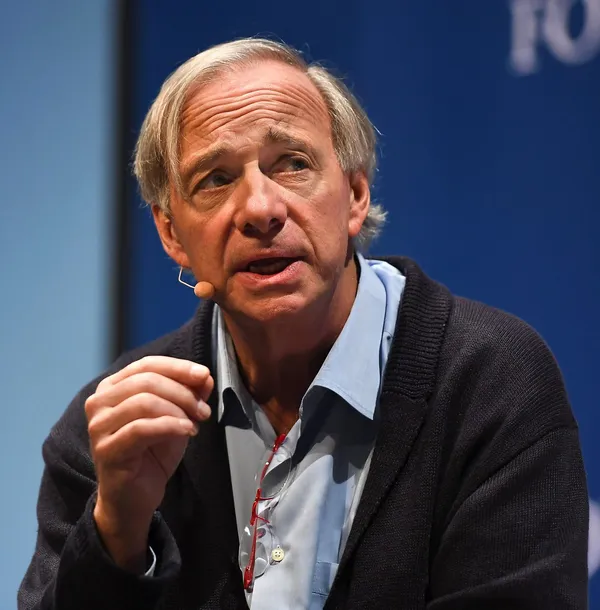 ProfileRay DalioInvestor and founder of Bridgewater Associates
Related
Elon Musk Documentary Among Highlights at Venice Film Festival
The Venice Film Festival features a new section showcasing documentaries, including an anticipated film on Elon Musk.
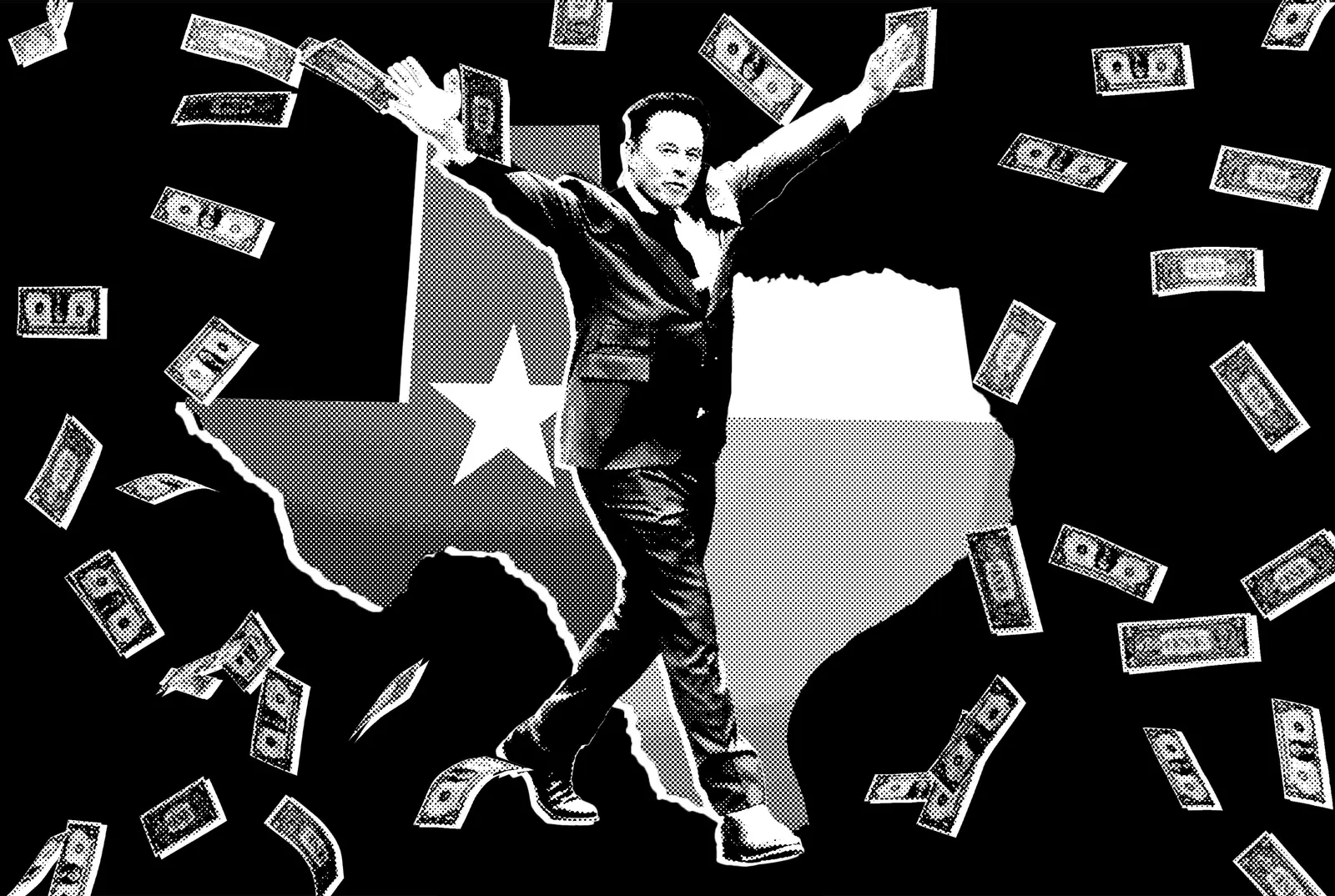
Musk Expected to Pour Up to $200M Into 2026 Midterm Races
Elon Musk is projected to commit between $100 million and $200 million to Republican midterm efforts, with Texas a key focus.

Tesla Prepares for Cybercab Launch Amid Safety Concerns
Tesla is set to unveil its Cybercab, a driverless vehicle pivotal to Elon Musk's vision, but readiness for public roads is questioned.