Impact of Increased Palestinian Representation on Israeli Politics

Palestinian parties' gains in the Knesset challenge Netanyahu's coalition, forcing the opposition to reconsider its approach to governance.
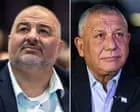
The recent Israeli elections have brought significant attention to the increasing power of Palestinian parties within the Knesset. After exit polls indicated a substantial rise in the seats won by these parties, the political landscape in Israel is poised for substantial change, especially regarding opposition leader Gadi Eisenkot's ability to form a governing coalition.
Shift in Power Dynamics
According to preliminary results, Palestinian parties are projected to secure between 17 and 18 seats in the Knesset, up from 10 previously. This dramatic shift signifies that Arab-Israeli representation cannot be overlooked any longer. As Gadi Eisenkot, leader of the opposition, acknowledged the outcomes as victories for Israel’s Zionist national majority, the reality is far more nuanced.
Eisenkot faces a complex challenge. His opposition bloc is currently tied with Israeli Prime Minister Benjamin Netanyahu's governing coalition, and the lack of a clear majority presents a formidable obstacle. With the Knesset comprising 120 seats, neither bloc has reached the necessary 61 seats to govern effectively. This stalemate places Israel's President Isaac Herzog in a pivotal role, determining who will be first invited to try forming a government.
The Need for Coalition Negotiations
To carve a path to governance, Eisenkot may need to engage with Palestinian leaders from the Joint List and Ra’am, whose cooperation would be essential in assembling a majority. Ra’am, led by Mansour Abbas, has previously been part of a right-leaning coalition, which might make negotiations smoother. Abbas has expressed his commitment to ousting Netanyahu and his right-wing allies, creating a potential avenue for coalition talks.
However, the actual dynamics may vary. Ra’am is expected to win around 7 seats, while the Joint List is projected to garner 11 or more. For Eisenkot, successfully negotiating with either group presents its own challenges. He has set forth four conditions for coalition discussions with the Joint List, including the recognition of Israel as a Jewish and democratic state and a commitment to national service from Palestinian citizens.
Amjad Shbita, general secretary of Hadash, a primary faction within the Joint List, has voiced skepticism about imposing such conditions, arguing that coalition negotiations should occur on equal footing between parties. This reflects a broader sentiment that unity and collaboration among opposition parties, including Arab representatives, may become critical for any viable government formation.
Implications of a Minority Government
Should the discussions with Palestinian parties falter, it is conceivable that Eisenkot could attempt to lead a minority government supported by informal, vote-by-vote agreements. However, this arrangement is typically unstable and may lead to further elections, presenting Netanyahu with an opportunity to reinforce his position by rallying support among conservative Jewish voters. His historical mindset of framing the choice as 'the Right or Palestine' suggests that the potential for another resurgence remains, despite current challenges.
Neck-deep in political maneuvering, Netanyahu is no stranger to these dynamics. He has often demonstrated remarkable resilience in his career, reviving his political fortunes amid daunting odds. For now, his coalition remains in a caretaker capacity while the new Knesset figures out its next steps.
A New Political Era
The ascendancy of Palestinian parties marks a critical juncture in Israeli politics. As the Knesset evolves, the implications for governance will be profound, compelling the opposition to rethink its strategies and potentially embrace a more inclusive framework. Commenting on this shift, a party official from the Joint List noted, "The Zionist opposition will have to choose between supremacy and building democracy." This statement encapsulates the pivotal crossroads ahead for Israel as it navigates the complexities brought about by its democratic processes.
Potential readers interested in further exploring political dynamics in Israel might consider reviewing Netanyahu's recent public rejection of a US-backed peace plan or his commentary on military aid reliance in light of the changing political landscape.
Related on Ni4o: Netanyahu hails Israel-Lebanon framework deal as historic · Netanyahu pushes to end Israel's US military aid dependence · Netanyahu Criticizes NYC Mayor for War Criminal Remarks
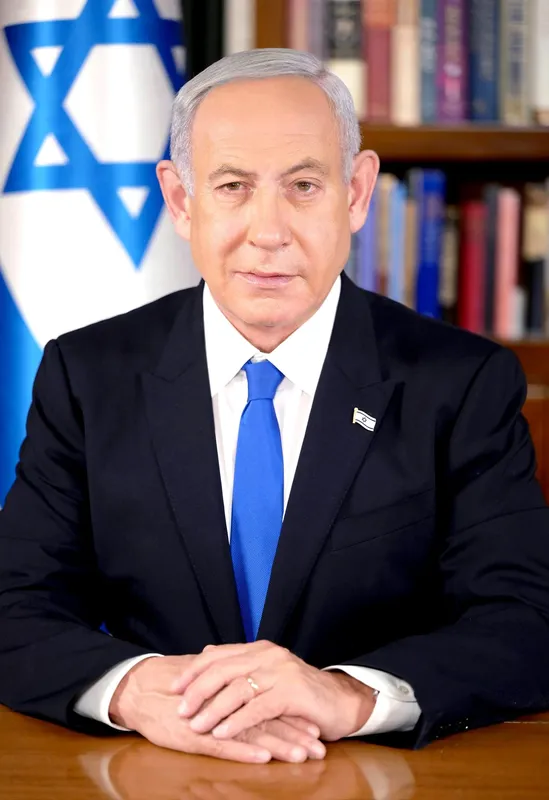 ProfileBenjamin NetanyahuPrime Minister of Israel
Related
California Senate Passes Post-Production Tax Bill; Newsom Must Act
SB 2319 cleared the California State Senate 33-5, creating a dedicated post-production tax incentive as the L.A. film industry continues to shrink.
Netanyahu Condemns West Bank Attack on NBC News Team as Settler Violence Escalates
Masked settlers assaulted an NBC News crew and a Palestinian woman in Jalud, injuring four journalists and drawing condemnation from Israel's prime minister.

Park Service Backs Trump Arch Despite Threat to DC Landmark Sightlines
A federal report endorses the proposed 250-foot gilded arch while acknowledging it will disrupt the visual integrity of dozens of historic Washington sites.