Netanyahu hails Israel-Lebanon framework deal as historic

Israel, Lebanon and the United States signed a trilateral framework agreement in Washington, with Netanyahu calling it a historic achievement while vowing to keep troops in a southern buffer zone.
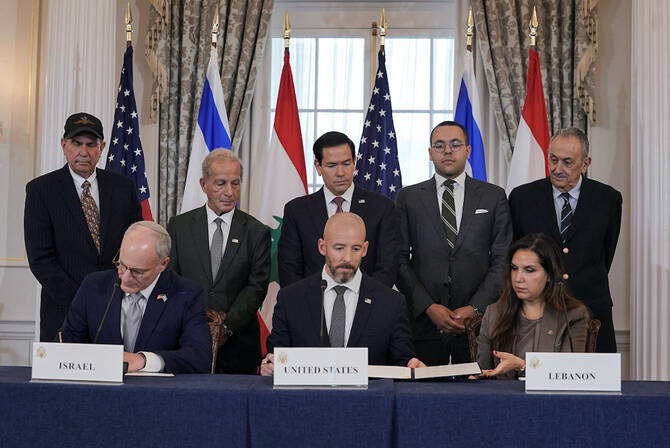
An Opening Move Toward Peace
In a development that could reshape one of the Middle East's most entrenched rivalries, Israel, Lebanon and the United States put their names to a trilateral framework agreement in Washington on Friday, June 26. The accord is designed to lay the groundwork for an eventual peace settlement between two adversaries with a long and bloody history. According to Arab News, the agreement emerged from five rounds of negotiations and arrived on the heels of weeks of renewed fighting between Israel and Hezbollah in southern Lebanon.
US Secretary of State Marco Rubio captured the cautious mood of the occasion, describing it as "the beginning of the beginning" and warning that a great deal of difficult work still lies ahead. That careful phrasing reflected a reality familiar to anyone tracking the region: framework deals open doors, but they rarely settle conflicts on their own.
Netanyahu Claims a Win
Prime Minister Benjamin Netanyahu presented the agreement as a clear gain for Israel. As Arab News reports, he emphasized that Israeli forces would remain inside the security zone in southern Lebanon, calling that outcome "a major achievement" his government fully intends to preserve. The framework also sketches out a gradual role for Lebanese forces, who are to take control of "two pilot areas," one south and one north of the Litani River.
The insistence on keeping troops in place signaled how Netanyahu intends to sell the deal at home: as a diplomatic step achieved without surrendering Israel's military posture along the border.
What the Agreement Contains
According to the reporting, the framework lays out a series of initial steps rather than a comprehensive, final settlement. Among its core elements:
- A limited Israeli military withdrawal tied to a process for disarming Hezbollah.
- A pilot handover of small zones to the Lebanese army.
- Conditions under which displaced civilians may, or may not, return home.
The contrasting language from each side captured both hope and hard bargaining. Lebanon's ambassador described the accord as "a first step on the road to restoring Lebanese sovereignty," while Israel's envoy struck a triumphant note, declaring that "Iran is out, Hezbollah is out, and the road to peace between Israel and Lebanon is in."
The Human Stakes
Hanging over the negotiations is a staggering toll. Arab News notes that the conflict has displaced more than one million Lebanese and left over 4,200 people dead, figures that underscore why even a tentative agreement drew international attention. Yet relief for civilians is not guaranteed in the near term. Netanyahu indicated that displaced residents would not immediately be permitted to return under the new terms, and he linked any further Israeli pullback to Hezbollah laying down its weapons "as long as there is a threat to the State of Israel."
Fragile Foundations
Perhaps the most significant complication is who was left out of the room. Hezbollah, excluded from the negotiations, rejected the agreement outright, a stance that casts doubt over the disarmament process at the heart of the deal. Without the participation of the very group whose weapons the framework seeks to remove, the path forward looks far from certain.
For Netanyahu, the signing nonetheless delivers a diplomatic high point to showcase domestically. But its durability will hinge on whether the disarmament steps actually advance and whether the fragile sequencing of withdrawals and handovers holds. As Rubio's measured framing makes clear, this is an opening move rather than a conclusion, and the months ahead will reveal whether the framework becomes a genuine peace or merely another pause in a long conflict.
Related on Ni4o: Netanyahu pushes to end Israel's US military aid dependence · Spanish King's World Cup Visit Signals End of Diplomatic Rift · Meloni Slams Trump's 'Unprovoked Attacks' Amid G7 Photo Row
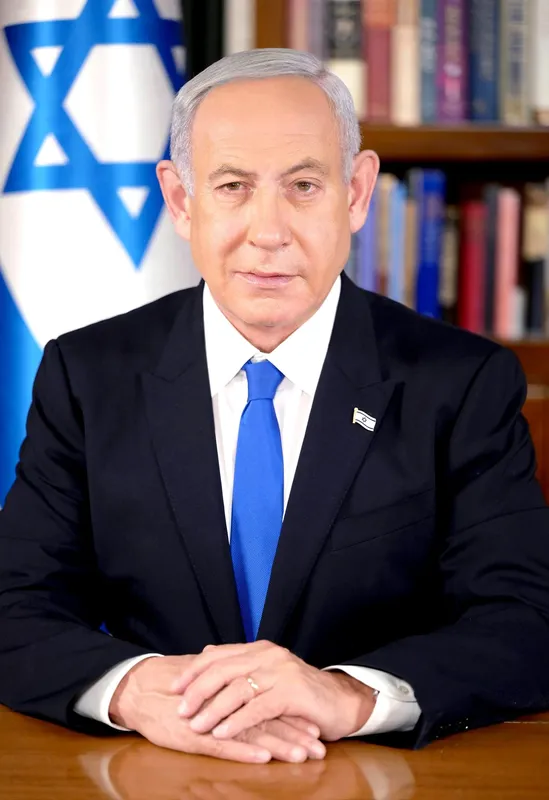 ProfileBenjamin NetanyahuPrime Minister of Israel
Related
California Senate Passes Post-Production Tax Bill; Newsom Must Act
SB 2319 cleared the California State Senate 33-5, creating a dedicated post-production tax incentive as the L.A. film industry continues to shrink.

Netanyahu Condemns West Bank Attack on NBC News Team as Settler Violence Escalates
Masked settlers assaulted an NBC News crew and a Palestinian woman in Jalud, injuring four journalists and drawing condemnation from Israel's prime minister.

Park Service Backs Trump Arch Despite Threat to DC Landmark Sightlines
A federal report endorses the proposed 250-foot gilded arch while acknowledging it will disrupt the visual integrity of dozens of historic Washington sites.