How Patrick Stewart Rescued 'Green Room' From the Brink of Collapse

Director Jeremy Saulnier revealed how Stewart's last-minute commitment to the 2015 thriller prevented a full production shutdown.
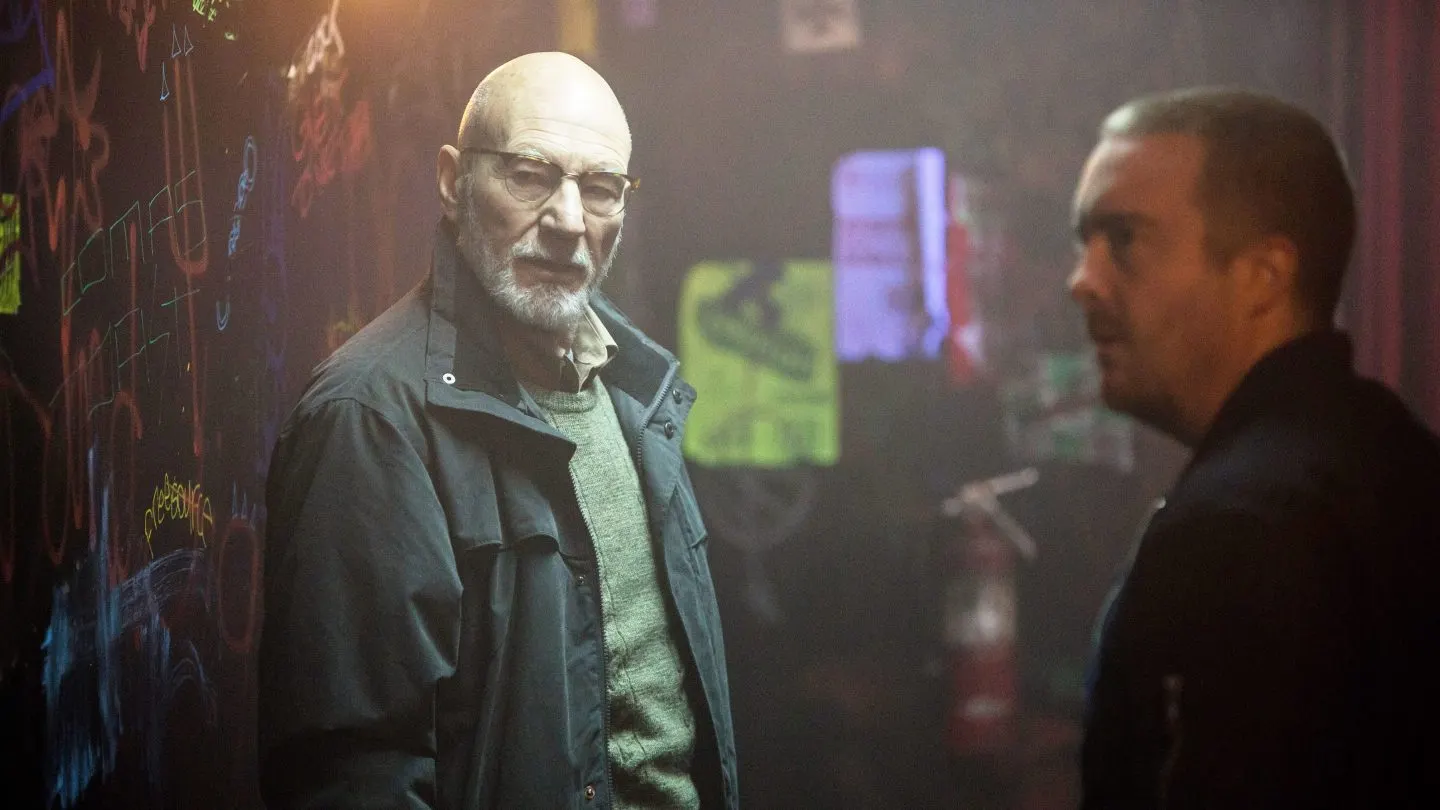
The death of Patrick Stewart has prompted an extraordinary wave of remembrance across Hollywood, but few tributes carry the particular weight of a filmmaker acknowledging that a career-defining work would simply not exist without him. At a Los Angeles screening of Green Room on Friday — timed to the film's tenth anniversary — director Jeremy Saulnier offered exactly that kind of testimony, one that illuminates something essential about how Stewart's devotion to craft extended well beyond prestige fare.
A Production on the Verge of Collapse
Saulnier, whose lean, intensely controlled filmmaking style — evident in Blue Ruin, Green Room, and Rebel Ridge — has earned him a devoted critical following, described a production in genuine crisis. Sets were already built, the clock was running, and the central role of neo-Nazi patriarch Darcy Banker remained uncast. Without a credible, commanding actor willing to carry that antagonist, the project had no path forward. As the director told the assembled crowd, according to The Hollywood Reporter, the production was "close to shutting down" when Stewart unexpectedly signaled his interest.
The image Saulnier painted — of exiting a production meeting convinced he'd be tearing sets down within days, only to receive an inquiry from one of the most recognizable actors of his generation — belongs to the stranger-than-fiction category of Hollywood lore. Within approximately a week, Saulnier was on the phone with Stewart. Shortly after that conversation, the film was greenlit. A single yes, from an actor who had every reason to decline, changed everything.
Why the Decision Mattered
What makes the story resonate beyond simple gratitude is the improbability of the match. Green Room is a brutal, unsparing siege thriller — punk rock, blood, and bleak Pacific Northwest atmosphere. Stewart, for all the range he demonstrated throughout his career, was not the obvious candidate for a role requiring him to anchor a film this raw and this deliberately unglamorous. Saulnier acknowledged as much directly, noting that Stewart "had no business doing this movie" and possessed every option to look elsewhere.
That willingness to step outside comfortable territory was, of course, a defining feature of a career that consistently defied easy categorization. Stewart brought the same considered intentionality to Green Room that he brought to the Royal Shakespeare Company stages of his early career and to the bridge of the Enterprise — an investment in the internal logic and integrity of the work, regardless of its scale or genre.
A Filmmaker's Gratitude, and a Telling Anecdote
Saulnier described Stewart as a "true gentleman" and a "kind leader" to the entire cast during production. But the most revealing detail he shared was a small one. Stewart approached the director during filming with a specific, modest request: he wanted to insert a single expletive at a particular moment in a scene. Nothing more, nothing less. When Saulnier gave his approval, he said it crystallized something important — that Stewart had fully internalized the film's aesthetic and was operating in genuine creative alignment with his director.
It is the kind of anecdote that speaks to a performer's instinct for collaboration, the quiet, unglamorous work of inhabiting a director's vision rather than imposing upon it. Saulnier was unambiguous about the stakes: Stewart, he said, is the reason he can still make films.
The Legacy He Left Behind
Patrick Stewart passed away at his Los Angeles home on Wednesday, following what his spokesperson described as a brief journey with Alzheimer's disease and Lewy body dementia. He was 86. The tributes have been voluminous and heartfelt, arriving from Ian McKellen — whose bond with Stewart was among the most celebrated in contemporary performance — alongside Hugh Jackman, Kevin Feige, William Shatner, Halle Berry, James Marsden, Minnie Driver, Rebecca Romijn, Seth MacFarlane, and many others.
Saulnier's account adds a different kind of texture to that collective portrait: not the icon of franchise cinema or Shakespearean prestige, but a man who saw a small, difficult film struggling to survive and quietly decided to save it.
 ProfilePatrick StewartActor
Related
Randy Quaid Slams Anne Hathaway Casting in Days of Thunder Sequel
Randy Quaid, who appeared in the original 1990 film, took to X to demand Nicole Kidman's return and dismiss the Hathaway announcement.

Eva Mendes' 'de Gosling' Tattoo Is the Only One She's Ever Wanted
Eva Mendes is showing off her wrist tattoo again — a small but meaningful piece of ink that carries a deep cultural significance.
Steven Spielberg's 'War of the Worlds' Returns to Streaming Amid Debate
Steven Spielberg's 'War of the Worlds' is hitting HBO Max next month, reigniting discussions on its mixed reception.