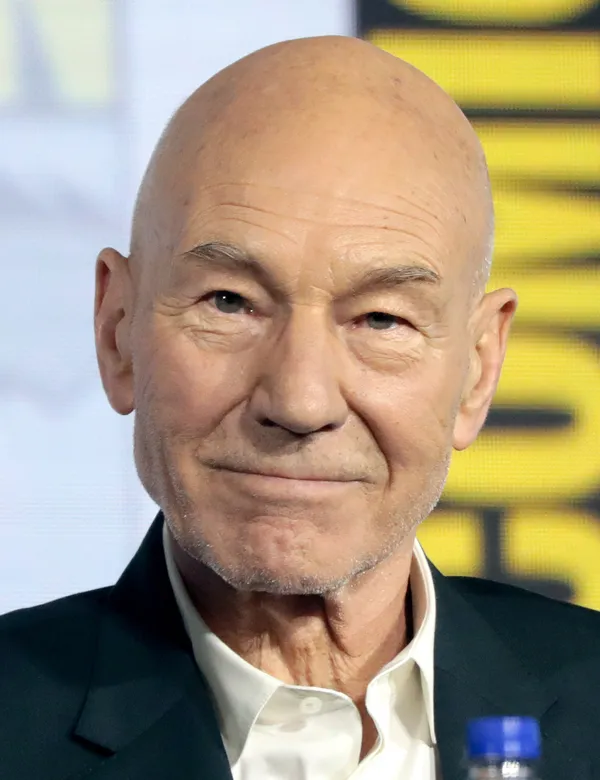
How Patrick Stewart United Shakespeare and Sci-Fi Like No One Else

Patrick Stewart's rare fusion of classical theater discipline and blockbuster genre work produced some of cinema's most enduring and deeply felt performances.

Few careers in modern entertainment have managed so elegant a negotiation between the highbrow and the popular as that of Patrick Stewart, who died this week at the age of 86. His trajectory — from the storied stages of the Royal Shakespeare Company to the bridge of the USS Enterprise and the grounds of the Xavier School for Gifted Youngsters — was not so much a compromise as a rare and illuminating synthesis.
A Classical Foundation That Hollywood Barely Noticed
Before a single studio executive knew his name, Stewart had spent the better part of two decades shaping his craft in environments that demanded the utmost from a performer. Sixteen years with the Royal Shakespeare Company, a celebrated Broadway debut alongside Ben Kingsley and Frances de la Tour in Peter Brook's landmark production of A Midsummer Night's Dream, and a sustained presence at the Royal National Theatre — these were not incidental credentials. They were the bedrock of everything that followed. Which makes it all the more remarkable that when he was cast in Star Trek: The Next Generation in 1987, the Los Angeles Times, according to The Hollywood Reporter, saw fit to describe him as an "unknown British Shakespearean actor." The hermetically sealed insularity of the Hollywood machine has rarely been more perfectly illustrated.
The Picard Years: Authority With a Human Core
What Stewart brought to Captain Jean-Luc Picard was something the role might never have found in less disciplined hands: a seamless integration of commanding presence and genuine emotional warmth. His Shakespearean training gave him an instinctive understanding of power — how to hold a room, how to modulate voice and stillness — but his working-class Yorkshire upbringing, marked by the trauma of domestic violence and a father struggling silently with what would now be recognized as PTSD, gave him an uncommon capacity for empathy. The result was a captain whose authority never felt cold.
Ian McKellen, his longtime friend and collaborator, famously urged him not to squander his prime Shakespeare years on a television spin-off. Stewart took the job anyway, reassured by industry whispers that the show would be lucky to survive a single season. It ran for 178 episodes across seven seasons, peaked at 12 million regular viewers, drew over 30 million for its 1994 finale, spawned four feature films, and ultimately returned as Star Trek: Picard for an additional three-season run. Well-made plans, the spacetime continuum notwithstanding.
The X-Men and the Legitimacy of Genre
If Picard established Stewart's populist credentials, Professor Charles Xavier confirmed that his particular gifts — moral gravitas, linguistic precision, a naturalistic command of psychological interiority — could anchor an entirely different kind of franchise. When the first X-Men film arrived in 2000, the superhero genre was still finding its commercial and cultural footing. Casting Stewart alongside McKellen, who took on the role of the ideologically opposed Magneto, lent those early films a seriousness of purpose that proved decisive. Across seven features between 2000 and 2017, the franchise grossed a collective $3.32 billion.
Yet it was the final chapter that produced the finest work. James Mangold's Logan — Western in spirit, elegiac in tone — gave Stewart the opportunity to play Xavier in genuine decline, his telepathic abilities destabilized by neurological disease, his dignity worn but unbroken. Opposite Hugh Jackman's exhausted Wolverine, Stewart delivered a performance of striking pathos, one that transformed what might have been a conventional superhero farewell into something closer to a genuinely moving character study. It is the kind of work that only comes from decades of knowing exactly what a scene needs — and having the technical mastery to provide it.
A Career That Defied Easy Categories
What made Stewart's professional life so unusual — and so instructive — was his refusal to accept the cultural hierarchies that tend to govern an actor's choices. The prestige of the stage and the reach of global pop culture are rarely thought to occupy the same space, but Stewart inhabited both with equal conviction. James McAvoy, who eventually took on the role of younger Xavier, even pitched a Young Picard Star Trek series — a concept that speaks directly to the legacy Stewart built. He leaves behind not just a body of work, but a template for what it means to take every room seriously, regardless of the size of the screen.
 ProfilePatrick StewartActor
Related

Randy Quaid Slams Anne Hathaway Casting in Days of Thunder Sequel
Randy Quaid, who appeared in the original 1990 film, took to X to demand Nicole Kidman's return and dismiss the Hathaway announcement.

Eva Mendes' 'de Gosling' Tattoo Is the Only One She's Ever Wanted
Eva Mendes is showing off her wrist tattoo again — a small but meaningful piece of ink that carries a deep cultural significance.
Steven Spielberg's 'War of the Worlds' Returns to Streaming Amid Debate
Steven Spielberg's 'War of the Worlds' is hitting HBO Max next month, reigniting discussions on its mixed reception.