How Patrick Stewart Brought Shakespearean Craft to Sci-Fi and Beyond

From the bridge of the Enterprise to the halls of Xavier's school, Patrick Stewart redefined what classical training could achieve in popular cinema.

Few careers in modern entertainment illustrate so vividly what a rigorous theatrical education can yield when transplanted into the commercial soil of Hollywood. Patrick Stewart, who passed away at the age of 86, spent decades proving that Shakespearean discipline was not merely an ornament but a genuine competitive advantage — one that allowed him to inhabit roles of extraordinary range with authority and specificity.
The RSC Foundation
Before Stewart became a household name in American living rooms, he had established himself as one of the more formidable presences in British classical theatre. As a member of the Royal Shakespeare Company's celebrated 1970s generation, he developed the technical precision and physical command that would later define his screen persona. A notable early television turn came in the form of the calculating Sejanus in I, Claudius, a performance that placed him opposite Derek Jacobi and demonstrated his instinct for portraying menace beneath a veneer of civility. According to The Guardian Culture, no actor of his era more persuasively demonstrated the commercial viability of that blue-chip classical background. The way Stewart fused those two worlds — Shakespeare and science fiction — remains genuinely singular.
The Picard Phenomenon
When Stewart was cast as Jean-Luc Picard in Star Trek: The Next Generation in 1987, the decision initially struck some observers as unconventional. William Shatner's Kirk had been cut from the cloth of an all-American romantic hero — vigorous, instinctive, broadly appealing. Picard was something more intricate: cerebral, European in temperament, his authority rooted in considered judgment rather than physical daring. The shaved head and the French name gave him a quality that felt cosmopolitan within the franchise's increasingly diverse galactic community. The series ran until 1994, generated four feature films, and eventually led to the streaming continuation Star Trek: Picard — a full arc that demonstrated how thoroughly Stewart had made the character his own.
It is worth noting that even before Next Generation, Stewart had already explored speculative fiction in creditable company. He appeared in John Boorman's mythologically rich Excalibur in 1981 and turned up in David Lynch's idiosyncratic adaptation of Frank Herbert's Dune in 1984, playing Gurney Halleck. These were not incidental credits; they suggested a genuine appetite for ambitious, world-building projects.
Charles Xavier and the Marvel Era
With his cultural capital considerably enriched by Star Trek, Stewart made the transition into the Marvel universe at the precise moment the superhero genre began reshaping the global box office. As Professor Charles Xavier — the wheelchair-bound founder and moral anchor of the X-Men — he brought the kind of weighty gravitas that the material needed to be taken seriously. The role also reunited him on screen with Ian McKellen, another alumnus of the RSC tradition, playing the antagonist Magneto. There was something almost self-aware and playful in watching two titans of British theatre deliver genre dialogue with absolute conviction. Xavier, as mentor and reluctant patriarch to a community of outcasts, gave Stewart ample opportunity to channel the Shakespearean archetype of the wise, exiled king.
The Villain Turn That Revealed Something Else
For all the prestige those franchises brought him, Stewart's most revealing late-career performance may well have come in Jeremy Saulnier's brutal 2015 thriller Green Room, where he played a neo-Nazi bar owner presiding over a siege with cold-blooded pragmatism. Here the sonorous voice carried a nasal threat rather than reassurance, and the patrician face became something leonine and dangerous. It was a reminder that his instrument was far more flexible than either Picard or Xavier had required.
Stewart's legacy rests not only on the iconic roles but on what those roles demonstrated about the craft beneath them — a lesson that continues to resonate across the industry.
Related on Ni4o: James McAvoy Pitched a Young Picard Star Trek Series He Nearly Made
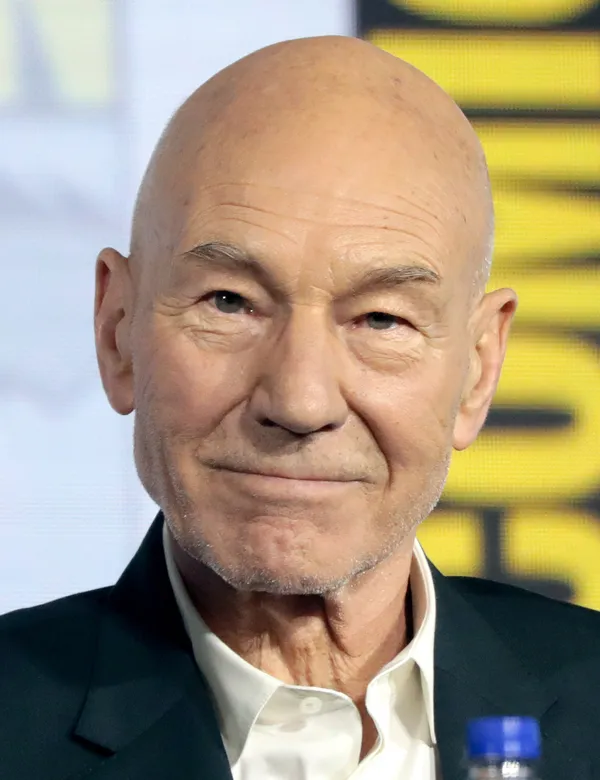 ProfilePatrick StewartActor
Related
Randy Quaid Slams Anne Hathaway Casting in Days of Thunder Sequel
Randy Quaid, who appeared in the original 1990 film, took to X to demand Nicole Kidman's return and dismiss the Hathaway announcement.

Eva Mendes' 'de Gosling' Tattoo Is the Only One She's Ever Wanted
Eva Mendes is showing off her wrist tattoo again — a small but meaningful piece of ink that carries a deep cultural significance.
Steven Spielberg's 'War of the Worlds' Returns to Streaming Amid Debate
Steven Spielberg's 'War of the Worlds' is hitting HBO Max next month, reigniting discussions on its mixed reception.