How Lanterns Is Building James Gunn's DCU Toward Its Cosmic Endgame

A year after Superman reset the DC Universe, the HBO series Lanterns is quietly laying the groundwork for something far larger in Gods and Monsters.
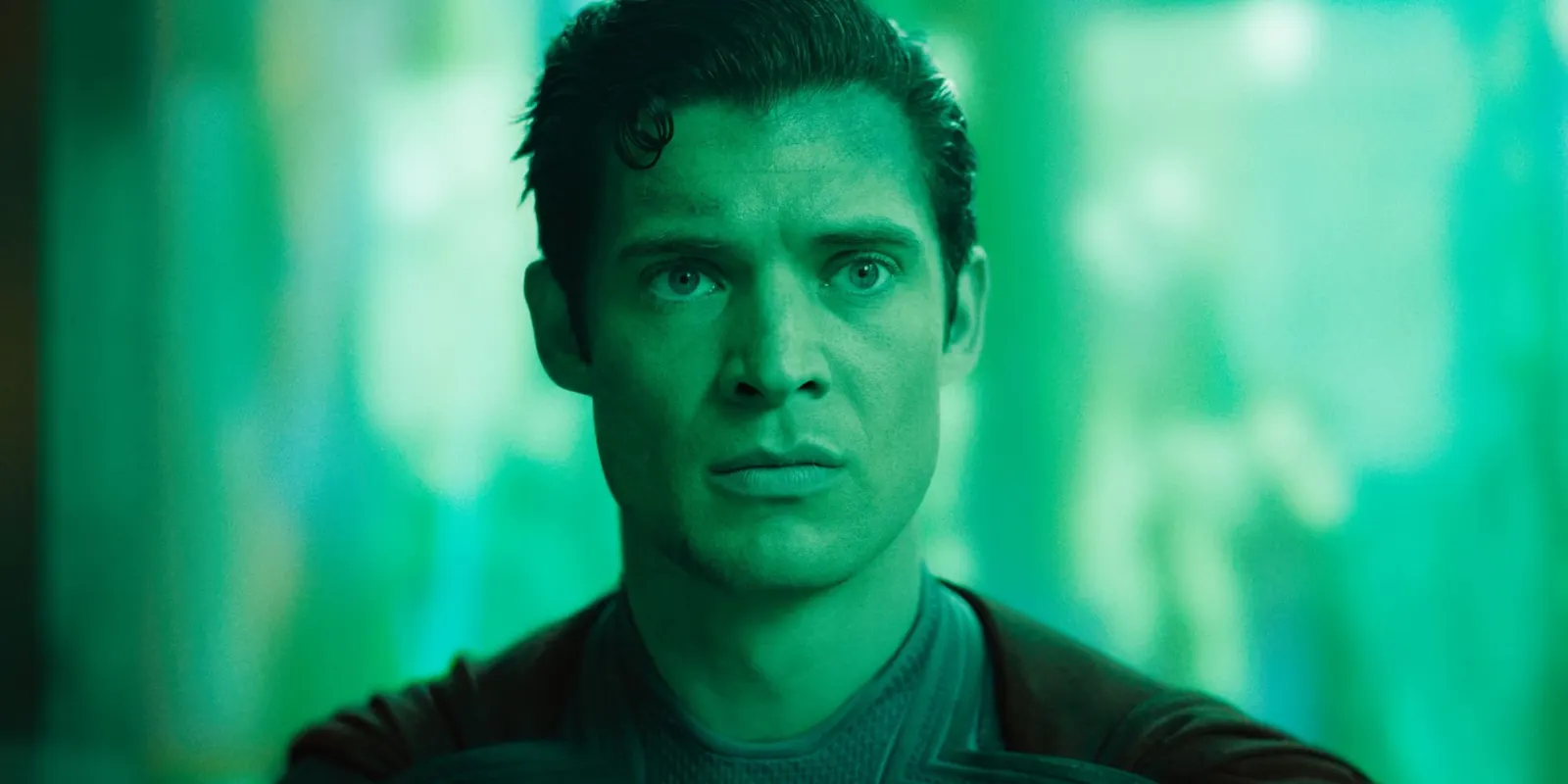
Just over a year removed from the release of James Gunn's Superman — a film that, as explored in our breakdown of its defining moments, announced an ambitious and cohesive creative vision for a rebooted DC Universe — the new HBO series Lanterns appears to be doing something more consequential than telling a contained alien murder mystery. It is beginning to sketch the architecture of a much grander narrative, one that could define the first chapter of Gunn's DCU: the still-unfolding Gods and Monsters era.
A True Detective Blueprint With Cosmic Ambitions
Starring Kyle Chandler as veteran Green Lantern Hal Jordan and Aaron Pierre as trainee John Stewart, Lanterns opens with a deliberate, procedural cadence reminiscent of prestige crime television. The two are investigating a string of alien killings in the rural Nebraska town of Rushville — a location, it turns out, that carries no small amount of cosmic weight. Rushville is where the dying Green Lantern Abin Sur crash-landed in 1986, ultimately passing his ring to Hal Jordan and effectively drawing Earth into the orbit of the Green Lantern Corps. That the show treats this geography as mythologically significant is one of its more elegant early choices, grounding an interstellar narrative in a specific, unglamorous American landscape, according to ScreenRant.
The premiere wastes little time in establishing its central mysteries across two timelines. In 2016, Hal and John investigate extraterrestrial killings while encountering a heavily armed militia — led by a man named William Macon — that appears to have been organized expressly to repel non-human threats. A decade later, in 2026, that slow burn takes a shocking turn: Hal Jordan turns up dead, frozen, and stripped of his ring. The structural audacity of introducing and then apparently killing your lead within a single episode — a creative decision the showrunner has described as genuinely frightening to commit to — signals that Lanterns is not interested in playing it safe.
Earth's Hidden Cosmic Significance
What elevates Lanterns beyond its immediate mystery, however, is a piece of mythology Hal quietly drops during his training of John Stewart. He reveals that Abin Sur's crash was almost certainly no accident, that the Guardians of the Universe had expressly prohibited Green Lanterns from approaching Earth, and that a human joining their ranks was categorically unwanted. Hal's conclusion — that something has always been coming, which is why he has never stopped monitoring Rushville — functions simultaneously as personal character detail and as a breadcrumb pointing toward a much larger story.
The suggestion that Earth holds some hidden cosmic significance, deliberately concealed from or ignored by the wider universe, maps neatly onto existing DC Comics mythology while also providing Gunn's shared universe with a compelling through-line. The DCU has already established that Earth is home to metahumans, government agencies wrestling with the geopolitics of superpowers, and a public growing increasingly uneasy with non-human beings in their midst. If Lanterns ends its first season by answering the immediate Nebraska mystery while simultaneously raising new questions about why Earth matters cosmically, it could serve as the project that genuinely opens Gods and Monsters into something epic in scope.
The Anti-Alien Thread Connecting the DCU
There is also a social and political dimension here that resonates with threads already running through the DCU. Macon's militia — organized around a worldview that Earth belongs exclusively to those born on it — is an extreme articulation of anxieties that Superman and Peacemaker have each gestured toward, particularly through organizations like ARGUS and its director Rick Flag Sr. That suspicion of the extraterrestrial does not stop at Nebraska; it has obvious implications for figures like Superman and Supergirl, whose alien origins make them vulnerable to exactly this kind of sentiment. Jennifer Holland's praise for Man of Tomorrow suggests those actors are deeply invested in where Gunn is taking these characters — and Lanterns may be one reason why.
Lanterns has already made a significant impression on HBO's Sunday night lineup, and that platform visibility matters. If the series succeeds both as a slow-burn thriller and as a structural pillar for a wider universe, it would represent Gunn achieving something rare in franchise filmmaking: a genuinely serialized mythology built on quality rather than volume.
 ProfileJames GunnDirector & studio executive
Related

Randy Quaid Slams Anne Hathaway Casting in Days of Thunder Sequel
Randy Quaid, who appeared in the original 1990 film, took to X to demand Nicole Kidman's return and dismiss the Hathaway announcement.

Eva Mendes' 'de Gosling' Tattoo Is the Only One She's Ever Wanted
Eva Mendes is showing off her wrist tattoo again — a small but meaningful piece of ink that carries a deep cultural significance.

Steven Spielberg's 'War of the Worlds' Returns to Streaming Amid Debate
Steven Spielberg's 'War of the Worlds' is hitting HBO Max next month, reigniting discussions on its mixed reception.