Gadi Eisenkot Appointed to Form Israeli Government Amid Political Stalemate

Israel faces a political impasse after election setbacks for Netanyahu. Gadi Eisenkot is tasked with forming a government, with challenges ahead.
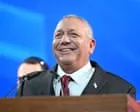
Following a tumultuous election cycle that left Israeli Prime Minister Benjamin Netanyahu's coalition without a clear majority, the country's president has appointed Gadi Eisenkot, a key rival and leader of the Yashar party, to attempt to form a new government. This decision comes after the Knesset has remained deadlocked since Netanyahu's coalition lost its parliamentary edge in the election held on October 27.
Eisenkot's Mandate
Isaac Herzog, the president of Israel, officially informed Eisenkot of his selection on Saturday evening. The formal appointment will occur during an official ceremony at the presidential residence in Jerusalem. In response, Eisenkot expressed his dedication to forming a national emergency government and emphasized the critical need for unity in a time of political crisis.
Political Landscape
Netanyahu's coalition emerged as the largest bloc in parliament with 53 seats. However, Eisenkot's opposition camp secured 48 seats, resulting in a persistent impasse within the Knesset, which is composed of 120 total seats. The endorsement of Arab-majority political lists during consultations with Herzog may prove crucial; these parties could potentially act as kingmakers, although it remains uncertain if Eisenkot's bloc will welcome their support.
Eisenkot is not new to the political scene; from 2015 to 2019, he served as Israel's military chief of staff. He is navigating a landscape marked by Netanyahu’s increasingly divisive leadership style, which has steered Israeli politics to the right. Eisenkot has made it clear that his priorities include fostering unity among Israelis and addressing the tensions arising from the government's handling of extremist settlers in the West Bank.
Challenges Ahead
If Eisenkot successfully forms a coalition, he would replace Netanyahu as prime minister, a significant shift given Netanyahu’s tenure as Israel’s longest-serving leader. Eisenkot has until the end of his 28-day mandate to gather the necessary 61 votes to establish a government. Should he fail, Herzog may grant a 14-day extension, after which the mandate would be offered to another candidate.
The stakes are high for both leaders. Another failure to establish a functioning government could lead to fresh elections, a situation that has already plagued Israel, which conducted five elections between 2019 and 2022 due to repeated deadlocks. Given the current political climate, the potential for renewed electoral turmoil remains ever-present.
Eisenkot's Strategic Vision
While Eisenkot aims to adopt a more unifying approach, his strategy does not lean toward concessions regarding a Palestinian state. He has expressed strong opposition to such a proposition while calling for decisive action against Hamas and claiming that the current government has contributed to a rise in violence against Palestinians. This stance underscores his dedication to maintaining security priorities, aligning with his previous military leadership experience.
In a related context, Netanyahu has faced fallout from his administration’s approach to military aid and foreign diplomacy. His recent efforts, including a push to reduce reliance on U.S. military support, have sparked significant debate both domestically and internationally. Meanwhile, Netanyahu continues to address criticisms regarding his administration's handling of violence in the West Bank, emphasizing the complexities facing the nation.
As the political landscape evolves, all eyes will be on Eisenkot as he embarks on this critical endeavor. The outcomes of his efforts may redefine Israeli governance and influence key decisions surrounding security and foreign policy.
For more insights, explore how Netanyahu's administration has navigated recent challenges, including allegations of settler violence and responses to international criticism.
Related on Ni4o: Netanyahu hails Israel-Lebanon framework deal as historic · Netanyahu pushes to end Israel's US military aid dependence · Netanyahu Criticizes NYC Mayor for War Criminal Remarks
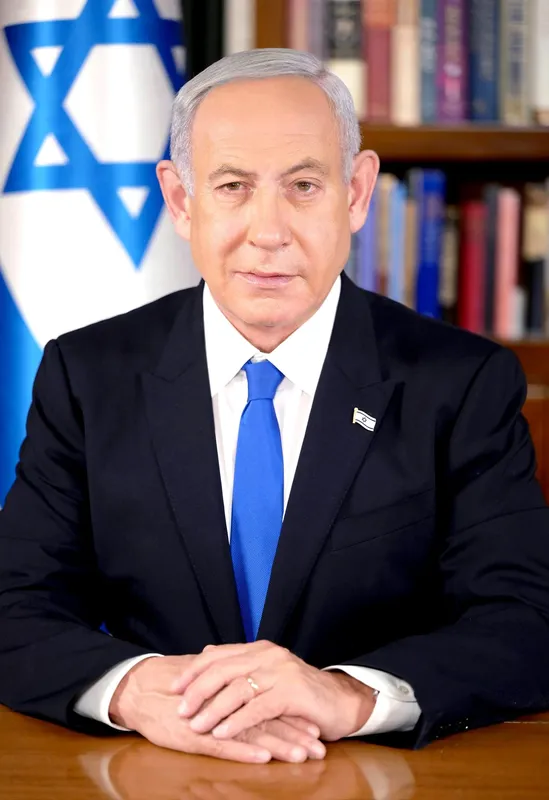 ProfileBenjamin NetanyahuPrime Minister of Israel
Related
California Senate Passes Post-Production Tax Bill; Newsom Must Act
SB 2319 cleared the California State Senate 33-5, creating a dedicated post-production tax incentive as the L.A. film industry continues to shrink.

Netanyahu Condemns West Bank Attack on NBC News Team as Settler Violence Escalates
Masked settlers assaulted an NBC News crew and a Palestinian woman in Jalud, injuring four journalists and drawing condemnation from Israel's prime minister.

Park Service Backs Trump Arch Despite Threat to DC Landmark Sightlines
A federal report endorses the proposed 250-foot gilded arch while acknowledging it will disrupt the visual integrity of dozens of historic Washington sites.