Eisenkot Charges Netanyahu With Running 'Racist' Campaign Against Arab Israelis

Prime ministerial hopeful Gadi Eisenkot publicly accused caretaker premier Netanyahu of deliberately stoking anti-Arab sentiment for political gain.
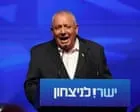
Prime ministerial hopeful Gadi Eisenkot levelled a pointed accusation against caretaker premier Benjamin Netanyahu on Friday, charging him with orchestrating a "racist" campaign of delegitimisation against Israel's Arab minority. The rebuke, reported by The Guardian World, is notably uncommon coming from a prominent Jewish political leader — and it arrives at a critical moment in Israeli coalition negotiations.
The Accusation and Its Context
Writing on X, Eisenkot stated that Arab citizens of Israel are "an integral part of the Israeli story" and accused Netanyahu and his inner circle of waging an "aggressive campaign of delegitimisation" against that community for political purposes. He argued that collectively vilifying Arab Israelis represented "a profound violation of the principles of civic responsibility."
The remarks came in direct response to efforts by Netanyahu to cast Arab lawmakers in a damaging light by drawing associations between them and Hamas — a line of attack Eisenkot described as neither legitimate nor acceptable. Netanyahu and his allies have pressed Arab party leaders to formally label Hamas a "terror organisation" following its October 7, 2023 attack on Israel. While all Arab party leaders have condemned the attack — an assault that also killed Arab Israelis — they have resisted adopting Netanyahu's specific framing.
Netanyahu's Rhetoric Toward Arab Parties
Netanyahu's campaign against Arab political representation has been multifaceted. Beyond the Hamas-linkage accusations, he has made repeated allegations of electoral fraud against Arab-majority parties, claims that Israeli electoral authorities have dismissed. In a recent speech, he alleged that the two major Arab lists — Ra'am and the Joint List — sought to establish either an "Islamic state" or a "nationalist Palestinian state," despite Ra'am's leader Mansour Abbas having previously acknowledged Israel's Jewish character.
The confrontation reached a particularly sharp moment when national security minister Itamar Ben Gvir publicly heckled Joint List leader Yousef Jabareen during his parliamentary oath, accusing him of loyalty to Hamas. This pattern of conduct reflects a broader posture from Netanyahu that critics say mirrors the kind of inflammatory politics he has deployed in other domestic and international contexts. Observers tracking Netanyahu's advocacy for citizenship revocation over IDF criticism have noted a consistent tendency to challenge political legitimacy as a tactical instrument.
The Coalition Stakes
The dispute carries real weight beyond political rhetoric. Ra'am and the Joint List combined won 19 seats in last month's election — nearly one-sixth of Israel's 120-seat Knesset — and both parties backed Eisenkot's candidacy when President Isaac Herzog tasked him with forming a government. That recommendation gives Arab parties significant potential influence as kingmakers in any emerging coalition.
However, Eisenkot faces a significant constraint from within his own prospective alliance. Avigdor Lieberman, one of his right-wing partners, has explicitly stated he will withdraw from any coalition that includes Arab Israeli parties. That condition places Eisenkot in a difficult position: defending Arab Israelis' civic standing publicly while navigating a coalition arithmetic that may require their support.
Eisenkot has 28 days to assemble a viable government, with the option of requesting a 14-day extension if needed. Should he fall short, the mandate would likely revert to Netanyahu — a scenario that lends urgency to every political calculation being made in Jerusalem right now.
A Rare Line in Israeli Politics
What distinguishes Eisenkot's statement is not merely its content but its directness. Israeli political leaders rarely place themselves so squarely on the side of Arab citizens against a rival's rhetoric. His declaration — that he "will not allow" entire communities to be maligned — represents a strikingly clear boundary at a moment when Israeli politics remain deeply fractured.
Netanyahu, meanwhile, continues to shape the political battlefield in ways that extend well beyond domestic discourse. From pushing to reduce Israel's dependence on US military aid to navigating international frameworks, the outgoing premier remains a dominant force even as his political future hinges on Eisenkot's success or failure in the coming weeks.
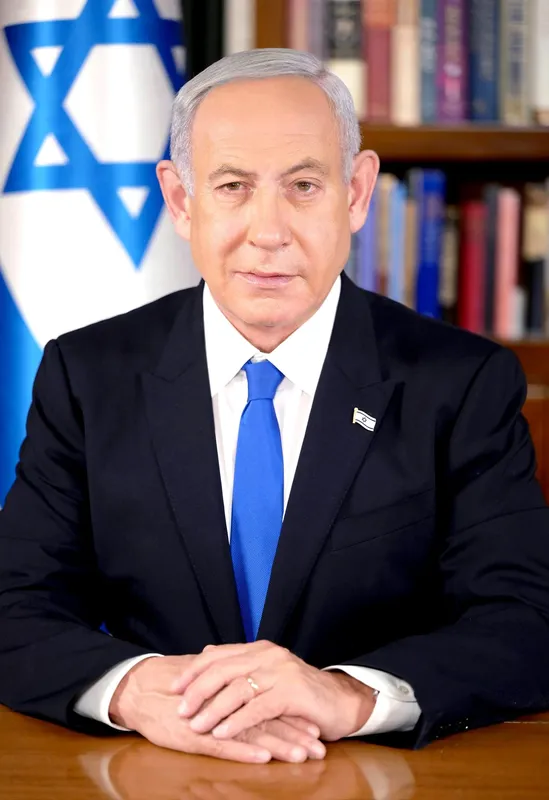 ProfileBenjamin NetanyahuPrime Minister of Israel
Related
California Senate Passes Post-Production Tax Bill; Newsom Must Act
SB 2319 cleared the California State Senate 33-5, creating a dedicated post-production tax incentive as the L.A. film industry continues to shrink.

Netanyahu Condemns West Bank Attack on NBC News Team as Settler Violence Escalates
Masked settlers assaulted an NBC News crew and a Palestinian woman in Jalud, injuring four journalists and drawing condemnation from Israel's prime minister.

Park Service Backs Trump Arch Despite Threat to DC Landmark Sightlines
A federal report endorses the proposed 250-foot gilded arch while acknowledging it will disrupt the visual integrity of dozens of historic Washington sites.