Business
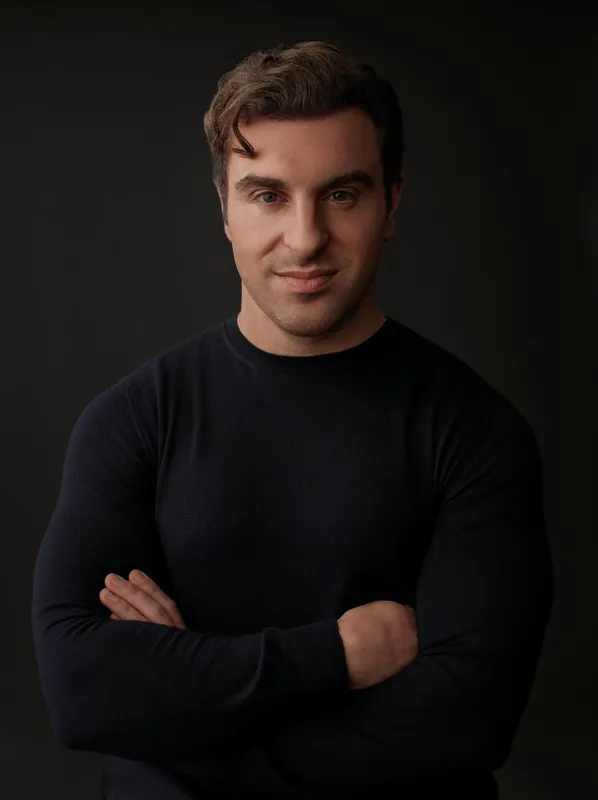
Andreessen's Pentagon Role Raises Conflict-of-Interest Questions
Marc Andreessen's appointment to the Defense Policy Board draws scrutiny over shared investments between a16z and a Trump-linked venture capital fund.

Tech entrepreneur, web browser pioneer, and venture capitalist
Marc Lowell Andreessen is an American entrepreneur, software engineer, and venture capitalist who played a pivotal role in making the World Wide Web accessible to ordinary people and who later became one of Silicon Valley's most influential investors. Born in Cedar Falls, Iowa, in 1971 and raised in rural Wisconsin, he developed an early interest in computers and taught himself to program as a child, an aptitude that would shape the entire arc of his career.
While a student at the University of Illinois at Urbana-Champaign, Andreessen worked at the National Center for Supercomputing Applications, where he co-created Mosaic, a graphical web browser. Earlier ways of accessing the internet were largely text-based and technically demanding, but Mosaic introduced an intuitive interface capable of displaying images alongside text, making the web approachable for non-experts. The browser spread quickly and is widely credited with helping ignite the popular explosion of the internet in the mid-1990s.
Building on this success, Andreessen co-founded Netscape Communications, which released the Netscape Navigator browser and rapidly became one of the defining companies of the early commercial internet. Netscape's initial public offering in 1995 was a watershed event that helped trigger the dot-com boom and turned Andreessen into a prominent symbol of the new internet economy while he was still in his twenties. Although Netscape eventually lost ground in the so-called browser wars against larger competitors, its influence on web standards and internet culture was profound, and the company was later acquired.
After Netscape, Andreessen continued to build companies, co-founding Loudcloud, which evolved into the software firm Opsware and was eventually sold to Hewlett-Packard, as well as the social networking platform Ning. These ventures deepened his experience as an operator and gave him insight into both the technical and business challenges of scaling technology companies. Drawing on this background, he increasingly turned his attention to funding the next generation of startups.
In 2009 Andreessen co-founded the venture capital firm Andreessen Horowitz, commonly known as a16z, together with his longtime business partner Ben Horowitz. The firm grew into one of the most prominent and well-capitalized investors in the technology industry, backing numerous high-profile companies across software, consumer internet, financial technology, cryptocurrency, biotechnology, and artificial intelligence. Andreessen became known for a distinctive investment philosophy and for actively championing the transformative potential of software, encapsulated in his widely quoted argument that software was reshaping entire industries.
Beyond his investments, Andreessen has become an outspoken commentator on technology, economics, and innovation, sharing strongly held views on the role of technology in driving progress and prosperity. His essays and public statements have generated considerable discussion and, at times, controversy, reflecting his status as a leading voice in debates about the direction of the tech industry. Through his writing and his firm's portfolio, he has helped shape narratives about where technology is headed.
Few individuals can claim to have influenced the internet era as directly as Andreessen, first as a builder of the tools that brought the web to the masses and later as a financier of the companies defining its future. His journey from a self-taught programmer in the Midwest to a central figure in Silicon Valley illustrates the enduring link between technical creativity and entrepreneurial ambition, and his continued investing keeps him at the heart of the industry he helped create.
Marc Andreessen's appointment to the Defense Policy Board draws scrutiny over shared investments between a16z and a Trump-linked venture capital fund.

Marc Andreessen drew a line between bureaucratic AI red tape and useful safety rules, arguing the right kind of regulation makes complex systems usable at scale.
FAQ
Marc Andreessen was born on July 9, 1971, which makes 55 years old.
Marc Andreessen is from United States.
Marc Andreessen is best known as Engineer, Computer scientist, Entrepreneur. Notable work includes Co-creating Mosaic and Netscape, founding Andreessen Horowitz, venture capital.
Yes — Marc Andreessen is on X (Twitter), Facebook. You can find the official links on this page.