Xi's Anti-Corruption Drive Takes Center Stage at Key Party Plenum

As China's top officials convene for the fifth plenum, Xi Jinping's years-long campaign against graft faces renewed scrutiny over its true purpose.
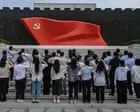
China's ruling Communist Party is holding one of its most consequential leadership gatherings of the current political cycle, with internal discipline and anti-corruption measures dominating the agenda. The meeting arrives against a backdrop of sweeping purges that have reached the very top of the party and military hierarchies, prompting analysts to ask whether the campaign is primarily about rooting out graft or consolidating power.
A Campaign That Shows No Sign of Slowing
When Xi Jinping assumed the leadership of the Chinese Communist Party in 2012, he made the elimination of corruption a defining pledge of his tenure. Over a decade later, that drive has only intensified. According to The Guardian World, disciplinary authorities launched investigations into more than one million individuals last year alone, among them over a hundred officials holding ministerial or provincial rank. The numbers underscore a campaign without an obvious end point.
The fifth plenum — the fifth in a series of seven gatherings that occur within each five-year cycle between party congresses — convened this week with a stated focus on what Chinese state media described as advancing the party's full and rigorous self-governance. In the coded language of CCP internal affairs, that phrase encompasses discipline, loyalty, and anti-corruption enforcement simultaneously.
Where Disloyalty Ends and Corruption Begins
For outside observers, the near-universal conviction rate in disciplinary cases raises a persistent question: are the targets genuinely corrupt, or are they political rivals being removed under the cover of an anti-graft mandate? Kerry Brown, director of the Lau China Institute at King's College London, argued that in Xi's framework the distinction may not matter much. Corruption, in the CCP's expanded definition, encompasses not just financial misconduct but what the party terms "spiritual corruption" — a category that can include political disloyalty itself.
Neil Thomas of the Asia Society noted that Xi has demonstrably reduced certain forms of corruption while tightening his personal hold on the party, but that structural incentives for self-dealing remain embedded in any large authoritarian bureaucracy governing 1.4 billion people. Xi's response, Thomas observed, has been to institutionalize anti-corruption work as a permanent governing instrument rather than a time-limited campaign with a defined finish line.
High-Profile Purges Reach the Military Summit
The stakes of the current plenum are thrown into sharper relief by a string of recent, high-profile removals. Zhang Youxia, China's most senior general and the second-ranking figure in the military hierarchy after Xi himself, was placed under investigation earlier this year and subsequently expelled from the party. His removal has left the Central Military Commission — normally a seven-member body — reduced to just two members: Xi and the commission's own disciplinary chief.
Other notable casualties include Ma Xingrui, the former party secretary for Xinjiang, and Huang Qifan, the former mayor of Chongqing. Huang's fall is particularly striking given that he had long been regarded as a consummate political survivor, having navigated the turbulent scandals surrounding Bo Xilai — Xi's one-time rival, now serving a life sentence — in the early 2010s without lasting consequence. That shield no longer holds.
Consolidation Ahead of the 2026 Party Congress
The timing of this plenum adds another layer of significance. It is widely expected to be the last major substantive gathering before the 21st Party Congress next year, at which a new Central Committee will be selected and Xi is broadly anticipated to be confirmed for a fourth term as party chief. Removing potential sources of instability before that transition gives the current wave of investigations a clear political logic, independent of any genuine anti-corruption rationale.
Brown put it plainly: corruption investigations are "the most easy and natural tool by which to enforce unity and discipline." As Xi has shown in his diplomatic engagements abroad, projecting confidence and control is central to his governing identity — and the plenum is as much about signaling internal command as it is about addressing actual malfeasance.
Xi himself has warned in previous years that the party risks being "eliminated by history" if it cannot govern itself effectively. Whether the vehicle is genuine reform or political consolidation, the machinery of discipline shows no sign of stopping.
Related on Ni4o: Xi Hosts Hun Sen to Deepen China-Cambodia Ties · Xi Jinping Offers Aid to Venezuela Following Devastating Earthquakes
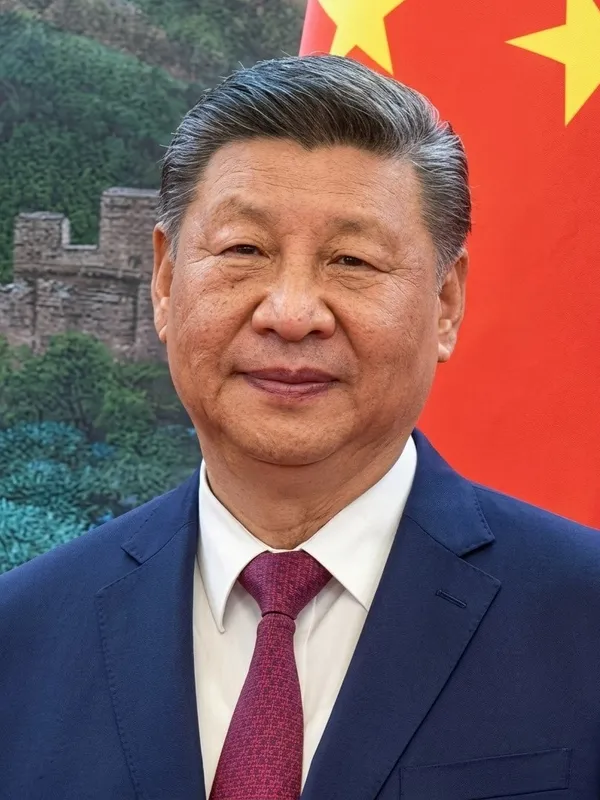 ProfileXi JinpingGeneral Secretary of the Communist Party of China
Related
California Senate Passes Post-Production Tax Bill; Newsom Must Act
SB 2319 cleared the California State Senate 33-5, creating a dedicated post-production tax incentive as the L.A. film industry continues to shrink.

Netanyahu Condemns West Bank Attack on NBC News Team as Settler Violence Escalates
Masked settlers assaulted an NBC News crew and a Palestinian woman in Jalud, injuring four journalists and drawing condemnation from Israel's prime minister.
Park Service Backs Trump Arch Despite Threat to DC Landmark Sightlines
A federal report endorses the proposed 250-foot gilded arch while acknowledging it will disrupt the visual integrity of dozens of historic Washington sites.