Trump-Xi Summit Ends With No AI Agreement, Drawing Bipartisan Criticism

The three-day Washington summit between Trump and Xi produced little beyond a trade truce extension, leaving hopes for an AI framework unfulfilled.
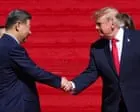
Donald Trump and Chinese President Xi Jinping concluded their three-day Washington summit on Friday having produced no meaningful agreement to govern the accelerating artificial intelligence competition between the two superpowers. Critics from both parties swiftly characterized the gathering as a missed opportunity of historic proportions.
A Summit Heavy on Ceremony, Light on Substance
The visit — Xi's first to the White House in more than a decade — was defined by elaborate pageantry rather than policy breakthroughs, according to The Guardian Business. The two leaders toured the National Archives together, where Trump drew an informal comparison between America's 250-year constitutional history and China's 6,000 years of recorded civilization. Their most concrete joint announcement was a modest two-month extension of an existing trade truce, a development Trump described in upbeat terms for American farmers without offering specifics.
The summit also carried a degree of symbolic weight as Trump broke with diplomatic tradition by personally greeting Xi at Joint Base Andrews and giving him a tour of White House renovation projects, including a ballroom construction site and a new helicopter landing pad.
AI Framework Hopes Go Unrealized
Perhaps the summit's most glaring omission was any coordinated framework on artificial intelligence. Tech industry leaders including Nvidia's Jensen Huang, Apple's Tim Cook, AMD's Lisa Su, and Elon Musk attended a White House state dinner on Thursday evening, yet no substantive AI commitments emerged from either side. Notably absent were their Chinese counterparts from companies such as DeepSeek, Moonshot, or Alibaba.
Xi publicly acknowledged that both nations bear a "responsibility to develop and manage AI for good" and affirmed the principle of keeping AI development "under human control." Trump, for his part, appeared more interested in promoting his preferred terminology — pushing to rebrand the technology as "super intelligence" — and later claimed on social media that Xi had expressed approval of the phrase.
Rep. Ro Khanna, the ranking Democrat on the House Select Committee on China, was direct in his assessment: he argued that even a modest agreement establishing technical working groups between American and Chinese AI firms would have been achievable and would have demonstrated genuine statesmanship. He indicated he believed Xi would have been receptive to such a proposal.
Analysts: Expectations Were Low and Still Not Met
Foreign policy analysts offered similarly blunt evaluations. Jonathan Czin, a fellow at the Brookings Institution's China Center, described the summit as "theatre of the absurd" — a gathering that failed to rise to the weight of the technological moment both countries are navigating. Czin noted that both leaders are in their seventies and eighties and may have limited direct familiarity with AI systems, yet the trajectory of that technology rests substantially on decisions made at their level. He added that the meeting "managed to underwhelm" even his already low expectations.
Senate Democrats echoed those concerns, arguing that Trump did not use the summit to secure meaningful concessions or commitments from Beijing on any number of fronts.
Broader Context: Allies, Rivals, and the Press
The summit also drew attention for what it revealed about the current administration's diplomatic calculus. The red-carpet treatment extended to Xi stood in notable contrast to the more adversarial posture Trump has adopted toward traditional democratic allies — a dynamic that has been on display in other recent foreign policy moments, including tensions with NATO partners and [trade disputes with European governments]((/article/trump-threatens-100-tariff-on-eu-digital-services-tax).
The summit was further complicated by the administration's recent decision to bar several major American news outlets from White House access. Chinese state media were granted entry to the grounds on Thursday even as domestic press organizations remained frozen out, though the latter were eventually allowed in. As was the case during Trump's May trip to Beijing, neither leader held a formal press conference.
Sen. Bernie Sanders used social media to highlight the combined net worth of the tech billionaires seated at the state dinner table — a figure exceeding one trillion dollars — framing the gathering as emblematic of an administration shaped by economic elites. The observation added another layer of political friction to a summit that had already generated considerable skepticism before it concluded. With [Trump's domestic agenda]((/article/trump-stalls-housing-bill-over-save-act-demand) also under scrutiny, the lack of a tangible foreign policy win from the Xi meeting may carry lingering political costs.
Related on Ni4o: Trump Stalls Bipartisan Housing Bill Over SAVE Act · Trump Meets NATO Chief Rutte Amid Europe Tensions
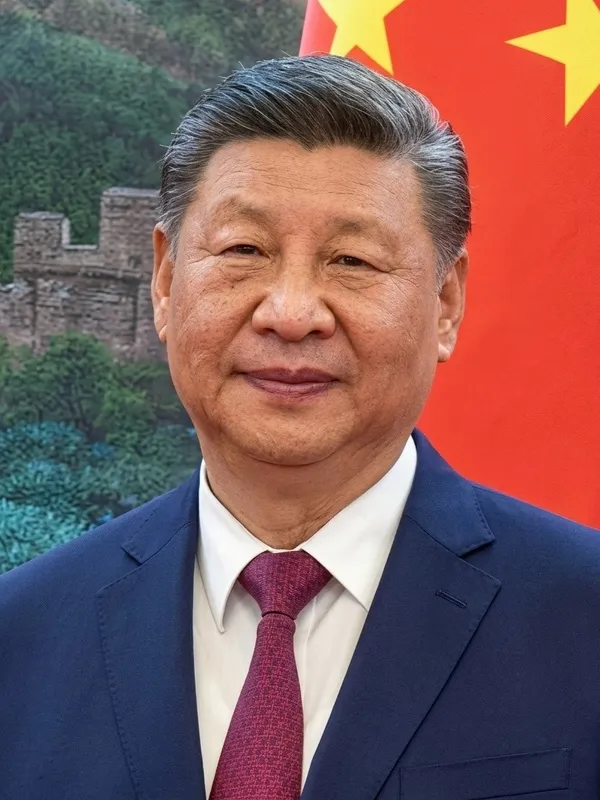 ProfileXi JinpingGeneral Secretary of the Communist Party of China
Related
California Senate Passes Post-Production Tax Bill; Newsom Must Act
SB 2319 cleared the California State Senate 33-5, creating a dedicated post-production tax incentive as the L.A. film industry continues to shrink.

Netanyahu Condemns West Bank Attack on NBC News Team as Settler Violence Escalates
Masked settlers assaulted an NBC News crew and a Palestinian woman in Jalud, injuring four journalists and drawing condemnation from Israel's prime minister.
Park Service Backs Trump Arch Despite Threat to DC Landmark Sightlines
A federal report endorses the proposed 250-foot gilded arch while acknowledging it will disrupt the visual integrity of dozens of historic Washington sites.