Netanyahu Publicly Rejects US-Backed 15-Point Gaza Peace Plan

Israeli PM Benjamin Netanyahu has openly refused a Trump-backed Gaza framework, insisting the IDF will not withdraw until Hamas is fully disarmed.
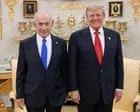
Israeli Prime Minister Benjamin Netanyahu has taken the rare step of publicly rejecting a US-backed peace framework for Gaza, marking one of the most direct breaks with the Trump White House since the two leaders' alliance began. In a statement on Sunday, Netanyahu declared that Israel does not accept the 15-point document proposed by Trump's Board of Peace, setting the stage for a significant test of the US-Israel relationship.
The Plan and Netanyahu's Objections
Trump's Board of Peace put forward the 15-point proposal in July, outlining a phased process under which Hamas would disarm in exchange for a full Israeli military withdrawal from Gaza and an eventual transfer of authority to an independent Palestinian National Committee. The White House had envisioned the deal being implemented in stages. Netanyahu, however, rejected that sequencing outright, demanding complete and verifiable disarmament of Hamas — covering heavy weapons, light weapons, and everything in between — before any Israeli withdrawal could begin. "When I say the disarming of Hamas, it means heavy weaponry, lighter weaponry, all weaponry," he stated, according to The Guardian World.
Israel had already signalled its opposition in the weeks following the plan's announcement, with Netanyahu's office stating that the publicly circulated version did not reflect Israeli positions. Sunday's statement, however, was notably more forceful and appeared aimed directly at Washington.
A Rare Public Break with Trump
Netanyahu's willingness to challenge the Trump administration openly is a departure from the typically managed tensions between the two governments. His remarks were pointed, stating that Israel knows how to "stand its ground, even against our best friends when necessary." The Israeli prime minister is navigating a difficult domestic political environment ahead of October elections, facing pressure from hardliners within his own coalition who oppose any concessions on Gaza or broader regional conflicts.
His posture comes at a sensitive moment for Trump as well. The White House is under pressure to show diplomatic progress ahead of US midterm elections in November, particularly on reopening the Strait of Hormuz following joint US-Israeli strikes on Iran — a development that has elevated energy prices. The interconnected nature of the region's conflicts, spanning Gaza, Lebanon, and Iran, makes any single diplomatic failure a complication for the broader US strategy.
The head of Trump's Board of Peace, Nickolay Mladenov, pushed back on Sunday, describing the 15-point plan as "the only way forward that ensures this tragedy does not happen again."
Broader Stakes for the US-Israel Alliance
Netanyahu has long been a complex partner for American presidents. His past friction with US administrations is well documented, and his recent moves to reduce reliance on Washington have raised questions about the long-term shape of the bilateral relationship. The Biden administration found that its objections to the human cost of the Gaza campaign were largely sidelined, and it continued military support despite internal reservations.
Trump presents a different challenge. While Netanyahu has found him to be a natural ideological ally — and has not shied away from weighing in on US political debates — Trump is also unpredictable in ways that previous presidents were not. With Vice President JD Vance, a potential 2028 presidential frontrunner, expressing public scepticism about Israel's conduct in Gaza, the political landscape in Washington is shifting in ways that complicate Netanyahu's traditional leverage.
At the same time, the fragile framework brokered on Israel's northern front underscores how difficult sustained diplomatic progress in the region has proven to be.
What Comes Next
Trump now faces a consequential choice: apply meaningful pressure on Netanyahu and risk alienating pro-Israel constituencies, or allow the Gaza peace process to stall indefinitely. The answer is likely to hinge on the president's read of American public opinion and the political cost of either path. With both countries entering difficult election cycles and long-standing generational shifts in US attitudes toward the conflict continuing to accelerate, the outcome of this standoff could have lasting consequences for one of Washington's most important — and complicated — alliances.
 ProfileDonald Trump45th and 47th President of the United States
Related

California Senate Passes Post-Production Tax Bill; Newsom Must Act
SB 2319 cleared the California State Senate 33-5, creating a dedicated post-production tax incentive as the L.A. film industry continues to shrink.

Netanyahu Condemns West Bank Attack on NBC News Team as Settler Violence Escalates
Masked settlers assaulted an NBC News crew and a Palestinian woman in Jalud, injuring four journalists and drawing condemnation from Israel's prime minister.

Park Service Backs Trump Arch Despite Threat to DC Landmark Sightlines
A federal report endorses the proposed 250-foot gilded arch while acknowledging it will disrupt the visual integrity of dozens of historic Washington sites.