Mexico to File Criminal Complaints in US Courts Over Migrant Deaths

President Claudia Sheinbaum says diplomatic letters have failed and vows formal legal action over 17 Mexican deaths tied to US immigration enforcement.

Mexican President Claudia Sheinbaum announced Monday that her government will pursue criminal complaints in United States federal and local courts over the deaths of more than a dozen Mexican nationals in immigration detention and at least three others killed during anti-migrant enforcement operations. The move marks a significant escalation after months of diplomatic correspondence that Sheinbaum says has produced no results. According to The Guardian World, the announcement came during Sheinbaum's morning press conference and was directly prompted by the fatal shooting of Lorenzo Salgado Araujo in Houston last week.
A Death That Sparked Outrage
Lorenzo Salgado Araujo, 7 July, was shot and killed by Immigration and Customs Enforcement agents as he traveled to work alongside his brother and two other men. Sheinbaum described him as having been "practically murdered" and said the case has provoked widespread anger across Mexico. Salgado Araujo had resided in the United States for nearly 35 years and had no criminal record.
The Department of Homeland Security maintains that Salgado Araujo used his vehicle as a weapon and attempted to strike an ICE officer. That account, however, is disputed by the three other individuals present in the car at the time. Houston authorities have since opened an independent investigation into the circumstances of the shooting.
Diplomatic Channels Exhausted
Sheinbaum has repeatedly urged US authorities to respect the human rights of Mexican nationals and has forwarded multiple diplomatic letters to Washington raising concerns about deaths in custody and enforcement operations. She made clear that this approach has reached its limit.
"We cannot simply continue with diplomatic letters that have yielded no results," she said at Monday's press conference, while stressing that legal action was not intended to provoke unnecessary conflict. "But neither can we, as a government and as Mexican men and women, say, 'Let's not say anything so there won't be any problem with our relationship with President Trump's government.'"
In total, 17 Mexican citizens have died since the Trump administration intensified its immigration crackdown — 14 in detention facilities and three, including Salgado Araujo, killed during enforcement operations.
Broader Strains on US-Mexico Relations
The legal filings arrive amid a broader and deepening deterioration in relations between the two countries. Earlier this year, reports emerged that CIA operatives had been conducting activities on Mexican soil without the knowledge or authorization of the federal government — a violation of Mexico's constitution that drew sharp criticism from Sheinbaum's administration.
The tension was compounded further in April when the US Department of Justice announced charges against Sinaloa Governor Rubén Rocha Moya and nine other current and former Mexican officials, alleging ties to the Sinaloa cartel and involvement in large-scale narcotics trafficking into the United States. Sheinbaum has declined to extradite Rocha Moya, stating that insufficient evidence has been presented to justify doing so. Questions around government accountability and transparency in the region have drawn comparisons to other political controversies across Latin America — including Mexico's UK Ambassador declaring 10 properties and two Rolls-Royces, which drew its own scrutiny.
Legal Action as a Last Resort
By turning to the courts, Sheinbaum is signaling that Mexico intends to hold US authorities accountable through mechanisms that carry more legal weight than diplomatic correspondence. The complaints are expected to be filed in both federal and local jurisdictions, targeting deaths across multiple detention facilities and field operations.
The situation reflects a broader global reckoning with how governments respond to immigration enforcement fatalities — a challenge that has surfaced in various forms internationally, including in South Africa, where authorities are bracing for anti-immigrant protests driven by a different set of social pressures.
For now, Sheinbaum's administration is pressing forward with a legal strategy that, whatever its outcome, carries unmistakable political weight on both sides of the border.
Related on Ni4o: Spanish King's World Cup Visit Signals End of Diplomatic Rift
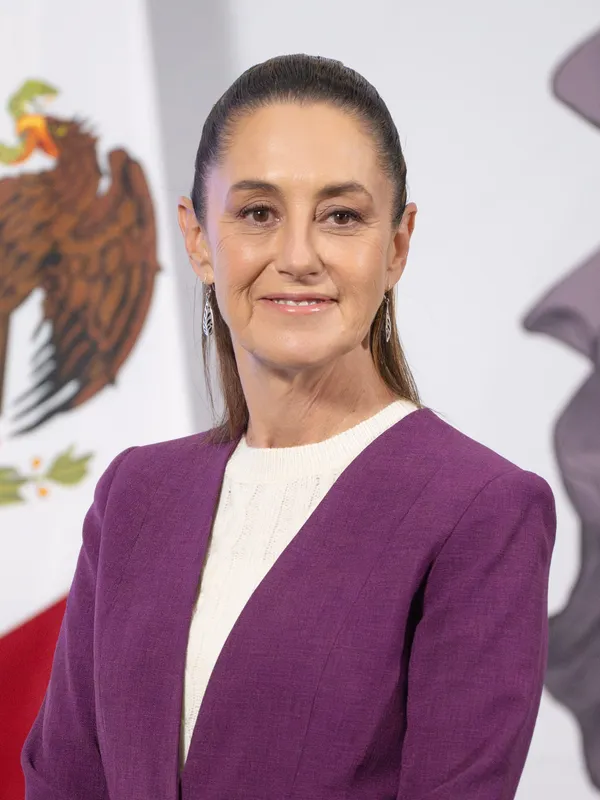 ProfileClaudia SheinbaumPresident of Mexico
Related
California Senate Passes Post-Production Tax Bill; Newsom Must Act
SB 2319 cleared the California State Senate 33-5, creating a dedicated post-production tax incentive as the L.A. film industry continues to shrink.

Netanyahu Condemns West Bank Attack on NBC News Team as Settler Violence Escalates
Masked settlers assaulted an NBC News crew and a Palestinian woman in Jalud, injuring four journalists and drawing condemnation from Israel's prime minister.

Park Service Backs Trump Arch Despite Threat to DC Landmark Sightlines
A federal report endorses the proposed 250-foot gilded arch while acknowledging it will disrupt the visual integrity of dozens of historic Washington sites.