Keir Starmer and the Quest for Economic Growth in Labour's Agenda

As Labour prepares for the upcoming election, Starmer emphasizes economic growth as vital; however, experts caution against outdated paradigms.

As the United Kingdom approaches the critical 2024 general election, economic growth has emerged as a focal point for Labour leader Sir Keir Starmer. With recent pressures on public finances, Starmer insists that fostering economic growth must be Labour's primary objective. However, experts are raising questions about the practical implications of this goal and its underlying assumptions.
The Growth Imperative
In a political landscape marked by rapid changes in leadership, the obsession with achieving economic growth is palpable among the British political elite. Sir Keir Starmer has taken a clear stance, stating that economic growth is imperative for any new Labour government to succeed. He has emphasized that the party's ability to deliver on its progressive policies would hinge on generating a notable increase in the country’s GDP.
Lost in the urgency for growth are concerns that the traditional measures of progress may not necessarily yield benefits across the UK evenly. Consider the recent comments from Andy Burnham, the Prime Minister of Greater Manchester, whose administration has adopted a similar mantra: “growth in every postcode.” This phrase reflects a growing recognition that economic disparities exist not just between regions but also within cities themselves.
Re-examining Economic Assumptions
Economists Karel Williams and Sukhdev Johal, speaking on the Guardian's new podcast, Radical Thinking, challenge the assumption that returning to former levels of growth is viable or even desirable. They contend that such a perspective disregards the complex realities of today's geopolitical climate, where past strategies may no longer apply effectively.
Instead, they argue, a more meaningful dialogue is needed around how low-income areas can be supported in their development. For the Labour party, this means shifting the focus from merely boosting GDP to addressing the fundamental needs of communities across the UK, which often suffer from a lack of local investment.
An Egalitarian Approach to Development
The experts highlight the significance of a redistributive fiscal policy, which can focus on easing the financial burdens faced by the less affluent. Emphasizing the importance of enhancing local infrastructure—transport, utilities, and community networks—could foster a sense of collective empowerment among communities.
Burnham's policies reflect an alignment with this vision, notably his initiative to re-establish public control over Greater Manchester's buses and to implement fare caps. Such measures indicate a shared commitment to transforming the local economy to better serve residents, aligning with Labour’s broader agenda.
The Path Forward
While Burnham's commitment to regional growth initiatives has been evident, the overall Labour strategy appears inconsistent. His concept of “Manchesterism” suggests a localized approach to economic revival, yet the current scrutiny surrounding international investments raises questions about the true beneficiaries of growth policies.
Experts argue that focusing on the foundational economy—investing in the essential services that underpin daily life—can yield tangible improvements without waiting for broader growth. The establishment of a mayoral development corporation in Middleton near Manchester is one such example, where local input is prioritized in economic planning.
As Labour gears up for the 2024 elections, the dialogue surrounding economic growth will remain central. However, navigating the balance between traditional growth metrics and innovative local economic strategies may be the key to the party's success and, ultimately, its promise to deliver meaningful change across the UK.
For Labour to realize its ambitious vision, it may need to rethink its approach entirely, prioritizing foundational equity alongside the pursuit of growth.
For those interested in further developments within Labour and its leadership, consider reading about Keir Starmer's recent political challenges or Andy Burnham's shifts in strategy regarding the Digital ID initiative.
Also, updates on the party's status can be found in the latest reports on Labour's by-election successes.
Related on Ni4o: Keir Starmer resigns as UK prime minister amid revolt · Andy Burnham to Abandon Starmer's Digital ID Initiative · Sarwar Takes Lords Seat in Burnham Government, Triggering Scottish Backlash
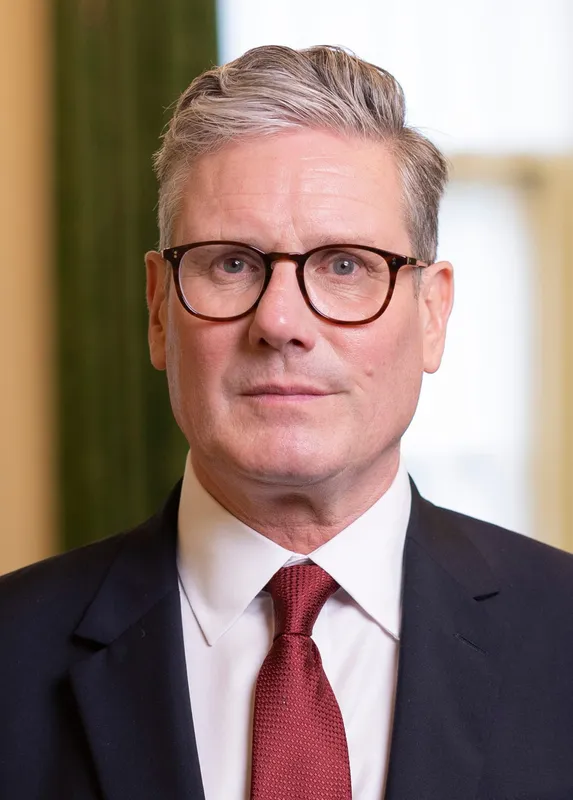 ProfileKeir StarmerPrime Minister of the United Kingdom
Related
California Senate Passes Post-Production Tax Bill; Newsom Must Act
SB 2319 cleared the California State Senate 33-5, creating a dedicated post-production tax incentive as the L.A. film industry continues to shrink.

Netanyahu Condemns West Bank Attack on NBC News Team as Settler Violence Escalates
Masked settlers assaulted an NBC News crew and a Palestinian woman in Jalud, injuring four journalists and drawing condemnation from Israel's prime minister.

Park Service Backs Trump Arch Despite Threat to DC Landmark Sightlines
A federal report endorses the proposed 250-foot gilded arch while acknowledging it will disrupt the visual integrity of dozens of historic Washington sites.