Joyce Carol Oates Defends Nolan as Literary Feud Over 'The Odyssey' Erupts

Novelist Joyce Carol Oates fired back at classicist Emily Wilson after Wilson's scathing London Review of Books takedown of Nolan's blockbuster went viral.
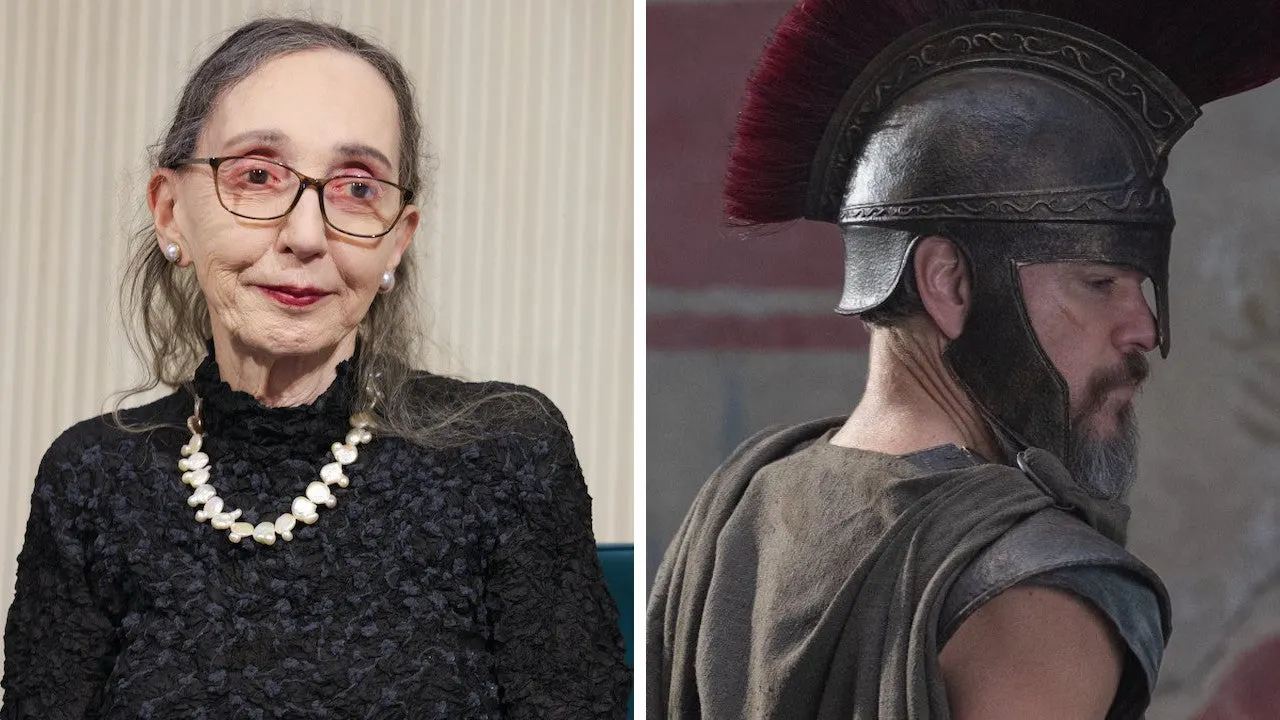
A dispute that began in the pages of the London Review of Books has spilled across social media, drawing one of America's most prolific novelists into an increasingly pointed argument about adaptation, authorship, and critical etiquette. Joyce Carol Oates stepped forward this week to defend Christopher Nolan's The Odyssey after translator Emily Wilson's withering assessment of the film circulated widely online, sparking a broader conversation about who holds interpretive authority over a 2,700-year-old text.
Wilson's Critique and Its Viral Spread
Wilson, the British-American classicist whose 2017 translation of Homer's epic was among Nolan's own cited sources of inspiration — he has specifically referenced her opening rendering, "Tell me about a complicated man," as a formative touchstone for the project — pulled no punches in her review, according to TheWrap. Writing under the pointed headline "An Uncomplicated Man," she argued that the film substitutes spectacle for substance, describing Nolan's approach as a blend of "grandiosity and superficiality." She contended the adaptation fails to meaningfully engage with the poem's central concerns: time, memory, the cost of war, and the fractured relationships that define Odysseus's world. Her conclusion was unsparing — she wrote that she "would be ashamed to have written any part of this script."
The review's severity, combined with its literary pedigree, gave it unusual traction online, particularly given the film's remarkable commercial trajectory. The Odyssey has crossed $725 million at the global box office, and the surge of cultural interest in Homer has directly lifted Wilson's own translation to over one million copies sold, placing it at No. 3 on Amazon and No. 11 on Barnes & Noble.
Oates Weighs In — and Sharpens Her Pen
It was precisely that commercial symbiosis that prompted Oates to respond. Writing on X, she characterized Wilson's tone as "dismissive" and marked by a "haughty superiority" she found ill-suited to scholarly discourse. More pointedly, she drew a comparison between Wilson's rhetorical style and what she described as the blunt combativeness associated with MAGA political rhetoric — a charge certain to generate its own controversy. Her argument rested on a particular irony: that a translator, whose craft is itself a form of interpretive re-authoring rather than literal fidelity, might be expected to extend some professional generosity to others working "in good faith" with the same source material.
Oates also offered a mild critique of Wilson's translation itself, suggesting it was calibrated toward a young adult readership — spare and direct in ways she found deliberately marketable — though she framed this as an observation about audience strategy rather than a wholesale dismissal. She rounded out her comments with a recommendation for the 1997 television miniseries co-produced by Francis Ford Coppola, a reminder that Nolan's film joins a long line of screen adaptations grappling with the same material.
Context: Nolan, Adaptation, and the Ownership of Myth
The exchange raises questions that recur whenever a canonical literary work migrates to a mass-market medium. Filmmakers working from classical sources are always, in a sense, translating — selecting, compressing, and reframing. Decoding Christopher Nolan's adaptation of The Odyssey's ending has itself become a cottage industry for critics and cinephiles, suggesting the film invites exactly the kind of interpretive engagement Wilson argues it lacks. Meanwhile, Nolan has remained characteristically composed in the face of divided opinion — a posture consistent with how he has handled backlash before, drawing on lessons learned across his career.
The film's ensemble adds further layers to the public conversation. Tom Holland has spoken about his own experience navigating Nolan's demanding working methods on set, and Nolan's broader collaborative philosophy — his belief in nurturing creative talent and resisting shortcuts — has been a consistent theme in his public statements, as seen in his recent advocacy for young filmmakers.
Whether Wilson's critique ultimately shapes the film's legacy or recedes as a footnote to its box-office dominance remains to be seen. What the episode makes clear is that Nolan's Odyssey has done something rare: it has made Homer genuinely controversial again.
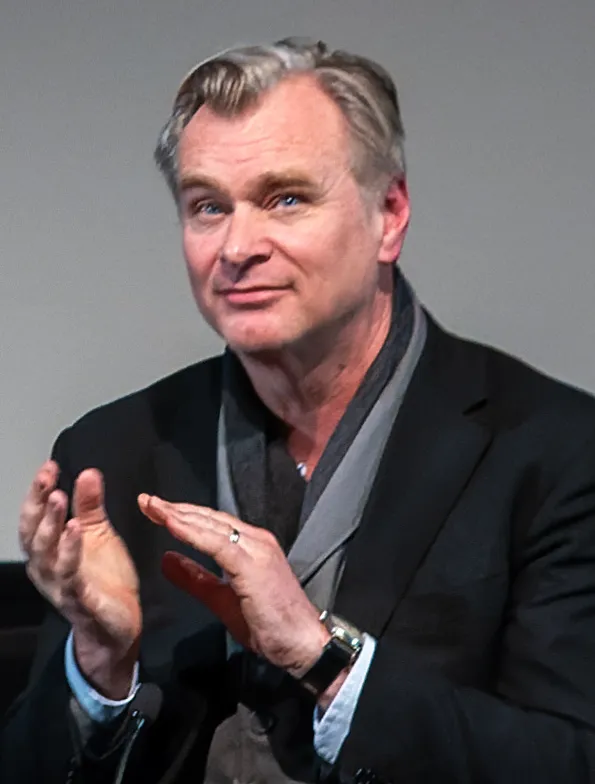 ProfileChristopher NolanFilmmaker
Related
Randy Quaid Slams Anne Hathaway Casting in Days of Thunder Sequel
Randy Quaid, who appeared in the original 1990 film, took to X to demand Nicole Kidman's return and dismiss the Hathaway announcement.

Eva Mendes' 'de Gosling' Tattoo Is the Only One She's Ever Wanted
Eva Mendes is showing off her wrist tattoo again — a small but meaningful piece of ink that carries a deep cultural significance.
Steven Spielberg's 'War of the Worlds' Returns to Streaming Amid Debate
Steven Spielberg's 'War of the Worlds' is hitting HBO Max next month, reigniting discussions on its mixed reception.