Blue Planet III Is Leaning Into Blurry Footage — and That's the Point

The BBC's new David Attenborough series is deliberately keeping its imperfect shots to prove every frame is gloriously, undeniably real.
If you notice a little extra murk in the water during Blue Planet III, that's not a technical glitch — it's a creative statement. The BBC's long-awaited return to the deep ocean is deliberately embracing imperfect, "organic" footage as a direct response to the rise of AI-generated imagery, and honestly, it might be one of the smartest moves in nature documentary filmmaking right now.
Why Blurry Is the New Beautiful
Producers of Blue Planet III — the David Attenborough-narrated sequel arriving nearly a decade after Blue Planet II and a full 25 years after the original series — told journalists at a press screening, according to The Guardian World, that the team made a conscious choice to keep shots that would previously have ended up on the cutting room floor. Think plankton-filled water, a stray buoy drifting into frame, or conditions that aren't quite crystal-clear.
Executive producer Elizabeth White explained that the explosion of AI makes the team "want to be even more authentic," noting that the creatures they filmed in the deep ocean are "probably more remarkable than AI could imagine and it's completely real." In the past, those cloudier conditions would have disqualified footage; now they're a badge of honour.
BBC specialist factual commissioning head Jack Bootle was unequivocal about the series' integrity: not a single frame of generative AI was used. Every jaw-dropping image is real photography. In a media landscape where audiences are increasingly second-guessing what they see on screen, that guarantee feels genuinely refreshing.
New Creatures, New Cameras, Novel Behaviour
For anyone who thought the ocean had already given up all its secrets on screen, Blue Planet III is here to prove otherwise. Bootle described the current moment as a "golden age of natural history-making" and said the series is "bursting with novel behaviour" — a bold promise the footage apparently backs up.
Highlights include dolphins using sea sponges to plug holes in coral and trap fish — a never-before-captured behaviour filmed using an underwater CCTV camera nicknamed the "stonefish" cam, developed by producer and director Yoland Bosiger. There are also 200,000 crabs forming enormous feeding formations, grouper fish communicating across species lines, sea urchins fashioning shells into impromptu sun hats, and a penguin sequence that the team is comparing to the legendary iguana-versus-snakes chase from Planet Earth II.
To get these extraordinary shots, the production innovated constantly over four years of filming across five oceans. The toolkit included a "mini-dome" camera custom-built to follow an octopus, a deep-sea selfie stick, leg-mounted scooters for TikTok-style immersive diving footage, and lasers used to illuminate deep-sea creatures. Series producer Lara Bickerton said the crew "continually innovated" throughout production.
For fans of David Attenborough's Emmy-nominated voyage into ocean mysteries, this level of technical ambition will feel deeply familiar — and deeply exciting.
The Ocean's Ongoing Struggles
It wouldn't be a Blue Planet series without a hard look at what humans are doing to these ecosystems. Blue Planet III addresses the climate crisis head-on, including a storyline about how warming waters are destroying the sea anemone habitats that clownfish call home, and what those resilient little fish do to try to repair their world. The plastic pollution thread first raised in Blue Planet II continues here too, with new focus on forever chemicals and other pollutants threatening ocean life.
Attenborough at 100: Still That Curious Little Boy
Perhaps the most touching detail to emerge from the press screening is the portrait of Sir David Attenborough himself, who turned 100 this year and remains deeply involved in the project. Bosiger confirmed he was "very much" part of the process and actively contributed changes to scripts.
White described showing him new footage and watching his face light up: "He hasn't lost his curiosity … he's still that little boy … who gets excited when you show him a new piece of footage."
It's that same wide-eyed wonder — paired now with decades of wisdom — that has made Attenborough's work a perennial awards contender and a genuine cultural institution. Blue Planet III looks set to carry that legacy forward, murky water and all.
Related on Ni4o: David Attenborough's Emmy-Nominated Voyage into Ocean Mysteries
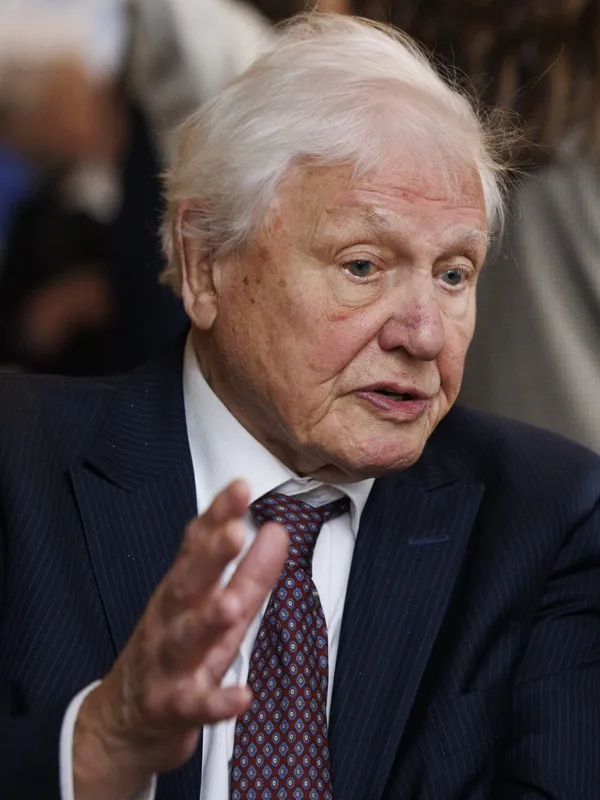 ProfileDavid AttenboroughBroadcaster and Natural Historian
Related

Jelly Roll Gets Real on Kimmel: 'A Handshake Is Not An Endorsement'
Wrapping up his guest-hosting run, Jelly Roll finally said what's been on his mind about politics, politicians, and that viral Trump photo.

Jelly Roll Opens Up About His Political Views on Jimmy Kimmel Live!
Jelly Roll shares his political beliefs and regrets not speaking out at the Grammys during his guest hosting stint on Jimmy Kimmel Live!

Ellen Pompeo Heads Back to Scrubs in New Hulu Thriller 'Not a Sound'
Ellen Pompeo is trading Grey Sloan Memorial for a brand-new mystery on Hulu, starring as a deaf ER nurse caught up in a deadly investigation.