Batman: Knightfall Finally Gives Bane the Portrayal He Deserves

DC's animated Knightfall trilogy corrects a long-standing creative misstep from Nolan's Dark Knight trilogy by treating Bane as a fully realized villain.
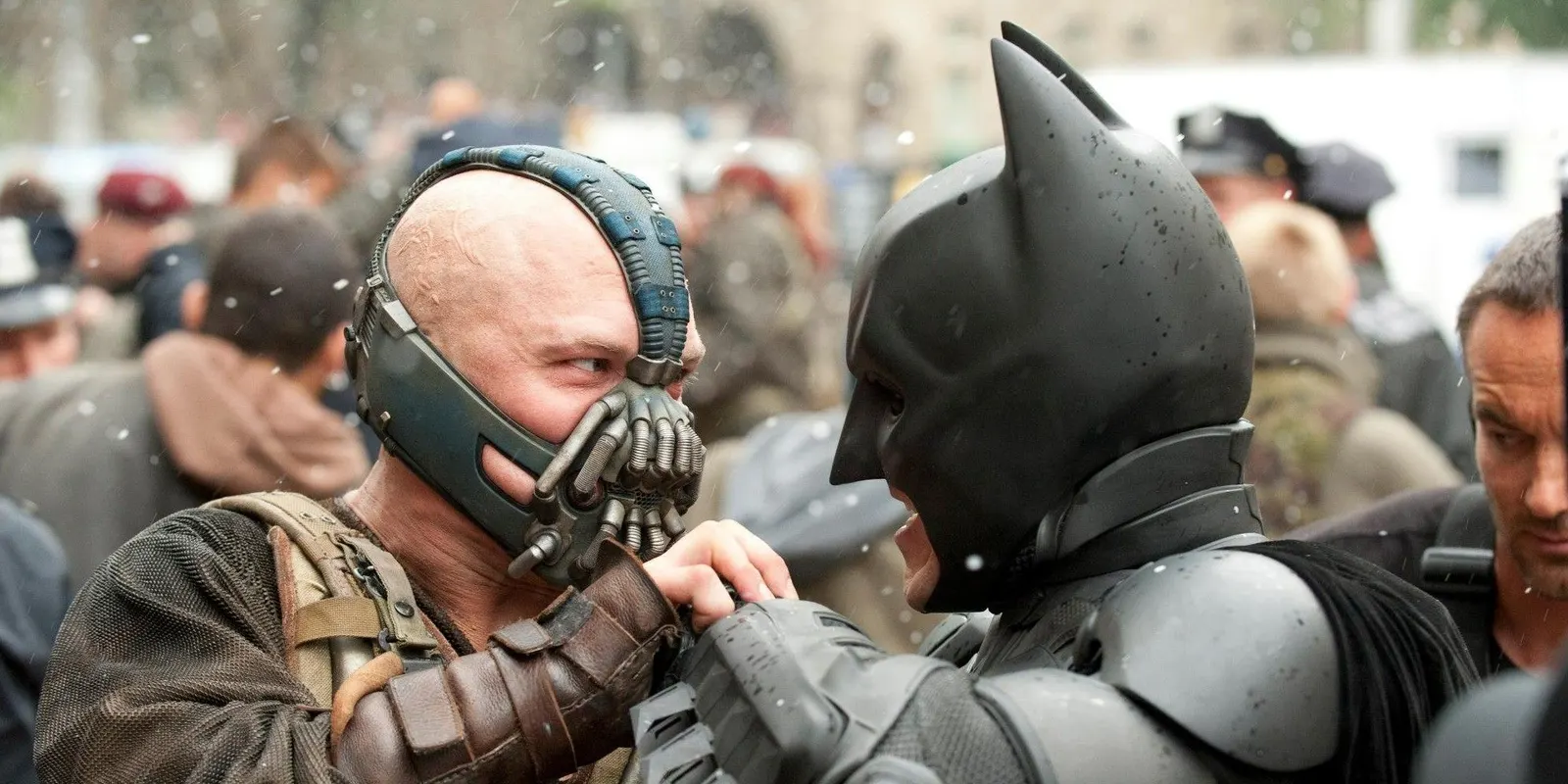
For all the genuine achievements of Christopher Nolan's Dark Knight trilogy — and they are considerable — the handling of Bane in The Dark Knight Rises has always represented an unresolved asterisk on an otherwise landmark run. The new animated feature Batman: Knightfall – Part 1 makes a compelling case, according to Polygon, that the character was always capable of sustaining something far more substantial.
The Problem With Nolan's Bane
Nolan's trilogy produced one of cinema's most celebrated villain performances in Heath Ledger's Joker — a performance that reshaped how the industry thought about comic-book adaptations. The supporting cast followed suit: Cillian Murphy's Scarecrow, Liam Neeson's Ra's al Ghul, and Aaron Eckhart's Harvey Dent each brought genuine menace and psychological texture to their respective roles. Tom Hardy's Bane, introduced in the trilogy's concluding chapter, never quite reached those heights. The voice was divisive, the machinations were convoluted, and the eventual reveal that Bane functioned largely as an instrument of Talia al Ghul — played by Marion Cotillard — diluted both characters simultaneously. It remains one of the more puzzling structural choices in Nolan's filmography, a director whose interest in layered antagonists is well documented. For more on how Nolan continues to shape the industry's creative conversation, see Christopher Nolan Champions Young Filmmakers, Calls AI in Cinema Doomed.
What Knightfall Gets Right
Directed by Jeff Wamester from a script by Jeremy Adams, Batman: Knightfall – Part 1 — which premiered at the Annecy Festival — adapts the celebrated 1993–1994 DC Comics arc with a fidelity that makes its improvements over The Dark Knight Rises feel almost methodical. Michael Mando voices Bane opposite Anson Mount's Batman, and the film establishes from the outset that this version of the character is operating on both a physical and strategic level. Rather than arriving as someone else's instrument, Knightfall's Bane spends considerable time studying Gotham and Batman's psychology, engineering a plan to exhaust the Caped Crusader before the decisive confrontation ever arrives.
The setup mirrors the original comics closely: Bane orchestrates a mass breakout from Arkham Asylum, forcing Batman through a brutal gauntlet of rogues — the Mad Hatter, Scarecrow, Victor Zsasz, the Riddler — each encounter leaving him progressively more depleted. The film is animated by Studio Mir and carries an R rating that Wamester uses purposefully, allowing Bane's physicality to register with a visceral weight that a PG-13 framework would never permit. When Bane ultimately breaks Batman's back — a moment that defined the source material's cultural impact — the film earns it through accumulated damage rather than dramatic convenience.
The Significance of Bane's Motivation
Perhaps the most telling distinction between the two interpretations is the simplicity of Knightfall's Bane. He does not require a nuclear device or a city held hostage to make his point. He recognizes that Batman is Gotham's psychological cornerstone, and that publicly destroying him is sufficient. When he delivers the broken hero to the Gotham Police Department, it is an act of demonstration rather than concealment — a ruthless clarity that the Rises version never quite achieved. Nolan has always been a filmmaker drawn to grand structural conceits, and it is worth noting, as explored in Nolan Dismisses 'Odyssey' Backlash, Cites Dark Knight Lesson, that he views the Dark Knight period as foundational to his own artistic development.
Limited Reach, Lasting Value
As a direct-to-video animated production, Knightfall will inevitably reach a far smaller audience than The Dark Knight Rises, which crossed the billion-dollar threshold at the global box office. Hardy's interpretation will remain the most culturally visible version of the character for the foreseeable future, particularly given that director Matt Reeves has indicated The Batman 2 will feature a villain who has yet to appear on screen. That commercial reality does not diminish what Wamester and Adams have accomplished. More than three decades after the Knightfall arc was first published, the animated medium has finally delivered the version of Bane the source material always implied was possible — methodical, terrifying, and utterly his own.
Related on Ni4o: How Christopher Nolan Convinced Ryan Coogler to Shoot 'Sinners' in IMAX
 ProfileChristopher NolanFilmmaker
Related
Randy Quaid Slams Anne Hathaway Casting in Days of Thunder Sequel
Randy Quaid, who appeared in the original 1990 film, took to X to demand Nicole Kidman's return and dismiss the Hathaway announcement.

Eva Mendes' 'de Gosling' Tattoo Is the Only One She's Ever Wanted
Eva Mendes is showing off her wrist tattoo again — a small but meaningful piece of ink that carries a deep cultural significance.
Steven Spielberg's 'War of the Worlds' Returns to Streaming Amid Debate
Steven Spielberg's 'War of the Worlds' is hitting HBO Max next month, reigniting discussions on its mixed reception.