Bad Bunny Calls Reggaeton Lawsuit a 'Frankenstein' Copyright

Bad Bunny's legal team is pushing back hard against a ruling that keeps a massive reggaeton origins lawsuit alive, arguing the claimed beat simply doesn't exist.

The beat that built an entire genre is now the subject of one of the most tangled copyright fights in modern music — and Bad Bunny isn't ready to let a recent court ruling stand without a serious fight. His legal team fired back Wednesday, filing a motion that exposes what they call a glaring flaw the judge failed to address before sending the case toward a jury trial.
A Ruling That Won't Go Down Without a Fight
Earlier this month, a federal judge ruled that only a jury could determine whether the reggae duo Steely & Clevie hold a valid copyright over the dembow rhythm — that propulsive, addictive boom-ch-boom-chick pulse that sits at the very heart of reggaeton. Rather than dismissing the lawsuit, the ruling essentially handed the sprawling case a long life ahead, complete with mountains of discovery and an eventual trial that could drag on for years.
The case, originally filed in 2021, was brought by Cleveland "Clevie" Browne and the estate of Wycliffe "Steely" Johnson against Bad Bunny, Daddy Yankee, Karol G, and a constellation of other artists. At stake are nearly 2,000 songs — an almost incomprehensible scope that makes this one of the biggest music copyright actions ever attempted.
The 'Frankenstein' Argument
Bad Bunny's attorney Kenneth Freundlich didn't hold back in Wednesday's motion. The crux of the argument, according to Billboard, is that Steely & Clevie's supposedly proprietary dembow beat doesn't actually exist in complete form within any single piece of music they claim to own. Instead, the plaintiffs draw from three separate songs — the 1989 track "Fish Market," plus two derivative works called "Dem Bow" and "Pounder (Dub Mix II)" — stitching together a copyright claim from fragments spread across multiple recordings.
"They have assembled a 'Frankenstein' across three separate songs," Freundlich wrote in the filing, arguing that asserting exclusive rights over something that has never existed as a single, unified work is legally unsound. It's a sharp and creative counter — essentially arguing you can't copyright a creature you built from mismatched parts.
This isn't the first time Bad Bunny has found himself navigating choppy legal waters; the global superstar faced a separate legal challenge involving an ex-girlfriend's voice memo not long ago, showing just how much legal turbulence can surround artists at the very top of the game.
Two Paths Forward
Bad Bunny's camp is asking for one of two outcomes. First, they want the judge to reconsider his own ruling, acknowledging the fatal flaw they say was overlooked. If the court won't do that, they're requesting an expedited path to a federal appeals court — a way to resolve the core legal question before the case spirals into years of costly litigation involving more than a thousand individual song analyses.
The logic is hard to argue with from a practical standpoint. Getting clarity on whether this particular copyright theory holds up before spending years in discovery could save everyone involved enormous time and resources.
Steely & Clevie Push Back
Unsurprisingly, the plaintiffs aren't impressed. Attorney Stephen Doniger issued a firm rebuttal, calling it "disappointing that defendants continue to push their false narrative" and stating plainly that the motion offers nothing new. He expressed confidence the court will deny it swiftly.
The back-and-forth signals just how much is at stake — not only for Bad Bunny personally, but for the entire reggaeton ecosystem. If dembow itself is ultimately found to be privately owned, the ripple effects across Latin music could be staggering. Artists who have built careers on that foundational rhythm, from arenas to streaming charts, would be operating in a fundamentally different legal landscape.
Bad Bunny, who recently made UK stadium history with a historic London performance, clearly has no intention of letting this case define his legacy without exhausting every legal avenue first. The next move belongs to the judge.
Related on Ni4o: Bad Bunny Makes UK Stadium History With Electrifying London Show
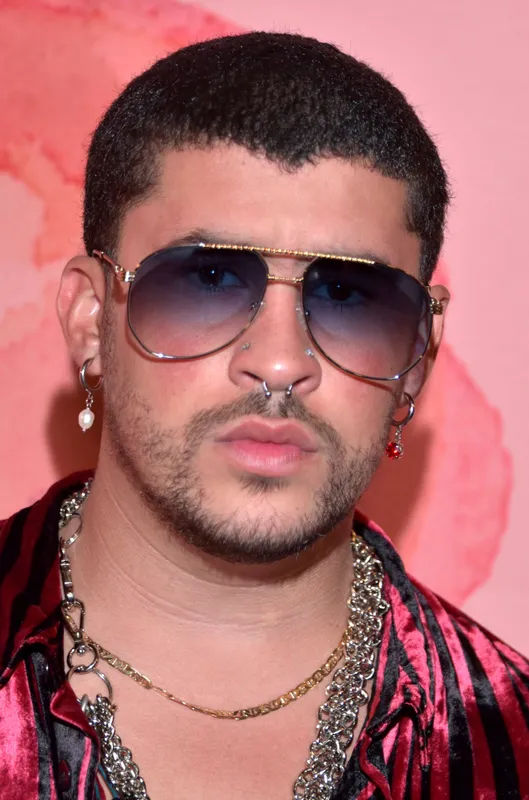 ProfileBad BunnyPuerto Rican rapper and reggaeton superstar
Related

Olivia Rodrigo's Daisy Chain Fields Festival: A Celebration of Music and Purpose
The Daisy Chain Fields Festival, headlined by Olivia Rodrigo, united fans and nonprofits in a joyous celebration of women and music.
Miley Cyrus Hints at New Era With Cryptic Red-and-Black Teaser
Exactly one year after 'Something Beautiful,' Miley Cyrus is flooding the internet with mysterious red-and-black imagery — and a new label to back it up.
How a Nashville Laundromat Sparked Dolly Parton's Six-Decade Love Story
Dolly Parton and Carl Dean built one of music's most enduring marriages on a simple formula: distance, devotion, and deep difference.