Albanese Stands by Bowen Amid COP31 Criticism

Prime Minister Anthony Albanese defends Climate Change Minister Chris Bowen from calls for resignation following COP31's diplomatic setback.
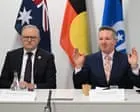
Prime Minister Anthony Albanese has publicly supported Climate Change Minister Chris Bowen amid fierce criticism after the recent UN COP31 climate summit ended without a critical agreement. The Coalition has demanded Bowen's resignation, labeling the outcome a catastrophic diplomatic failure, although the opposition has not suggested any viable alternatives for reducing emissions.
Difficult Geopolitical Environment
Albanese attributed the COP31 outcome to what he described as "difficult geopolitical times," emphasizing that Bowen and his team left no stone unturned during negotiations in Turkey. Bowen acted as the conference's president, working closely with Turkish officials to navigate discussions involving nearly 200 nations.
During the summit, key nations including European Union members and various Pacific island states expressed strong opposition to a proposed agreement that failed to explicitly call for a transition away from fossil fuels. This pivotal issue became the center of contention, with oil-rich countries like Saudi Arabia and Russia leading efforts to block any such mention.
Bowen stated, "Australia left nothing on the field," asserting that the proposed red lines he and his team sought to bridge were insurmountable. He expressed disappointment with the result but noted that the transition away from fossil fuels is already underway globally. He cited a pledge signed by over 90 countries to boost electrification by 35% by 2035 as an example of progress.
Coalition's Demands
In response to the summit's outcome, Coalition energy spokesperson Dan Tehan demanded Bowen's immediate resignation, asserting that the Minister was directly accountable for the failure. Tehan criticized Bowen's handling of the negotiations and claimed that he should have recognized the shortcomings of the consensus model utilized at the summit.
While the Coalition has criticized Labor's leadership and objectives on climate change, Tehan did not articulate any alternatives or strategies the opposition would have pursued had they been in Bowen's position. Notably, the Coalition has distanced itself from the net-zero emissions target initially set by former Prime Minister Scott Morrison, pledging to dismantle Labor's climate policies if elected.
Mixed Reactions and Outcomes
The lack of consensus at COP31, particularly surrounding the significant topic of fossil fuel transition, has drawn attention to Australia's position in international climate negotiations. Critics pointed out that Australia faced backlash for its ongoing support for new coal and gas projects, with environmentalists labeling the summit a significant failure for the country’s climate leadership.
Despite the disappointment, some experts, such as Bill Hare of Climate Analytics, emphasized that the breakdown of the main agreement should not entirely define the summit's outcomes. He argued that preserving the integrity of the UN climate convention in the face of resistant countries was a form of success in itself.
Amanda Cahill, who provided insights on the just transition aspect of the conference, echoed this sentiment, stating that while the desired outcomes were not achieved, commitments to equity and justice in climate action were maintained.
The Road Ahead
As both sides of the parliamentary spectrum respond to COP31's conclusion, the implications of this summit will serve as a pivotal backdrop for Australia's climate policy ahead of the next elections. Albanese referred to the essential dialogue established with Pacific leaders as foundational for Australia's credibility in the region concerning climate action. He stated, "The entry fee is action on climate change."
In the aftermath of COP31, Australia is faced with renewed scrutiny regarding its climate commitments and future policy directions. As the nation navigates through these geopolitical challenges, the Albanese government may need to reconsider its strategies to enhance its standing on the global stage amid rising criticism.
Explore further on Albanese's ambitions regarding social media regulations in Australia.
Related on Ni4o: Albanese Vows to Toughen Australia's Under-16 Social Media Ban · Australia to Double Social Media Ban Fines to $99M as Albanese Presses Tech Giants
 ProfileAnthony AlbanesePrime Minister of Australia
Related
California Senate Passes Post-Production Tax Bill; Newsom Must Act
SB 2319 cleared the California State Senate 33-5, creating a dedicated post-production tax incentive as the L.A. film industry continues to shrink.

Netanyahu Condemns West Bank Attack on NBC News Team as Settler Violence Escalates
Masked settlers assaulted an NBC News crew and a Palestinian woman in Jalud, injuring four journalists and drawing condemnation from Israel's prime minister.

Park Service Backs Trump Arch Despite Threat to DC Landmark Sightlines
A federal report endorses the proposed 250-foot gilded arch while acknowledging it will disrupt the visual integrity of dozens of historic Washington sites.