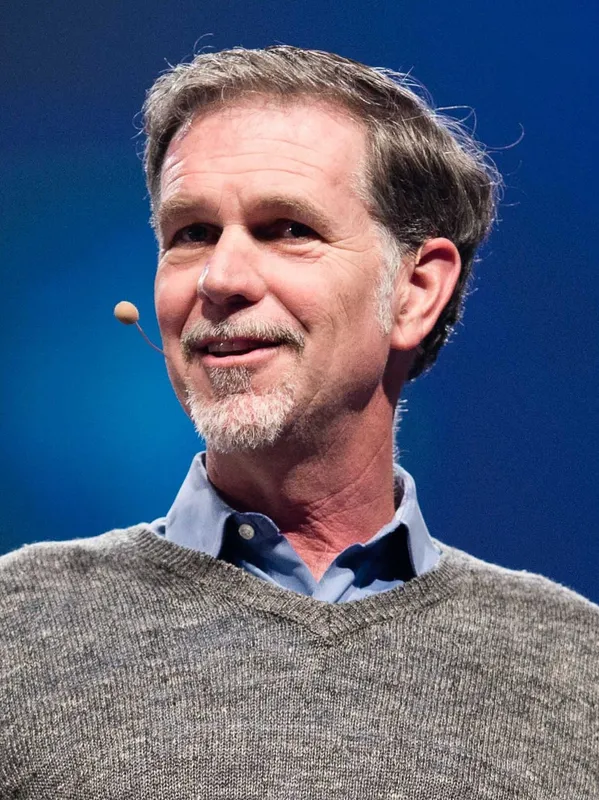
Reed Hastings
Netflix co-founder & executive
Reed Hastings is an American entrepreneur best known as the co-founder of Netflix, the company that transformed how the world watches movies and television. Under his leadership, Netflix evolved from a DVD-by-mail service into a global streaming giant and a major producer of original films and series, helping ignite a sweeping shift in the entertainment industry.
From Software to DVDs
Hastings was born in Boston and studied mathematics, later earning a graduate degree in computer science. Before entering the consumer internet world, he founded a software company that specialized in tools for developers, building experience as a technologist and manager. The sale of that company gave him the resources and confidence to pursue a new venture.
In the late 1990s he co-founded Netflix with a partner, launching a service that mailed DVDs to subscribers. The model dispensed with late fees and offered a subscription-based approach that proved popular as DVD players became widespread. The company refined its recommendation systems and logistics, gradually building a loyal customer base and outlasting traditional video rental competitors.
The Streaming Revolution
Hastings is widely credited with recognizing, early and decisively, that internet streaming would eventually supplant physical media. Netflix introduced streaming as a feature for subscribers and then committed heavily to it, even at the risk of cannibalizing its profitable DVD business. This willingness to disrupt itself became a celebrated example of strategic foresight, though the transition included a turbulent period when a controversial restructuring and pricing change drew customer backlash before the company regained momentum.
The next major leap came when Netflix moved into producing its own content. Investing aggressively in original series and films, the company attracted top creative talent and released a steady stream of acclaimed and popular titles. This strategy reduced its dependence on licensing from studios, strengthened its global brand, and pressured established media companies to launch their own streaming services, reshaping the competitive landscape of entertainment.
Leadership Philosophy and Later Roles
Hastings became known for an unconventional management philosophy emphasizing freedom and responsibility, candor, and high performance. The company's influential internal culture document circulated widely in business circles, and he later expanded on these ideas in a book about Netflix's culture, co-written with a management researcher. His approach favored giving employees significant autonomy while maintaining high expectations, an ethos that drew considerable attention and imitation.
Over time Hastings transitioned away from day-to-day leadership, moving into the role of executive chairman as he handed operational responsibilities to other executives he had helped develop. Beyond Netflix, he has been deeply engaged in education philanthropy and reform, supporting charter schools and initiatives aimed at improving learning, reflecting a long-standing personal interest that predates his entertainment career.
Reed Hastings stands as one of the defining business leaders of the streaming era. By repeatedly betting on technological change, embracing the disruption of his own successful models, and championing original content, he helped redefine how stories are distributed and consumed worldwide. His career is frequently studied as a model of adaptability and bold strategic reinvention in a fast-changing industry.
Photos
Videos





FAQ
Reed Hastings — Frequently asked questions
How old is Reed Hastings?+
Reed Hastings was born on October 8, 1960, which makes 65 years old.
Where is Reed Hastings from?+
Reed Hastings is from United States.
What is Reed Hastings known for?+
Reed Hastings is best known as Entrepreneur, Chief executive officer, Philanthropist. Notable work includes Netflix, streaming revolution, DVD-by-mail, corporate culture deck.
Is Reed Hastings on social media?+
Yes — Reed Hastings is on X (Twitter), Facebook. You can find the official links on this page.