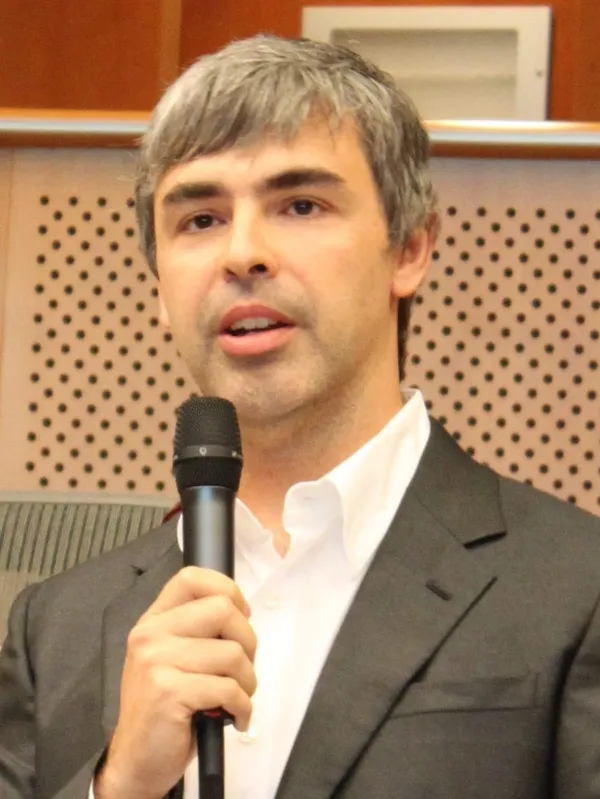
Larry Page
Co-founder of Google and former CEO of Alphabet
Lawrence Edward Page is an American computer scientist and entrepreneur best known as a co-founder of Google, the search engine that became one of the most influential technologies of the internet age. Born in East Lansing, Michigan, in 1973, Page grew up in a household steeped in computing; both of his parents were involved in computer science academia, and he was surrounded by technology and scientific curiosity from childhood. That environment nurtured an inventive, problem-solving mindset that would define his career.
Education and the Birth of an Idea
Page earned an undergraduate degree in engineering before pursuing graduate study in computer science at Stanford University. It was there that he met Sergey Brin, with whom he would form one of the most consequential partnerships in technology history. As a doctoral student, Page became fascinated by the structure of the World Wide Web and the way pages linked to one another. His research led to the development of an algorithm, later called PageRank, that ranked web pages according to the quantity and quality of links pointing to them. This approach treated links as a kind of vote of confidence, producing search results that were far more relevant than those of existing engines.
Building Google
Together with Brin, Page turned this research into a search engine and founded Google in 1998. The company's clean interface and dramatically better results quickly won over users, and Google grew from a startup operating out of a garage into one of the world's largest and most profitable corporations. Page served as the company's first chief executive and remained central to its product vision and engineering culture. He championed ambitious, long-horizon projects and encouraged the company to pursue bold ideas that extended well beyond search, from email and mapping to mobile operating systems and online video.
Alphabet and Moonshots
As Google expanded into an increasingly diverse range of businesses, Page led a major corporate restructuring in 2015 that created Alphabet Inc., a holding company designed to house Google alongside other ventures. He became chief executive of Alphabet, a structure intended to give the company's more experimental initiatives, sometimes called "moonshots," room to operate independently. These efforts spanned areas such as self-driving cars, life sciences, and advanced research, reflecting Page's long-standing belief that technology should aim to solve large and difficult problems rather than pursue only incremental improvements.
Later Years and Legacy
Page stepped back from day-to-day leadership of Alphabet in 2019, handing executive responsibilities to a successor while retaining significant influence as a co-founder and board member with a controlling stake. Known for being intensely private and reserved compared with many of his peers, he has largely avoided the public spotlight, preferring to focus on technology and investment interests. His personal wealth, derived from his Google holdings, ranks him among the richest people in the world.
Page's impact on modern life is difficult to overstate. The search technology he helped pioneer changed how people find information, conduct research, and navigate the digital world, while the company he built reshaped advertising, communication, and computing. His emphasis on audacious goals and engineering excellence left a lasting imprint on Silicon Valley's culture. Though he now keeps a low profile, the systems and ideas he set in motion continue to influence the daily experience of billions of internet users around the globe, securing his place among the most important figures of the digital era.
Photos
Videos
On Instagram






You may also like





FAQ
Larry Page — Frequently asked questions
How old is Larry Page?+
Larry Page was born on March 26, 1973, which makes 53 years old.
Where is Larry Page from?+
Larry Page is from United States.
What is Larry Page known for?+
Larry Page is best known as Engineer, Computer scientist, Entrepreneur. Notable work includes Co-founding Google, PageRank algorithm, Alphabet Inc., search technology.
Is Larry Page on social media?+
Yes — Larry Page is on Instagram. You can find the official links on this page.