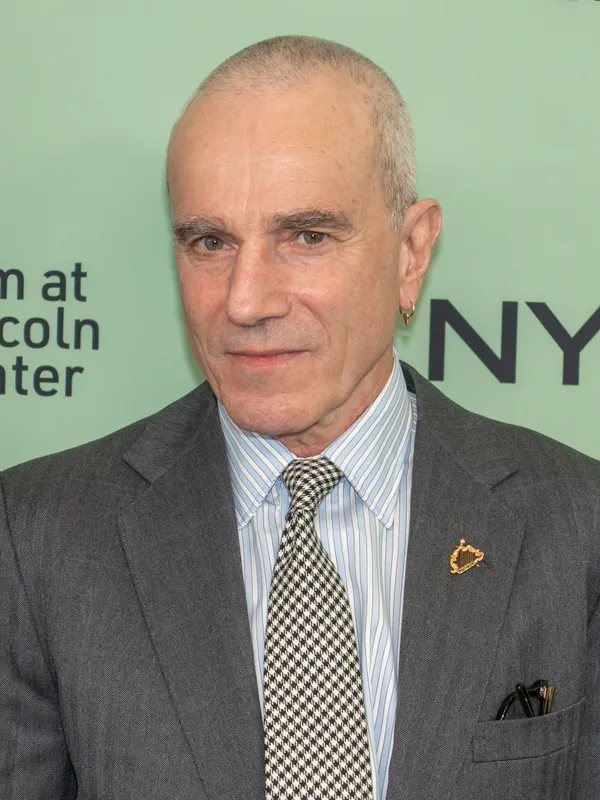
Daniel Day-Lewis
Actor
Daniel Day-Lewis is a retired English actor widely regarded as one of the greatest screen performers of his generation. Famous for his intensive preparation and rare, carefully chosen roles, he is the only male performer to have won the Academy Award for Best Actor three times.
Early life
Daniel Michael Blake Day-Lewis was born on April 29, 1957, in London, England. He was the son of poet Cecil Day-Lewis and actress Jill Balcon, and grandson of film producer Michael Balcon. He attended the Bristol Old Vic Theatre School and began his career in theatre and small film roles.
Career
Day-Lewis gained international attention in the mid-1980s with contrasting performances in My Beautiful Laundrette and A Room with a View, demonstrating a striking range. He won his first Best Actor Oscar for playing the artist and writer Christy Brown in My Left Foot, followed by acclaimed work in The Last of the Mohicans, In the Name of the Father and The Age of Innocence.
His reputation for total immersion in roles became central to his image, often involving extended periods in character and meticulous physical preparation. He delivered landmark performances in Gangs of New York and won his second Best Actor Oscar for There Will Be Blood, playing the ruthless oilman Daniel Plainview. He earned a third Best Actor Oscar for portraying Abraham Lincoln in Steven Spielberg's Lincoln.
Recent work
After his role in the fashion-world drama Phantom Thread, Day-Lewis announced his retirement from acting in 2017. He subsequently stepped away from public film work for several years. He later collaborated on the drama Anemone, directed and co-written by his son Ronan Day-Lewis, marking a return to the screen. Known throughout his career for a deliberate, selective approach, Day-Lewis remains a defining figure in discussions of acting craft.
Method and legacy
Day-Lewis is frequently cited as a leading example of immersive, research-intensive acting, an approach in which he reportedly remained in character for extended periods and undertook extensive physical and vocal preparation for his roles. This dedication, combined with his decision to appear in relatively few films across his career, contributed to a reputation for rarity and quality that few performers have matched. His three Best Actor Academy Awards, alongside numerous other honors, underscore the critical regard in which his work is held. He was also recognized with a knighthood for services to drama. Despite the acclaim, Day-Lewis has been known for guarding his privacy and avoiding much of the publicity associated with film stardom. His infrequent appearances and the intensity of his performances have made each new project a significant event, and his influence is regularly invoked in conversations about the limits and possibilities of screen acting.
Photos
Videos

FAQ
Daniel Day-Lewis — Frequently asked questions
How old is Daniel Day-Lewis?+
Daniel Day-Lewis was born on April 29, 1957, which makes 69 years old.
Where is Daniel Day-Lewis from?+
Daniel Day-Lewis is a citizen of United Kingdom and Ireland.
What is Daniel Day-Lewis known for?+
Daniel Day-Lewis is best known as Actor, Artist, Stage actor. Notable work includes My Left Foot, There Will Be Blood, Lincoln, Gangs of New York, In the Name of the Father.
Is Daniel Day-Lewis on social media?+
Yes — Daniel Day-Lewis is on Facebook. You can find the official links on this page.