Why Jason Momoa's 'Frontier' Hits Different After Hudson's Bay Collapse

The closure of Hudson's Bay in 2025 lends Netflix's overlooked historical drama a strange new resonance — and a compelling reason to revisit it.
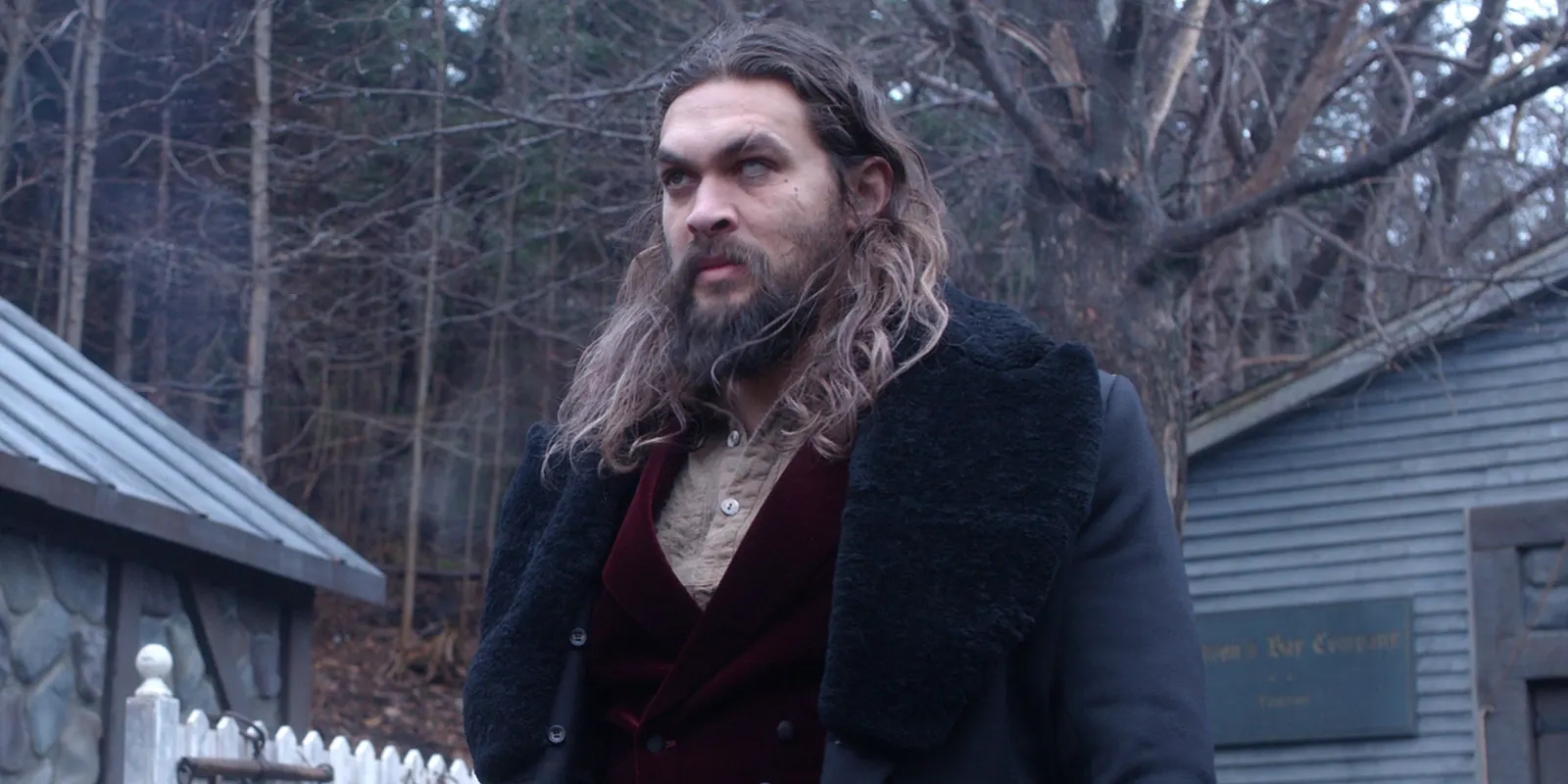
The collapse of Hudson's Bay Company's retail operation in early 2025 — the end of a 355-year commercial run — gave an unexpected second life to a Netflix series most casual viewers had long overlooked. According to Collider, Frontier, the three-season historical drama anchored by Jason Momoa, now functions not only as a period adventure but as something closer to an origin story for an institution whose remarkable arc has finally reached its conclusion.
A Corporation as Protagonist
Set during the late eighteenth century, Frontier builds its central conflict around the Hudson's Bay Company at the apex of its power — a time when the fur trade was among the most lucrative commercial enterprises in North America. Founded in 1670, the company controlled vast stretches of land and exercised an authority that blurred the boundary between corporate interest and governmental force. The series doesn't relegate this history to background texture; it places the company's monopoly at the heart of every major plot movement.
Momoa plays Declan Harp, a half-Irish, half-Cree outlaw whose driving mission is to dismantle the company's stranglehold on the fur trade. Opposing him is Lord Benton, a figure whose willingness to deploy violence on behalf of institutional power gives the series its moral friction. The show wisely refuses to flatten this into a simple hero-versus-villain structure. Nearly every character is animated by overlapping motivations — survival, wealth, revenge, or belonging — and the drama emerges from those competing pressures rather than from any clear moral hierarchy.
Moral Complexity in a Crowded Landscape
When Frontier premiered in 2016, it arrived during a television moment defined by morally ambiguous protagonists. Series like Game of Thrones and Vikings had recalibrated audience expectations around antiheroes, and the market for brutal, historically inflected drama was genuinely crowded. In that context, Frontier was easy to miss. Momoa's portrayal of Harp — a man shaped equally by grief, rage, and a deep refusal to be absorbed into the colonial order — ranks among the more nuanced work of his television career, even if it received a fraction of the attention his later blockbuster roles would generate.
Equally notable is the series' treatment of Indigenous perspectives. Rather than positioning Cree characters as atmospheric backdrop to a European-centric narrative, Frontier integrates Cree communities and their cultural stakes into the story's central examination of colonial expansion. Period dramas that attempt this level of representational ambition don't always succeed, but the effort here is consistent and meaningfully shapes the show's tone.
Historical Symmetry, Newly Visible
What makes revisiting Frontier in 2025 genuinely interesting is the retrospective weight the Hudson's Bay closure places on the narrative. When the show debuted, audiences could watch the company's eighteenth-century brutality knowing that the institution had survived — evolved, softened, and eventually become the department store synonymous with striped blankets and holiday retail traditions. That knowledge provided a kind of dramatic irony, a sense that however vicious the company's origins, it endured.
That certainty no longer applies. Former flagship locations are being redeveloped, the brand has been acquired largely as intellectual property, and the retail operation that defined generations of Canadian consumers is gone. Watching Frontier now, the corporate power struggles at its core feel less like prologue to a long success story and more like the opening chapters of a complete historical arc — one whose final pages we've only just read.
For viewers drawn to historical drama that rewards careful attention — the kind of sustained, considered storytelling that the best of the genre, from Rome to Deadwood, has always offered — Frontier deserves a second look. The passage of time, and one very significant corporate closure, has made it a richer watch than it was at its premiere.
Related on Ni4o: Why Jason Momoa as Lobo in 'Supergirl' Is the Role He Was Always Meant to Play · Hugh Jackman's 'The Sheep Detectives' Becomes a Prime Video Hit · Priyanka Chopra "Shocked" by The Bluff Success, Updates Varanasi
 ProfileJason MomoaActor
Related
Randy Quaid Slams Anne Hathaway Casting in Days of Thunder Sequel
Randy Quaid, who appeared in the original 1990 film, took to X to demand Nicole Kidman's return and dismiss the Hathaway announcement.

Eva Mendes' 'de Gosling' Tattoo Is the Only One She's Ever Wanted
Eva Mendes is showing off her wrist tattoo again — a small but meaningful piece of ink that carries a deep cultural significance.
Steven Spielberg's 'War of the Worlds' Returns to Streaming Amid Debate
Steven Spielberg's 'War of the Worlds' is hitting HBO Max next month, reigniting discussions on its mixed reception.