Vance Sidesteps Trump's Iran Nuclear Claim at White House Briefing

The vice president declined to validate Trump's assertion that Iran was weeks from a nuclear weapon when the U.S. launched its war against the country.
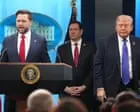
Vice President JD Vance appeared at a White House news conference Friday and found himself navigating a careful line between loyalty to President Donald Trump and declining to personally validate one of Trump's central justifications for going to war with Iran. The exchange highlighted a deepening tension within the administration over both the war's origins and its political fallout.
Vance Defers but Does Not Confirm
When pressed by reporters to endorse Trump's repeated assertion that Iran had been only weeks away from possessing a nuclear weapon when the U.S. initiated full-scale hostilities in February 2026, Vance stopped short of doing so. He acknowledged that preventing Iran from acquiring a nuclear weapon was a vital objective, calling Iran "the biggest state sponsor of terrorism" and warning of catastrophic consequences should it obtain such a capability. But he pointedly redirected credit — and responsibility — for the decision to the president himself.
"I think the president is the one who makes the decision, and the president has said he would do it again," Vance said, according to The Guardian World. "My view is that my job is to support the president of the United States."
The statement was notable for what it omitted: Vance never directly affirmed Trump's claim that an imminent Iranian nuclear threat made the war unavoidable.
A Claim at Odds With the Intelligence Record
Trump has made the two-weeks-to-a-nuclear-weapon argument dozens of times since the conflict began, including at a recent campaign rally in Alaska. The assertion, however, sits uneasily alongside the public record. In March 2025, then-Director of National Intelligence Tulsi Gabbard testified before Congress that U.S. intelligence agencies continued to assess that Iran was not building a nuclear weapon and that Supreme Leader Khamenei had not authorized a nuclear weapons program since suspending one in 2003.
Despite that assessment, Trump ordered airstrikes on Iranian nuclear enrichment facilities in June 2025, declaring afterward that Iran's key sites had been "completely and totally obliterated." Eight months later, he announced a full-scale war, again framing it as necessary to prevent Iran from obtaining a nuclear weapon — a rationale that appears difficult to reconcile with his administration's own prior intelligence conclusions.
The president's foreign policy posture has drawn scrutiny across a range of fronts. His administration's handling of international relationships has been a recurring point of contention, as seen in Trump Meets NATO Chief Rutte Amid Europe Tensions and in economic disputes such as Trump Threatens 100% Tariff on EU Digital Services Tax.
Midterm Fallout and Intra-Party Friction
The Friday briefing was partly shaped by reports that Trump had been irritated by a social media post Vance made the morning after the midterm elections, in which the vice president stated bluntly: "The reason we lost is the war." Vance went further, challenging fellow Republicans to at least make an honest case that the losses were a worthwhile price to pay — signaling he himself was not prepared to make that argument.
At the briefing, Trump pushed back against characterizations that he was displeased with Vance, saying he found the statement "fine" but adding that he would have included an affirmative answer to the question of whether he would go to war again. The two men's public appearances together on Friday were calibrated to project unity, though the substance of Vance's answers told a more complicated story.
The administration's domestic political standing has been under pressure from multiple directions. Financial disclosures showing Trump Reports $2.2 Billion in Revenue During Second Term's Initial Year have added to scrutiny of the presidency's broader profile, while legislative friction has also mounted, including disputes like Trump Stalls Bipartisan Housing Bill Over SAVE Act.
What Comes Next
The vice president's office did not respond to a request for comment following Friday's briefing. With the midterms having cost Republicans Senate seats and internal questions about the war's justification remaining unresolved, the administration faces sustained pressure to defend both the intelligence basis and the strategic rationale for the conflict — pressure that Vance, for now, appears unwilling to fully absorb on the president's behalf.
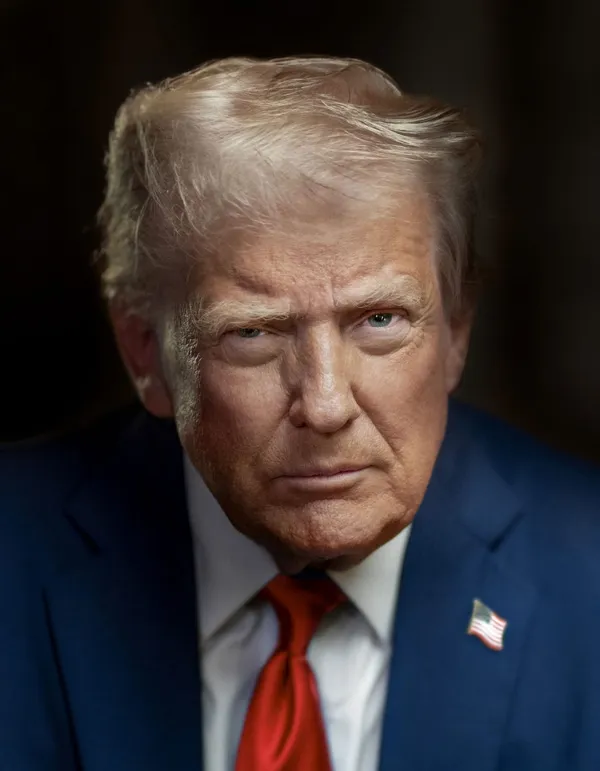 ProfileDonald Trump45th and 47th President of the United States
Related
California Senate Passes Post-Production Tax Bill; Newsom Must Act
SB 2319 cleared the California State Senate 33-5, creating a dedicated post-production tax incentive as the L.A. film industry continues to shrink.

Netanyahu Condemns West Bank Attack on NBC News Team as Settler Violence Escalates
Masked settlers assaulted an NBC News crew and a Palestinian woman in Jalud, injuring four journalists and drawing condemnation from Israel's prime minister.
Park Service Backs Trump Arch Despite Threat to DC Landmark Sightlines
A federal report endorses the proposed 250-foot gilded arch while acknowledging it will disrupt the visual integrity of dozens of historic Washington sites.