Trump Warns of Military Action Against Iran If Diplomacy Stalls

President Trump says the U.S. is engaged in serious talks with Iran but will resume strikes if negotiations do not produce quick results.

President Donald Trump has renewed his threat to unleash military force against Iran, warning that ongoing diplomatic contacts must produce results quickly or the U.S. will resume its offensive campaign. The remarks came Monday in an interview with Axios and were echoed later that day aboard Air Force One and at a rally in Michigan.
Trump Sets a Tight Deadline
Speaking to Axios, Trump characterized the current engagement with Tehran as substantive, while making clear the window for a negotiated outcome is narrow. "We are in very deep talks with Iran. If they don't work out, we will go back to very strong military action," he said. When pressed on how long he would allow the process to run, he replied: "Not much time. Either it goes fast or not at all."
Later, speaking to reporters on Air Force One, Trump attributed Iran's willingness to engage directly to pressure from American strikes. "They would not have requested the meeting if we were doing poorly," he said. "The only reason they want to meet is because we've been hitting them very hard." At the Michigan rally, he struck a harder edge: "You can't bribe them. You've got to beat them, and we'll beat the hell out of them."
The remarks reflect a pressure-focused diplomatic posture that has characterized much of Trump's foreign engagement during his second term. For more on how that approach has played out in other arenas, see our earlier report on Trump Meets NATO Chief Rutte Amid Europe Tensions.
Tehran Disputes That Direct Talks Are Underway
Iranian officials offered a sharply different characterization of the situation. Foreign ministry spokesperson Esmaeil Baqaei stated that while intermediaries may be passing messages between Washington and Tehran regarding developments in the region, Iran is not currently engaged in any direct negotiations with the United States. The gap between the two governments' descriptions of events underscores the fragility of the current diplomatic moment.
According to The Guardian World, the conflict itself began in late February with a wave of U.S.-Israeli strikes that has since rattled both the region and global energy markets.
The Strait of Hormuz at the Center
Much of the diplomatic activity is focused on the Strait of Hormuz, the critical waterway through which a significant share of the world's oil supply passes. Oman and Iran have been engaged in technical talks — held in Tehran last Friday and Saturday — aimed at reaching an agreement on the future management of the strait.
The sticking point remains Iran's demand that vessels transiting the waterway pay a fee or toll to a consortium led by Tehran and Muscat. Oman, supported by China, Qatar, and Pakistan, has been pushing for a voluntary contributions model similar to the arrangement governing the Strait of Malacca, which funds environmental and safety services for shipping. The IMO secretary general has acknowledged the Malacca model as worth examining for Hormuz.
Iranian officials separately reported that six vessels with disabled navigation systems attempted to use the southern route through the strait on Sunday; one was fired upon and the rest were turned back.
The humanitarian and economic toll of the disruption is becoming clearer. The United Nations Office for Project Services reported Monday that transits through the Strait of Hormuz had dropped to roughly five ships per day over the prior week, compared with approximately 130 per day before the conflict began.
Military and Political Pressures on Washington
The U.S. pause in its bombing campaign was shaped in part by internal military advice, according to senior officials cited in the reporting. Admiral Brad Cooper, the top U.S. commander in the Middle East, reportedly recommended halting the campaign around the strait after assessing it had reached the ceiling of its tactical effectiveness. Senior officials also flagged concerns about depleted munitions stockpiles and the toll of Iranian reprisals on U.S. bases in Kuwait and Jordan.
Trump has demonstrated a pattern of wielding economic and diplomatic threats simultaneously across multiple fronts. Earlier this year, he similarly applied pressure through trade policy, as seen in reporting on Trump Threatens 100% Tariff on EU Digital Services Tax. Whether his stated deadline on Iran talks translates into renewed military action or further negotiation remains the central uncertainty.
Related on Ni4o: Trump Stalls Bipartisan Housing Bill Over SAVE Act
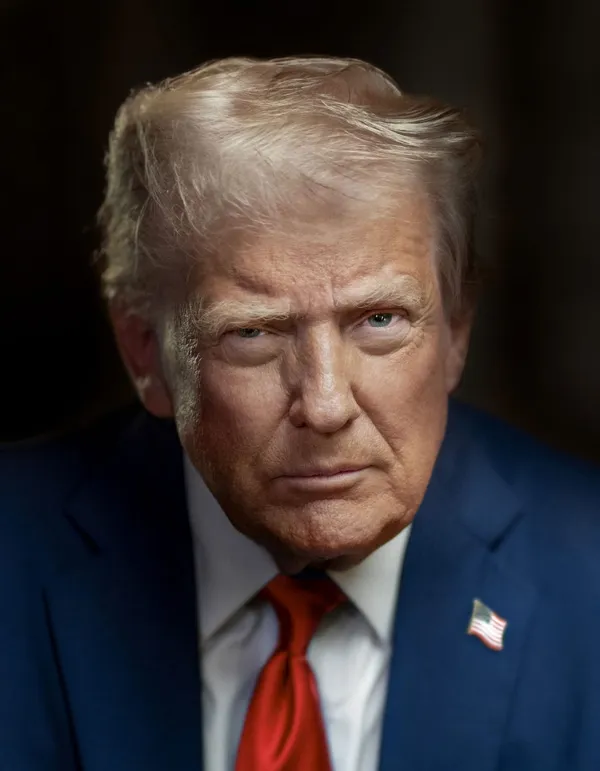 ProfileDonald Trump45th and 47th President of the United States
Related
California Senate Passes Post-Production Tax Bill; Newsom Must Act
SB 2319 cleared the California State Senate 33-5, creating a dedicated post-production tax incentive as the L.A. film industry continues to shrink.
Netanyahu Condemns West Bank Attack on NBC News Team as Settler Violence Escalates
Masked settlers assaulted an NBC News crew and a Palestinian woman in Jalud, injuring four journalists and drawing condemnation from Israel's prime minister.

Park Service Backs Trump Arch Despite Threat to DC Landmark Sightlines
A federal report endorses the proposed 250-foot gilded arch while acknowledging it will disrupt the visual integrity of dozens of historic Washington sites.