Trump Takes Mail-In Voting Fight to Supreme Court Ahead of Midterms

The Trump administration has filed a third emergency appeal to the Supreme Court seeking to enforce executive-order restrictions on mail-in ballots.
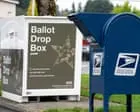
With states already dispatching mail-in ballots for November's midterm elections, the Trump administration has returned to the Supreme Court in an urgent bid to reinstate federal restrictions on how those ballots are delivered. The legal campaign, now in its third round before the nation's highest court, carries direct implications for control of Congress.
The Core Legal Dispute
President Trump signed an executive order in March directing the U.S. Postal Service to deliver mail-in ballots only to voters whose names appear on a DHS-maintained list of federally verified citizens eligible to cast ballots in each state. The practical effect would be to sharply limit which voters receive ballots through the mail. Federal district court judge Indira Talwani blocked enforcement of that order, and on Friday she extended the injunction — prompting the administration's latest emergency filing to the Supreme Court on Sunday, according to The Guardian World.
The USPS has indicated it is prepared to comply with the executive order's requirements — including collecting the names and barcodes associated with mail-in ballots for federal races — the moment any court-ordered injunction is lifted.
Administration Argues Time Is Running Out
Solicitor General John Sauer warned in the emergency application that the window for meaningful action is closing fast. He noted that North Carolina has already begun mailing ballots, Alabama was set to follow on September 9, and at least five additional states were scheduled to begin the process the week of September 13.
"Once those ballot envelopes enter the mailstream, there is no retrieving them," Sauer wrote, adding that the continued injunction risks introducing "confusion and chaos" because it renders compliance with the new federal rules voluntary rather than mandatory.
The administration has characterized the measures as straightforward steps to protect election integrity, describing the district court's blocking order as "unreasoned and unlawful."
Opposition and Constitutional Questions
Democratic-led states and voting rights organizations have pushed back vigorously, arguing that the executive order oversteps constitutional boundaries and intrudes on election administration authority that has traditionally rested with the states. Officials responsible for running state elections have added a logistical concern: there is simply not enough time before November to rebuild their systems around the new federal requirements.
The Supreme Court has previously allowed aspects of the administration's plan to move forward but has not yet rendered a definitive ruling on the order's legality — leaving the central constitutional question unresolved even as ballots begin to circulate.
Electoral Stakes
The outcome matters enormously. Roughly one in three American voters cast their ballots by mail, a figure that grew substantially during the pandemic and has remained elevated. Any restrictions that take effect mid-cycle could disrupt voting for millions of people, with both chambers of Congress in play this November.
Trump has long maintained that mail-in voting is susceptible to fraud — claims that have been repeatedly examined and rejected by courts and election officials — and he has publicly blamed absentee balloting for his 2020 defeat to Democrat Joe Biden, despite his own documented use of the method. That broader pattern of executive action on domestic policy is consistent with other assertive moves his administration has made across multiple fronts; earlier this year, for instance, the White House stalled a bipartisan housing bill over SAVE Act provisions, illustrating a willingness to leverage legislative and regulatory levers simultaneously.
What Comes Next
The Supreme Court must now decide whether to intervene before the midterm ballot-mailing process becomes effectively irreversible in the states queued to send ballots next week. Any delay in a ruling, or a decision to allow the injunction to stand, would likely mean the executive order's restrictions play no role in the November elections. A ruling in the administration's favor, conversely, would force states to rapidly reconfigure systems on an extremely compressed timeline — a prospect election administrators across the political spectrum have described as logistically untenable.
Related on Ni4o: Trump Stalls Bipartisan Housing Bill Over SAVE Act · Trump Meets NATO Chief Rutte Amid Europe Tensions
 ProfileDonald Trump45th and 47th President of the United States
Related

California Senate Passes Post-Production Tax Bill; Newsom Must Act
SB 2319 cleared the California State Senate 33-5, creating a dedicated post-production tax incentive as the L.A. film industry continues to shrink.

Netanyahu Condemns West Bank Attack on NBC News Team as Settler Violence Escalates
Masked settlers assaulted an NBC News crew and a Palestinian woman in Jalud, injuring four journalists and drawing condemnation from Israel's prime minister.
Park Service Backs Trump Arch Despite Threat to DC Landmark Sightlines
A federal report endorses the proposed 250-foot gilded arch while acknowledging it will disrupt the visual integrity of dozens of historic Washington sites.