Trump Endorses Federal Film Tax Credit, Calls Hollywood a 'Disaster'

President Trump has thrown his support behind a federal film and TV tax incentive, blasting the state of the American entertainment industry.
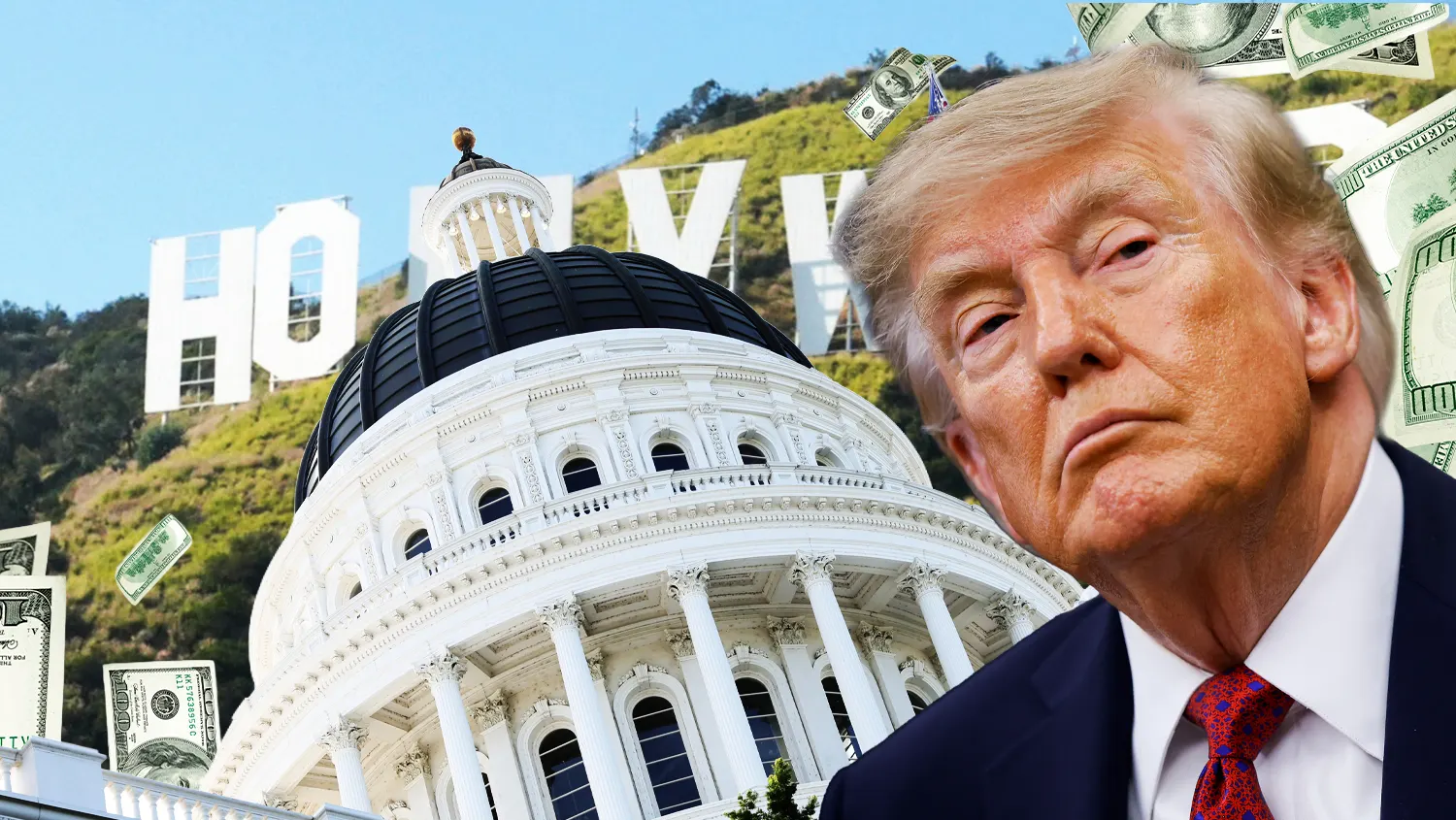
President Donald Trump formally endorsed the creation of a federal film and television tax credit on Monday, coupling the announcement with a sharp critique of Hollywood's current standing — and a pointed dig at production activity north of the U.S. border.
Trump's Announcement
Following a meeting with actor and longtime ally Jon Voight, Trump took to social media to declare that "Hollywood is a Complete and Total Disaster," according to Deadline, which first reported the development. The post marked the administration's clearest public commitment yet to pursuing a domestic production incentive at the federal level — a policy long sought by U.S. studio executives and entertainment unions who argue that American productions have been steadily migrating to Canada and other jurisdictions offering more competitive tax structures.
Trump's language, while characteristically blunt, reflected a broader concern shared across the industry: that the United States lacks a unified federal framework to compete with the aggressive incentive regimes offered by Canada, the United Kingdom, and several European nations. The reference to "Hollywood North" — a colloquial term for the robust Canadian production industry centered in Vancouver and Toronto — underscored the administration's framing of the issue as one of economic competition and national prestige.
Voight's Role and Industry Context
Jon Voight, who was appointed by Trump as a special ambassador to Hollywood earlier this year, appears to have played a direct role in shaping the president's engagement on this issue. Voight has been vocal about his belief that the American entertainment industry requires federal intervention to reverse what he and others describe as a sustained decline in domestic production volume. The Monday meeting between the two, which preceded Trump's post, suggests Voight's ambassadorial brief is producing tangible policy discussions at the White House level.
The U.S. film and television industry has long operated without a federal-level production incentive, leaving individual states to compete among themselves — and against foreign governments — for studio dollars. States like Georgia, New Mexico, and New York have built substantial production economies on the back of their own credit programs, but industry advocates argue that a coordinated federal approach could more effectively counter international competition.
Political Dimensions
The move is not without its political complexities. A federal tax credit would require congressional approval, and the mechanics — how it would be structured, who would qualify, and how it would interact with existing state programs — remain undefined. Senator Adam Schiff responded to the news on social media, acknowledging the broader goal of keeping production in the United States while signaling that the details of any proposal would warrant careful scrutiny.
Trump's embrace of a pro-Hollywood policy position comes amid a notably complicated relationship between his administration and the entertainment industry. The president has frequently clashed with the cultural mainstream that Hollywood represents, yet he has simultaneously sought to position himself as a defender of American industry writ large. That tension has surfaced in other contexts as well — from his approach to international trade and digital services to questions about federal spending priorities and economic leverage.
What Comes Next
No formal legislative text has been introduced, and the White House has not outlined a specific timeline for translating Trump's endorsement into a concrete proposal. Industry lobbyists and union representatives are expected to engage aggressively with the administration in the coming weeks to help shape the framework of any potential credit.
For an entertainment sector that has weathered strikes, streaming upheaval, and the ongoing loss of productions to foreign locations, the prospect of federal support represents a significant policy development — regardless of the outcome. Whether Trump's backing translates into durable legislation will depend heavily on the administration's ability to build bipartisan support in a Congress already managing a crowded economic agenda. The president's financial disclosures and revenue picture suggest he remains deeply invested in projecting economic wins, and a revitalized domestic film industry could serve as a useful political symbol alongside broader efforts to bring jobs back to American soil.
 ProfileDonald Trump45th and 47th President of the United States
Related
California Senate Passes Post-Production Tax Bill; Newsom Must Act
SB 2319 cleared the California State Senate 33-5, creating a dedicated post-production tax incentive as the L.A. film industry continues to shrink.

Netanyahu Condemns West Bank Attack on NBC News Team as Settler Violence Escalates
Masked settlers assaulted an NBC News crew and a Palestinian woman in Jalud, injuring four journalists and drawing condemnation from Israel's prime minister.
Park Service Backs Trump Arch Despite Threat to DC Landmark Sightlines
A federal report endorses the proposed 250-foot gilded arch while acknowledging it will disrupt the visual integrity of dozens of historic Washington sites.