Thomas Bangalter Opens Up About the Pain of Scoring Tron: Legacy

Daft Punk's Thomas Bangalter reveals the orchestral ambitions and creative frustrations that made the Tron: Legacy score a grueling experience.
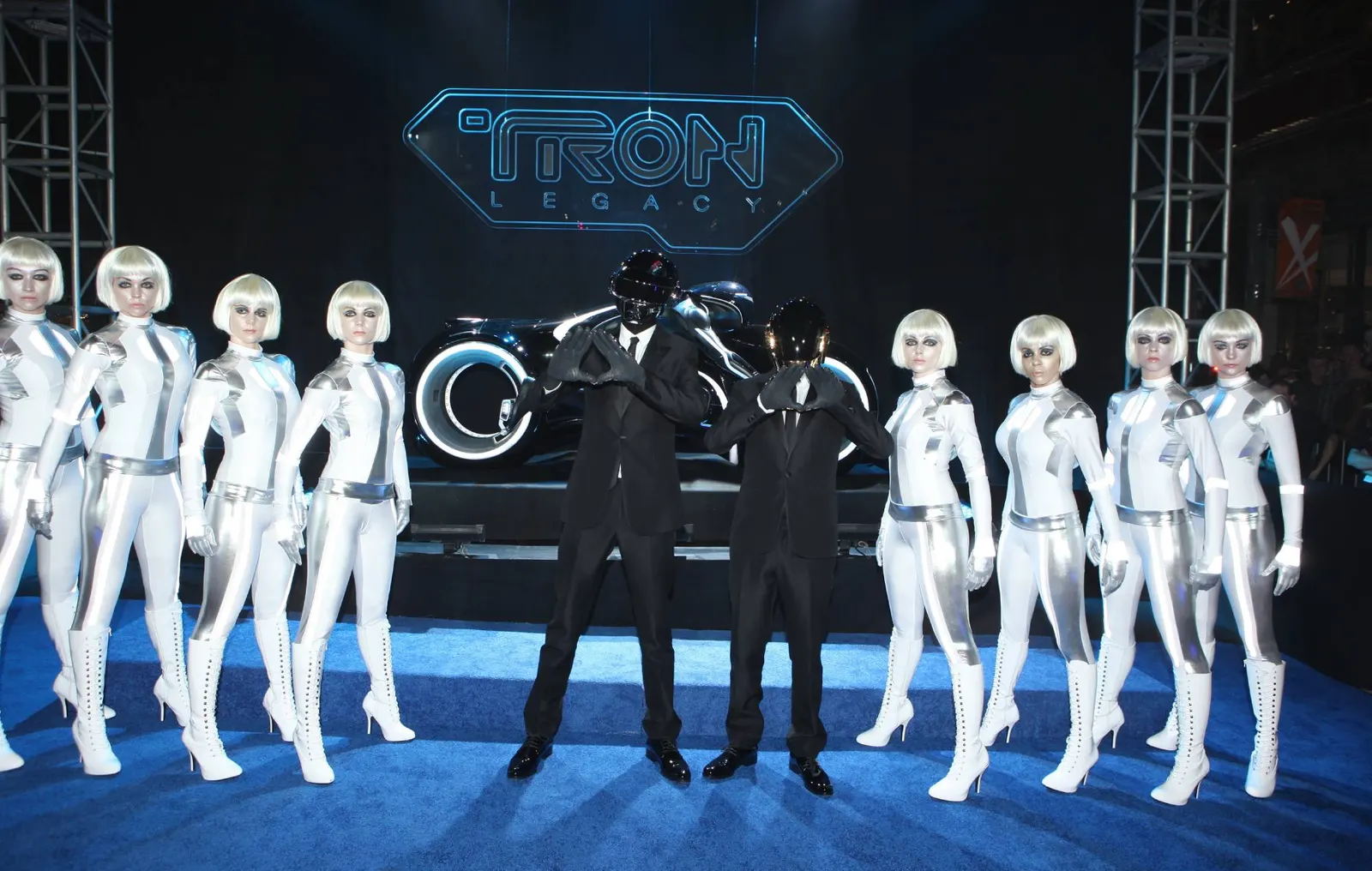
Before the helmets came off for good, Daft Punk took one of their boldest swings in an unlikely place — a Disney sci-fi sequel about glowing motorcycles and digital gladiators. But according to Thomas Bangalter, the road to that landmark score was paved with more frustration than triumph.
An Electronic Legend Walks Into Hollywood
When director Joseph Kosinski came to Bangalter and Guy-Manuel de Homem-Christo for the 2010 film Tron: Legacy, his vision was straightforward: keep it purely electronic, lean into what the duo did best. Bangalter, however, had other ideas entirely. Having spent roughly 15 years crafting synthesizer-driven music, he saw the Disney commission as a rare doorway into something grander — a full symphony orchestra, old Hollywood grandeur, a Fantasia-scale sonic canvas.
The push and pull between Kosinski's original concept and Bangalter's orchestral aspirations shaped the score's DNA from the very beginning, producing a hybrid that blended lush strings with pulsing electronics in ways nobody had quite heard before.
The Wall Bangalter Kept Hitting
For all its ambition, the project came with structural limitations that proved genuinely maddening. Bangalter, speaking on a recent episode of The A24 Podcast in conversation with Dev Hynes (aka Blood Orange), described how months of painstaking synth work kept colliding with one fundamental problem: frequency conflict. Anything sitting in the mid-range of the sonic spectrum — exactly where much of his most interesting material lived — would step on the film's dialogue. The score had to constantly yield to the story rather than drive it.
For a musician hardwired to push ideas into the foreground, learning to pull back felt, in his own words, "depressing." He described arriving with a full arsenal of concepts only to find himself retreating toward more conventional film-scoring methods — the very traditions he'd spent a career sidestepping. According to NME, Bangalter acknowledged that those traditions exist not as arbitrary constraints but as accumulated wisdom: proof of what simply doesn't work when music and narrative compete for the same space.
A Milestone That Left Its Mark
Despite the creative friction, Tron: Legacy stands as a genuine landmark in Daft Punk's catalogue — their first complete film score and, by Bangalter's own admission at the time, the most complex project the duo had ever tackled. It didn't fade quietly either. A deluxe edition surfacing previously unreleased material dropped in 2020 for the film's tenth anniversary, followed by a vinyl reissue the following year, keeping the soundtrack alive for a new generation of listeners.
Given Bangalter's ongoing fascination with the intersection of technology and artistic expression, it's worth reading his broader thoughts on where music is heading — his critiques of AI's growing role in the creative process offer a sharp companion piece to these Tron reflections.
Life After the Helmets
Daft Punk dissolved in 2021 after 28 years together, and Bangalter has since made clear that a reunion isn't on the horizon — there are, he says, still too many unexplored territories to map on his own. Even so, the duo's shadow looms large. This past summer, 'One More Time' served as France's official goal anthem during the FIFA World Cup, proof that some music refuses to age out of the cultural moment.
It's a fitting irony for a pair of artists who always operated behind masks and mythology: their most emotionally raw legacy might not be the helmet-clad robots the world fell in love with, but a moody, orchestra-heavy score for a film about a man trapped inside a machine — born out of months of limitation and, yes, a fair amount of depression.
For fans following the broader landscape of artists pushing genre boundaries, the conversation around Pharrell's recent live debut of new material offers another window into how legacy acts continue to reinvent themselves long after their defining moments.
Related on Ni4o: From Monastery to Music: Father Tabakis' Groundbreaking Sound
 ProfileDaft PunkElectronic music duo
Related

Olivia Rodrigo's Daisy Chain Fields Festival: A Celebration of Music and Purpose
The Daisy Chain Fields Festival, headlined by Olivia Rodrigo, united fans and nonprofits in a joyous celebration of women and music.
Miley Cyrus Hints at New Era With Cryptic Red-and-Black Teaser
Exactly one year after 'Something Beautiful,' Miley Cyrus is flooding the internet with mysterious red-and-black imagery — and a new label to back it up.
How a Nashville Laundromat Sparked Dolly Parton's Six-Decade Love Story
Dolly Parton and Carl Dean built one of music's most enduring marriages on a simple formula: distance, devotion, and deep difference.