The Kubrick Film Nolan Calls 'Pure Cinema' — But Still Can't Fully Explain

Christopher Nolan has openly admitted that 2001: A Space Odyssey confounded him as a child — and insists it still does. That hasn't dimmed his reverence.
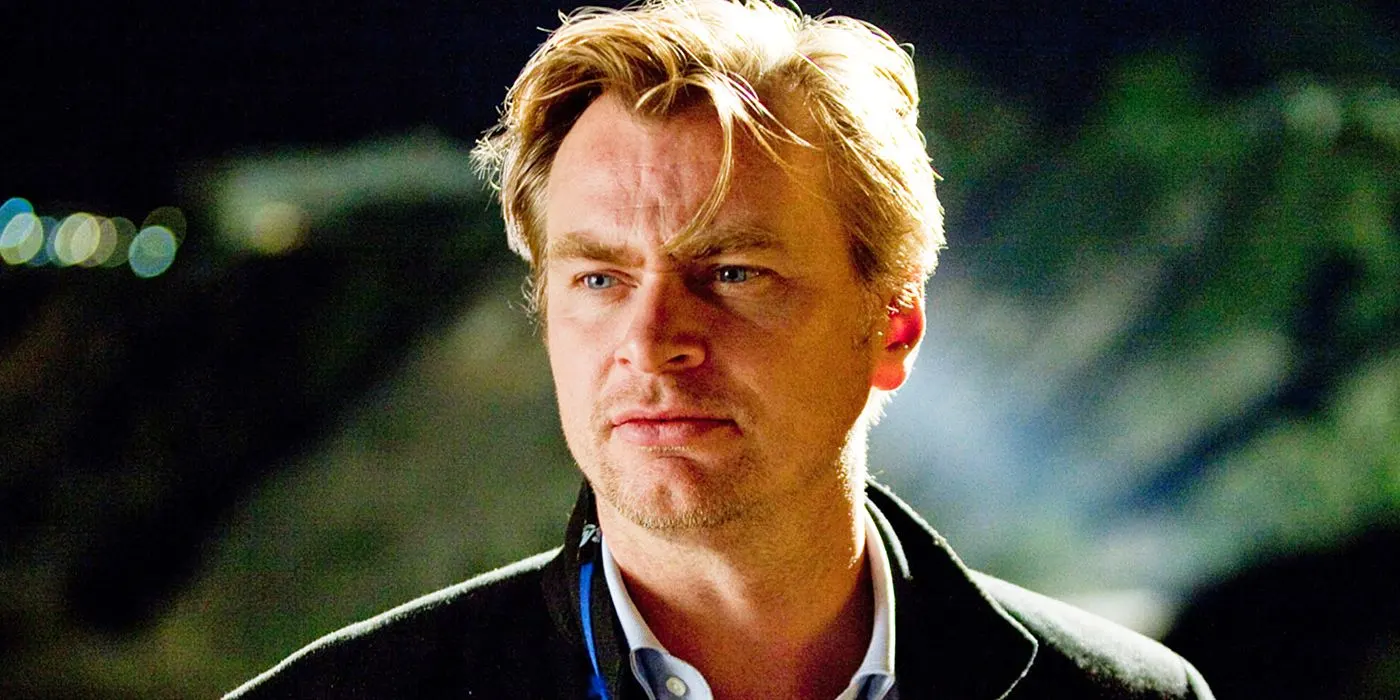
Few confessions from a filmmaker of Christopher Nolan's stature are as disarming as this one: the director behind some of cinema's most intellectually intricate works readily admits he doesn't fully understand one of his favorite films. That film is Stanley Kubrick's 2001: A Space Odyssey, and for Nolan, that incomprehension is precisely the point.
A Seven-Year-Old in the Dark
According to Collider, Nolan first encountered Kubrick's 1968 masterwork at the age of seven — just a year after his introduction to Star Wars — and the experience left an indelible mark that no amount of subsequent analysis has fully decoded. Speaking in an interview with Entertainment Weekly, Nolan recalled the sensation vividly: the feeling of being transported somewhere entirely alien, of surrendering to a world so meticulously constructed that disbelief never entered the equation. "I was seven years old, so I couldn't claim to have understood the film," he said. "I still can't claim that." Yet rather than frustration, what he remembers is wonder — a state of pure, unmediated cinematic absorption that he described, simply and emphatically, as "pure cinema."
That phrase carries real weight coming from Nolan, a director whose own body of work consistently interrogates what the medium can do. From the fractured chronology of Memento to the layered dreamscapes of Inception and the meta-structural elegance of The Prestige, his films treat storytelling architecture as both subject and form. His commitment to the theatrical, large-format experience is similarly well-documented — he has, for instance, championed IMAX as a storytelling tool for other directors as well.
What Kubrick Built That Still Holds
2001: A Space Odyssey follows a crew of astronauts on a mission to Jupiter, drawn there by the discovery of a cryptic extraterrestrial monolith. On its surface, the premise is spare. What Kubrick constructed around it, however, was anything but: a film of extraordinary visual patience, scientifically rigorous production design, and a near-total resistance to conventional dramatic exposition. The dialogue is restrained almost to the point of abstraction, forcing the imagery and Howard's arrangement of classical music to carry the emotional architecture. Shot on 70mm film, it retains a clarity and physical presence that many digitally produced films released decades later simply cannot match.
The film also introduced the world to HAL 9000, the eerily calm artificial intelligence voiced by Douglas Rain, whose chilling logic made him one of the defining AI characters in all of fiction — a legacy that resonates with particular sharpness in contemporary conversations about technology. Nolan himself has weighed in on AI's role in creative industries; his perspective on the matter is worth considering alongside his deep reverence for a film whose most frightening character is a machine that thinks. His broader views on AI in cinema reflect a filmmaker deeply invested in preserving what is irreducibly human about the art form.
Interstellar as Spiritual Heir
The influence of 2001 is not merely biographical for Nolan — it's structural. His 2014 film Interstellar inhabits recognizably similar emotional and philosophical territory: the vast, indifferent beauty of deep space, the distortion of time, the encounter with forces beyond human comprehension, and ultimately, a meditation on what drives our species to look outward. Both films treat the cosmos as a mirror for interior experience, using the unknowable to illuminate the deeply personal. The visual language of Interstellar — its long, contemplative shots of spacecraft against the infinite — owes an unmistakable debt to Kubrick's template.
Nolan is now at work on The Odyssey, another project steeped in the kind of mythic, expansive storytelling that rewards patience over easy resolution — a sensibility that traces a clear line back to that childhood afternoon watching Kubrick's monolith emerge from the dark.
The Value of Not Understanding
What Nolan's relationship with 2001 ultimately illuminates is a generative truth about ambitious filmmaking: the most enduring works are often those that refuse to fully close. A film that can be entirely comprehended on first viewing may satisfy, but it rarely haunts. 2001: A Space Odyssey was designed to outlast understanding, to plant something in the viewer that grows and shifts over time. That a director of Nolan's sophistication still approaches it with a degree of productive bewilderment is not an admission of limitation. It is, rather, the highest possible compliment.
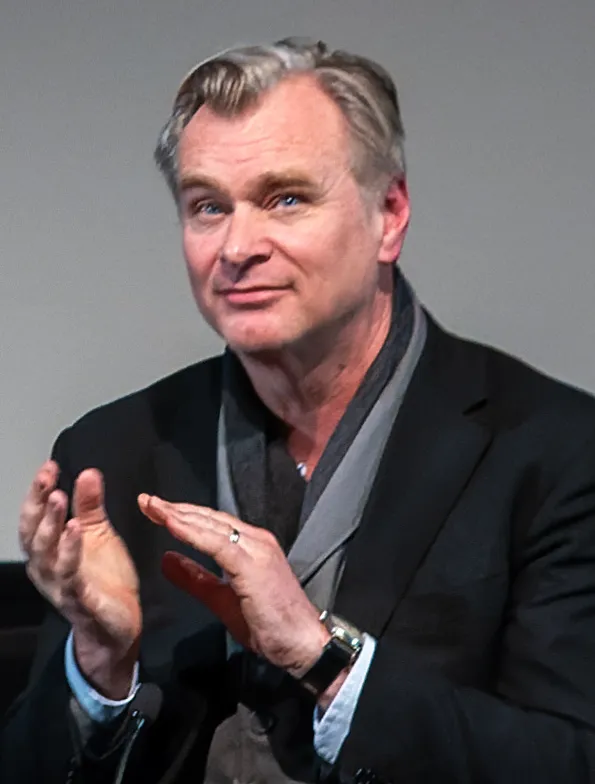 ProfileChristopher NolanFilmmaker
Related
Randy Quaid Slams Anne Hathaway Casting in Days of Thunder Sequel
Randy Quaid, who appeared in the original 1990 film, took to X to demand Nicole Kidman's return and dismiss the Hathaway announcement.

Eva Mendes' 'de Gosling' Tattoo Is the Only One She's Ever Wanted
Eva Mendes is showing off her wrist tattoo again — a small but meaningful piece of ink that carries a deep cultural significance.
Steven Spielberg's 'War of the Worlds' Returns to Streaming Amid Debate
Steven Spielberg's 'War of the Worlds' is hitting HBO Max next month, reigniting discussions on its mixed reception.