Supreme Court Blocks Trump's Mail Ballot Restrictions Ahead of Midterms

The justices declined to reinstate new postal delivery rules that critics warned would have disrupted mail voting for millions of Americans.
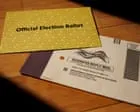
The Supreme Court on Monday turned back the Trump administration's emergency bid to enforce sweeping new restrictions on mail-in ballot delivery, preserving the voting procedures that states have relied on for years as midterm balloting is already underway. The unsigned order represents a significant legal defeat for the White House, which had mounted a last-minute push to reshape how ballots are handled by the postal service, according to The Guardian World.
What the Court Decided
In a one-paragraph unsigned order, the justices concluded that the federal government was unlikely to prevail on the merits of its case and that the factors required for emergency relief did not weigh in the administration's favor. The ruling preserves a lower-court injunction blocking the new rules from taking effect, leaving states free to continue distributing mail ballots as they have done in prior election cycles.
Justice Brett Kavanaugh filed a concurrence acknowledging the government had at least a reasonable chance of success on the underlying legal questions, but concluded that imposing a sweeping operational change on election systems so close to voting day would itself be unreasonable. Justices Samuel Alito and Clarence Thomas dissented, with Alito arguing that states challenging the rule bore responsibility for the compressed timeline and should not benefit from delays they had partly caused.
The Rule and the Legal Challenge
The controversy traces back to an executive order signed by Trump on March 31, directing the postal service to halt ballot delivery to voters whose eligibility could not be confirmed against Department of Homeland Security and other federal databases. The administration's plan would also have required states to adopt a standardized envelope design and submit voter eligibility lists to a new online portal, with the postal service empowered to refuse delivery to non-compliant states.
Twenty-three states, the District of Columbia, and a coalition of voting rights organizations — including the NAACP — challenged the plan in court, arguing that the Constitution grants no authority to the executive branch to dictate how states administer their elections. Lower courts agreed. A whistleblower report added urgency to those concerns, warning that technical flaws in the portal — including the risk that a single bar-code error could cause an entire batch of ballots to be discarded — could result in millions of ballots never reaching voters.
Election officials in Alabama, North Carolina, and Wisconsin had already begun dispatching mail ballots to voters while the new system remained non-functional, underscoring what state officials described as the logistical impossibility of compliance on such a compressed schedule.
Reaction From Both Sides
Kristen Clarke, general counsel for the NAACP and a former head of the Justice Department's civil rights division, called the administration's move an eleventh-hour attempt to destabilize the mail voting system, arguing that civil rights groups had acted as quickly as legally possible once the final rule was issued roughly ten days before the ruling. She characterized Justice Alito's criticism of the states' timing as disingenuous.
Samantha Tarazi, co-founder and CEO of the Voting Rights Lab, welcomed the decision but cautioned that the fight was not over. She noted that tens of thousands of military ballots stationed abroad were legally required to be dispatched by all fifty states within days, making the injunction particularly consequential. Representative Robert Garcia of California called the outcome a rebuke of what he described as an illegal effort to interfere with elections.
Broader Pattern of Election-Related Legal Battles
Monday's outcome adds to a growing list of federal court setbacks for the administration's election-related agenda. Trump, who has long opposed mail voting and falsely attributed his 2020 loss to Joe Biden to the practice, has continued to push restrictions even as he has personally voted by mail on multiple occasions in recent years. The episode is one of several instances in which administration policy initiatives have been halted by the judiciary — a pattern also visible in unrelated domains, such as when Trump stalled a bipartisan housing bill over immigration-related demands.
With nearly one-third of the American electorate casting ballots by mail, the stakes of the legal dispute extended well beyond procedural questions about postal logistics. The ruling ensures that the mechanics of voting in the midterms will remain, for now, unchanged.
Related on Ni4o: Trump Stalls Bipartisan Housing Bill Over SAVE Act · Trump Meets NATO Chief Rutte Amid Europe Tensions
 ProfileDonald Trump45th and 47th President of the United States
Related

California Senate Passes Post-Production Tax Bill; Newsom Must Act
SB 2319 cleared the California State Senate 33-5, creating a dedicated post-production tax incentive as the L.A. film industry continues to shrink.

Netanyahu Condemns West Bank Attack on NBC News Team as Settler Violence Escalates
Masked settlers assaulted an NBC News crew and a Palestinian woman in Jalud, injuring four journalists and drawing condemnation from Israel's prime minister.

Park Service Backs Trump Arch Despite Threat to DC Landmark Sightlines
A federal report endorses the proposed 250-foot gilded arch while acknowledging it will disrupt the visual integrity of dozens of historic Washington sites.