Supreme Court Blocks Trump-Backed Missouri Map From 2026 Elections

The Supreme Court unanimously rejected a Republican-drawn Missouri congressional map backed by Trump, ending months of legal turmoil ahead of November voting.

The U.S. Supreme Court on Friday delivered a decisive ruling against a Missouri congressional redistricting effort championed by Donald Trump, shutting down a Republican-friendly map that had already been used in the state's August primaries. The decision, issued without any noted dissents, brings a close to one of the most prolonged and legally complex redistricting battles the country has seen in recent years.
What the Court Decided
The justices moved to block a ruling from the Eighth U.S. Circuit Court of Appeals that would have reinstated the revised congressional map for the November general election. In an unsigned opinion, the court was blunt about the consequences of reversing course mid-election: "At this late date, ordering reversion to the 2025 map in the midst of an ongoing election would usher in electoral chaos." The court directed lower courts not to interfere with Missouri's use of the 2022 congressional boundaries in the upcoming contest.
Instead of the new map, Missouri voters will proceed under the same district lines that governed the 2022 and 2024 elections, consistent with a ruling issued earlier in September by the Missouri Supreme Court.
The Political Stakes Behind the Map
The redistricting effort was no routine administrative update. At the urging of Trump and Republican Governor Mike Kehoe, Missouri's legislature passed revised district boundaries last September with an explicit goal: flipping one additional House seat from Democratic to Republican hands. Republicans currently hold six of Missouri's eight congressional districts and sought to expand that advantage to seven.
The redrawn map targeted the Kansas City-based district represented by longtime Democratic Congressman Emanuel Cleaver, dramatically reshaping its composition. According to an Associated Press estimate cited by The Guardian World, roughly 59% of potential voters in Cleaver's district were new to it under the revised boundaries — a seismic shift that rippled across most of Missouri's other districts as well.
This kind of aggressive mid-decade remapping is part of a broader strategy Trump has pursued to tighten Republican control of Congress, a pattern visible in his approach to a range of legislative and political levers. Earlier this year, for example, Trump moved to stall a bipartisan housing bill over separate political demands, illustrating how electoral calculations shape his domestic agenda.
Months of Legal Chaos
The road to Friday's ruling was exceptionally tangled. At least 16 separate lawsuits were filed in state and federal courts challenging the redistricting. Missouri's Republican Secretary of State Denny Hoskins waited until the legal deadline of August 4 — the very day the new map was used in the primaries — to reject a citizen petition that sought to put the map to a statewide referendum. The Missouri Supreme Court overruled him on September 3, ordering a return to the 2022 maps. Days later, a federal district judge issued a conflicting order reinstating the new boundaries, only to have the U.S. Supreme Court block that order on September 10.
That same day, the Missouri Supreme Court held Hoskins temporarily in contempt for instructing local election authorities to follow the federal district court's directive rather than the state court's. The confusion left more than one million Missouri voters — close to one in four statewide — uncertain about which district they belonged to and which candidates would appear on their ballots. Absentee voting had already begun under the 2022 lines by the time the final ruling arrived.
Where Things Stand Now
The two general election candidates — Democratic Congressman Cleaver, who ran unopposed in the Democratic primary, and Republican state Senator Rick Brattin, who won a six-way GOP primary under the now-discarded map — remain on the ballot regardless. The district lines, however, revert to their prior configuration.
The November results will still shape the balance of power in the House, and Missouri's outcome will be closely watched as part of a nationwide redistricting contest. Trump has applied similar political pressure across multiple fronts this term, as reflected in his reported $2.2 billion in revenue during his second term's first year — figures that underscore how tightly intertwined his political and financial activities have become.
For now, Missouri's voters head to the polls on familiar ground.
Related on Ni4o: Trump Stalls Bipartisan Housing Bill Over SAVE Act
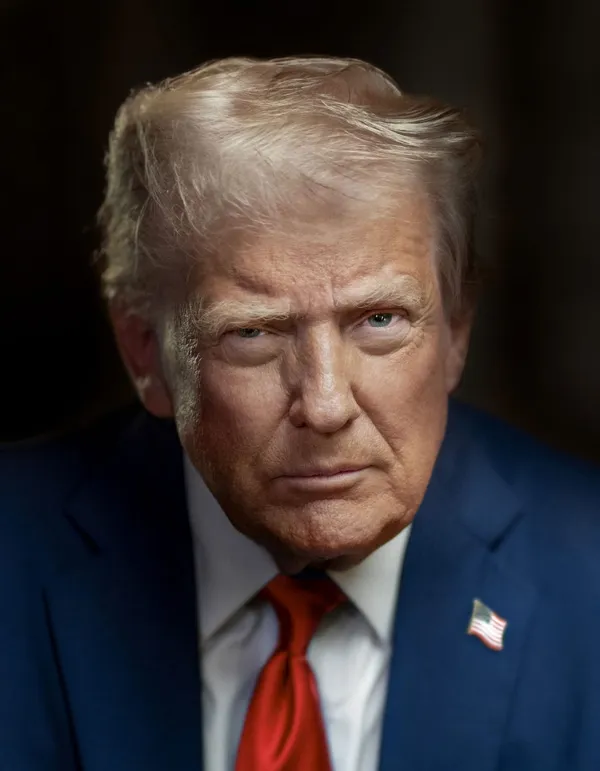 ProfileDonald Trump45th and 47th President of the United States
Related

California Senate Passes Post-Production Tax Bill; Newsom Must Act
SB 2319 cleared the California State Senate 33-5, creating a dedicated post-production tax incentive as the L.A. film industry continues to shrink.

Netanyahu Condemns West Bank Attack on NBC News Team as Settler Violence Escalates
Masked settlers assaulted an NBC News crew and a Palestinian woman in Jalud, injuring four journalists and drawing condemnation from Israel's prime minister.

Park Service Backs Trump Arch Despite Threat to DC Landmark Sightlines
A federal report endorses the proposed 250-foot gilded arch while acknowledging it will disrupt the visual integrity of dozens of historic Washington sites.