Snap's Spiegel Open to Teen Time Limits, Unveils $2,195 AR Glasses

Evan Spiegel told the BBC that Snap would consider a default daily time cap for teen users while also announcing a pricey new Specs AR headset.

Snap CEO Evan Spiegel said this week that his company is open to placing default time limits on how long teenagers can use Snapchat — and he used the same interview to show off a new pair of augmented reality glasses that will run you over two grand. Both topics say a lot about where Snap is trying to position itself right now.
The Time Limit Question
According to BBC Business, Spiegel described a default daily cap on teen usage as "an important step forward for the industry" — but stopped well short of committing to anything concrete. When pressed on whether Snap would actually implement such a limit, he said it was "something we've talked about internally" and that he had nothing more to announce at this time.
That measured non-commitment is worth noting. Spiegel is clearly watching what happens with Meta before Snap moves. Meta recently settled with attorneys general from most US states for $12.7 billion after facing allegations that it deliberately designed Instagram and Facebook to be addictive to young users. As part of that deal, Meta agreed to enforce a two-hour daily default limit for teens, mute notifications during school hours, and impose nighttime blocks. Meta also said it would add stricter limits and pay an extra $5.3 billion if YouTube and TikTok adopt the same measures — a move clearly intended to pressure competitors to fall in line.
Snap is now in that pressure zone. A Meta spokesperson has publicly said it hopes Snap will make similar changes. YouTube's parent Google declined to comment when asked, and TikTok didn't respond.
Spiegel did point to Snap's existing Family Center feature, which gives parents some visibility into how their teens are using the app. That's a real tool, but it's opt-in and parent-dependent — a meaningful difference from a platform-wide default cap.
Why This Matters Beyond PR
Snap, Meta, TikTok, and YouTube have all been hit with lawsuits arguing their platforms contributed to a youth mental health crisis. Snap has also faced specific accusations around facilitating illegal drug sales. The legal and regulatory pressure isn't going away, and voluntary industry commitments — even vague ones — are increasingly being used as negotiating chips in litigation and legislation.
For Spiegel, signaling openness without locking in a deadline is a calculated move. It keeps Snap out of the headlines as a bad actor while giving the company room to see how enforceable Meta's commitments actually turn out to be.
The Specs Glasses: Expensive, Ambitious, Familiar
The other half of Spiegel's news cycle this week was Snap's new Specs AR glasses. Priced at $2,195 in the US and £1,995 in the UK, these are not a consumer product — Spiegel openly said the target audience is early tech adopters, developers, and enterprise users.
Specs are designed to sit between full VR headsets like Meta's Quest 3 and the lighter AI glasses from competitors. At around 130 grams with see-through lenses, the pitch is that you get meaningful computing power without being locked out of the real world. The glasses can connect to Apple iPhone and Mac devices, support live translation across 60 languages, and use AI to proactively suggest actions based on your goals and routines — rather than waiting for you to type a prompt.
That last part is an interesting angle as AI moves toward more agentic, proactive behavior rather than simple question-and-answer interactions.
Snap has also tried to address the privacy concerns that have dogged Meta's smart glasses — which critics have labeled "pervert glasses" due to covert recording incidents. Specs include a visible white indicator light that activates whenever the device is recording or taking photos. Meta's glasses have faced problems with users tampering with similar indicator lights, prompting the company to remotely disable cameras on thousands of affected devices.
Whether a light is enough to change public perception is an open question. Snap's previous hardware experiment, the original Spectacles, cost the company tens of millions of dollars in unsold inventory.
The Bigger Picture for Snap
Spiegel is juggling two very different audiences right now: regulators and parents worried about what Snapchat is doing to kids, and tech enthusiasts who might buy into the AR glasses vision. Neither conversation is easy, and so far he's handled both carefully — saying the right things without making hard commitments. That approach works until it doesn't.
Related on Ni4o: Evan Spiegel and Miranda Kerr Erase $550M in Medical Debt · Nadella Bets on a 33-Year-Old Exec to Fix Copilot
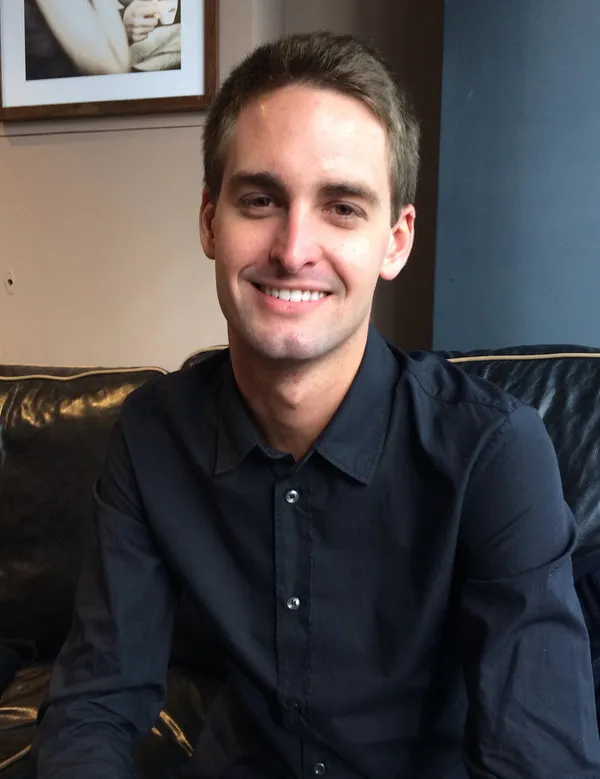 ProfileEvan SpiegelCo-founder and CEO of Snap Inc.
Related

Jensen Huang's Call from Trump Disrupts Nvidia's All-Hands Meeting
During Nvidia's recent all-hands meeting, CEO Jensen Huang received an unexpected call from Donald Trump, sparking employee buzz about its implications.

Jane Fonda Supports Mark Ruffalo Amid Controversy Over Antisemitism Claims
Jane Fonda stands by Mark Ruffalo after he was labeled antisemitic by Paramount for criticizing Larry Ellison's ties to Israel and a major merger.
Mark Ruffalo Ties Oracle's Military Tech to Paramount Deal, Studio Fires Back
The Hulk actor linked Larry Ellison's Oracle to Israel's military operations, prompting an unusual public response from Paramount calling the remarks antisemitic.