Sanders: Trump's Narcissism Could Be a Tool for Democrats on Healthcare

Bernie Sanders tells Jon Stewart that Trump's ego and lack of fixed ideology may make him persuadable on major Democratic legislation.
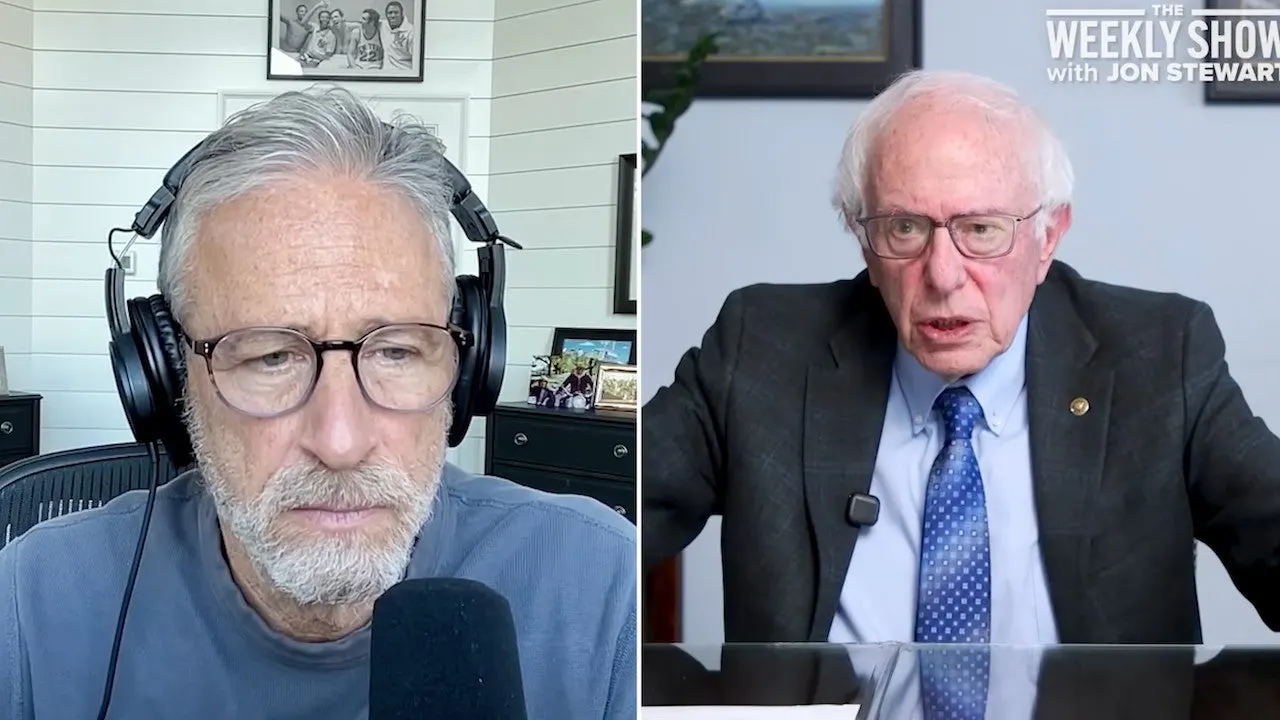
Bernie Sanders offered a candid and strategically calculated assessment of Donald Trump this week, arguing that the president's personality traits — not his policy convictions — will determine whether the two parties can find common ground in the new congressional landscape. The Vermont senator made the remarks during a wide-ranging appearance on Jon Stewart's podcast, laying out a Democratic playbook for the post-midterm era.
Sanders on Trump: 'Mentally Unstable' but Politically Shrewd
Speaking on Wednesday's episode of The Weekly Show, Sanders drew a distinction that is likely to generate significant debate inside the Democratic Party. Trump is "mentally unstable," Sanders said, but he is neither unintelligent nor a poor politician — and that combination, the senator argued, creates a window of opportunity, according to TheWrap.
Central to Sanders's theory is Trump's well-documented narcissism. Rather than viewing it purely as a liability, Sanders suggested Democrats could use it as leverage. If sweeping legislation such as Medicare for All were to pass and demonstrate broad public support, Sanders speculated that Trump might ultimately back it — not out of ideological alignment, but out of a desire to attach his name to a historic achievement.
"He has no ideology," Sanders said bluntly, framing that characteristic not as a strength for the opposition but as a potential opening. The senator was careful to hedge his prediction, acknowledging he could be entirely wrong, but maintained that the possibility is real enough to factor into Democratic strategy.
A Strategy Built on Bold Legislation, Not Compromise
Sanders was equally direct about what he believes Democrats should not do following their midterm gains. Some colleagues, he noted, have counseled a more cautious, centrist approach in hopes of winning Trump's cooperation from the outset. Sanders rejected that posture entirely.
In his view, the correct sequence is to advance strong, ambitious legislation first. If Trump vetoes it, that creates a defined point of disagreement from which genuine compromise negotiations can begin. Watering down bills preemptively, he argued, surrenders leverage before any negotiation has taken place.
The senator did not specify a legislative timeline but indicated that the new Democratic majority should move quickly to establish the terms of engagement rather than wait for signals from the White House.
Context: A Shifted Congressional Map
Sanders's comments come after Democrats secured decisive wins across several competitive swing states — including Texas and North Carolina — in the midterm elections, handing Trump a significant setback at the midpoint of his second term. The results end two years of unified Republican control in Washington and give Democrats the institutional leverage to block legislation, conduct oversight investigations, and serve as a check on the executive branch.
Trump's initial response to the results was to attribute Republican losses to his absence from the ballot, writing on Truth Social that a landslide victory would have followed had he been a candidate. He subsequently issued a more measured statement to CBS News, expressing a willingness to work with the incoming Democratic majority — a posture that, at least rhetorically, appears to align with the opening Sanders is trying to identify.
Sanders, who has previously collaborated with progressive colleagues on high-profile events beyond the Senate floor, has long been a vocal proponent of Medicare for All. Whether the new congressional dynamics give that proposal any realistic path forward remains an open question.
What Comes Next
The broader challenge for Democrats will be translating midterm momentum into durable legislative results. Across global politics, leaders are navigating their own complex calculations — from Argentina's spending controversies to shifting diplomatic alignments — a reminder that political credibility is rarely secured in a single election cycle.
For Sanders, the message is straightforward: lead with conviction, test Trump's flexibility, and negotiate from a position of demonstrated public support rather than anticipated presidential approval. Whether the rest of the Democratic caucus shares that appetite for confrontation before compromise will shape the coming legislative session.
Related on Ni4o: AOC and Bernie Sanders Unite to Introduce The Strokes in NYC
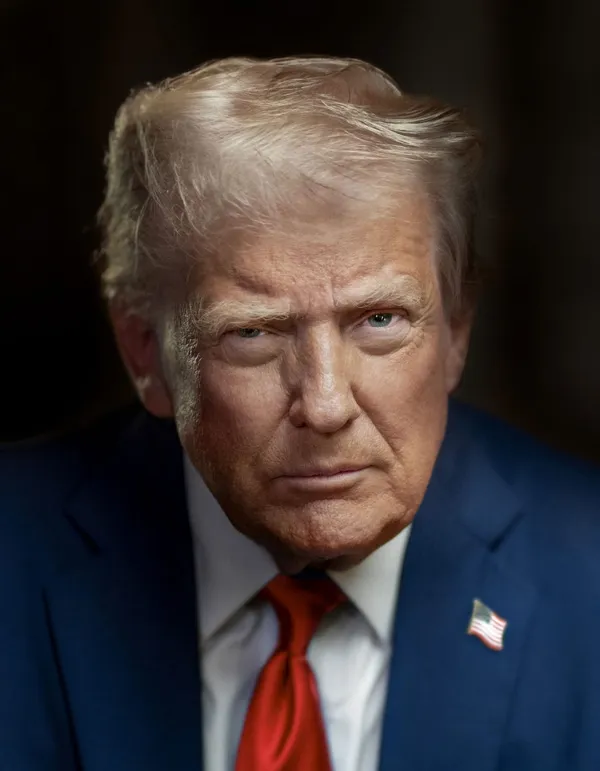 ProfileDonald Trump45th and 47th President of the United States
Related
California Senate Passes Post-Production Tax Bill; Newsom Must Act
SB 2319 cleared the California State Senate 33-5, creating a dedicated post-production tax incentive as the L.A. film industry continues to shrink.

Netanyahu Condemns West Bank Attack on NBC News Team as Settler Violence Escalates
Masked settlers assaulted an NBC News crew and a Palestinian woman in Jalud, injuring four journalists and drawing condemnation from Israel's prime minister.

Park Service Backs Trump Arch Despite Threat to DC Landmark Sightlines
A federal report endorses the proposed 250-foot gilded arch while acknowledging it will disrupt the visual integrity of dozens of historic Washington sites.