Newsom Signs Election Security Package to Counter Federal Interference

California's governor has enacted a suite of bills protecting mail-in voting and making ballot seizures a felony amid escalating tensions with the Trump administration.
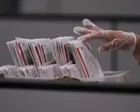
California Governor Gavin Newsom has signed a broad package of election security legislation designed to protect the state's voting infrastructure and push back against what he characterized as federal overreach by the Trump administration. The signing, announced by his office on Sunday, represents one of the most assertive state-level responses yet to ongoing national disputes over voting access and election administration, according to The Guardian World.
Mail-in Voting Protections Take Center Stage
Among the most prominent measures in the package is an extension of operating hours for mail-in ballot drop-off locations. Newsom specifically highlighted this provision as a direct counterweight to the Trump administration's efforts to curtail vote-by-mail practices — efforts that have already been partially blocked by the U.S. Supreme Court. The court moved to halt proposed federal changes that would have required states to submit approved voter lists to the U.S. Postal Service before issuing mail ballots.
This confrontation over mail-in voting has been building for some time. Readers following California's legal battles over mail-in voting rules will recognize the broader pattern of the state positioning itself as a bulwark against federal encroachment on election procedures.
"Donald Trump won't stop until he can exert dictatorial control over your free vote and disenfranchise millions of people this November," Newsom said in a statement. "California will stop him at every opportunity."
Ballot Seizure Now a Felony
A separate bill in the package elevates the unauthorized seizure of ballots or election records to felony status. The measure appears to be a direct legislative response to Riverside County Sheriff Chad Bianco, who earlier this year took possession of more than 650,000 ballots from a 2025 redistricting special election. That episode drew significant criticism from election officials and transparency advocates who viewed the action as an improper intrusion into the electoral process.
By codifying criminal penalties for such conduct, California is drawing a firm legal line around the physical integrity of election materials — a boundary that had previously existed more in norm than in statute.
Influencer Disclosure Rules Target Campaign Spending
The legislation also takes aim at a growing gray area in modern political campaigning: the use of paid social media influencers to promote candidates without adequate disclosure to voters. One bill in the package establishes penalties for individuals who distribute paid political content without clearly identifying it as such.
The rule arrives in the wake of controversy surrounding Tom Steyer, the billionaire philanthropist and candidate in the gubernatorial race to succeed Newsom. Steyer faced criticism for compensating content creators who promoted his candidacy without proper disclosure — an approach that drew accusations of attempting to purchase influence in the race. A spokesperson for his campaign maintained that Steyer supported fair compensation for creators' work.
Given how actively Newsom has engaged with industry and media issues — from pressuring studios on tax incentives to weighing in on major entertainment mergers — the move to regulate campaign-related digital content reflects a broader instinct to set policy boundaries around powerful commercial interests.
Context: Trump's Attacks on California's 2026 Primaries
The package arrives against a backdrop of sustained pressure from former President Trump, who has repeatedly and without evidence questioned the integrity of California's 2026 primary process. Trump alleged that the state's vote-counting timeline was a deliberate attempt to manipulate outcomes — claims that election officials have firmly rejected.
Secretary of State Shirley Weber issued a pointed statement in response to the legislation's signing. "California is meeting the moment," she said. "No one should doubt the degree of our resolve in protecting our democracy."
With the 2026 elections drawing closer and federal-state tensions showing no sign of easing, Sunday's bill signings signal that California intends to remain one of the most active fronts in the national battle over election administration and voting rights.
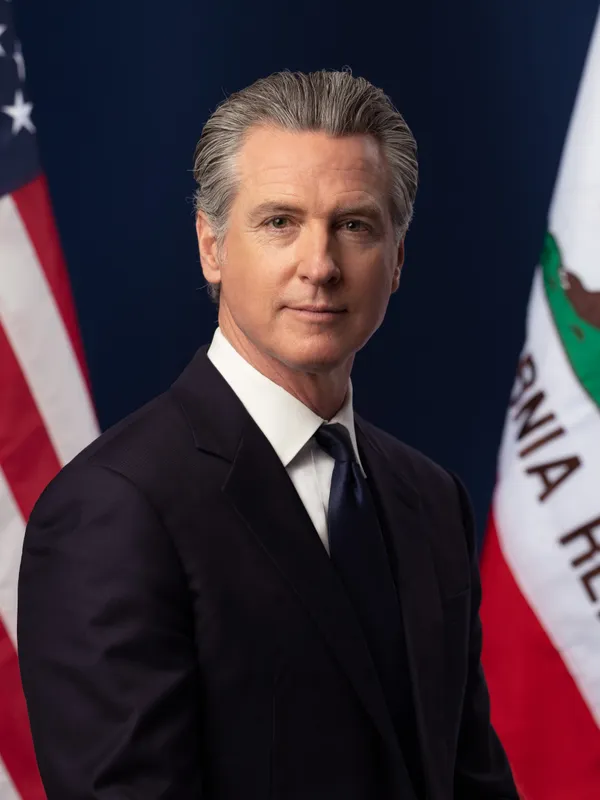 ProfileGavin NewsomGovernor of California
Related
California Senate Passes Post-Production Tax Bill; Newsom Must Act
SB 2319 cleared the California State Senate 33-5, creating a dedicated post-production tax incentive as the L.A. film industry continues to shrink.

Netanyahu Condemns West Bank Attack on NBC News Team as Settler Violence Escalates
Masked settlers assaulted an NBC News crew and a Palestinian woman in Jalud, injuring four journalists and drawing condemnation from Israel's prime minister.
Park Service Backs Trump Arch Despite Threat to DC Landmark Sightlines
A federal report endorses the proposed 250-foot gilded arch while acknowledging it will disrupt the visual integrity of dozens of historic Washington sites.