Lucky Review: Anya Taylor-Joy's Apple TV Thriller Can't Quite Find Its Footing

Apple TV's Lucky puts Anya Taylor-Joy at the center of a stylish con-woman saga, but the series struggles to balance its competing tones.

Apple TV's Lucky arrives at an interesting moment for streaming crime drama, drawing on a subgenre — the heist and grifter story — that, despite periodic commercial success, has rarely been pushed to its full narrative potential on the small screen. The series stars Anya Taylor-Joy, an actress whose capacity for projecting coiled intelligence and quiet unease makes her a compelling fit for this kind of material. Whether Lucky ultimately does justice to that instinct is a more complicated question.
A Familiar Formula, Freshly Framed
The show positions itself within a lineage of stylish con-artist narratives — from the breezy clockwork of Steven Soderbergh's Ocean's trilogy to the grittier European flavour of Money Heist — but it carves its own particular corner by grounding the premise in family trauma rather than pure caper mechanics. Based on the bestselling novel by Marissa Stapley and developed by Jonathan Tropper (Warrior, Your Friends & Neighbors) alongside showrunner Cassie Pappas (Silo, Griselda), the series departs significantly from its source material. Where Stapley's book hinges on a grifter who wins the lottery and must decide whether to claim her winnings at the cost of her freedom, the adaptation reconfigures the central crisis entirely.
Here, Taylor-Joy's Lucky Armstrong wakes up in Las Vegas to discover that her husband, Cary (Drew Starkey), has absconded with their stolen money, leaving her exposed and hunted. It's a sharper, more kinetic inciting incident, and for a while it works.
The Weight of the Ensemble
The supporting cast is where Lucky accumulates genuine prestige-drama gravity. Timothy Olyphant plays John Armstrong, Lucky's father and the criminal mentor who shaped her from childhood — a dynamic that gives the series its most emotionally resonant thread, even when the plotting around it feels overstuffed. Aunjanue Ellis-Taylor brings characteristic precision to Billie Rand, an FBI agent with a specific history with Lucky's world, and her scenes have a procedural rigour that occasionally makes the more baroque thriller elements feel slightly cartoonish by comparison.
The most theatrical presence belongs to Annette Bening, cast as Priscilla Matheson, a mob boss who also happens to be Lucky's mother-in-law. It's a role that demands a kind of operatic menace, and Bening delivers it with considerable flair — though, according to Collider, the balance between the show's action instincts and its character-study ambitions is where the series most visibly falters. Priscilla arrives with a henchman named Dutch in tow, and the gangster-thriller machinery that surrounds her sometimes crowds out the quieter, more interesting drama at the show's core.
Craft and Context
What Lucky gets right, intermittently, is its portrait of a woman who has been instrumentalised her entire life — raised as a prop in her father's schemes — now having to construct a selfhood under extraordinary pressure. Taylor-Joy is well-suited to this register; she has always done her best work in roles that require her to project competence while suggesting something fragile underneath. Streaming has lately been generous to this kind of female-led crime story, with projects like Hugh Jackman's The Sheep Detectives and Gal Gadot's In the Hand of Dante demonstrating how varied the genre's tonal possibilities really are.
Where Lucky stumbles is in its pacing and tonal consistency. The series wants to be simultaneously a propulsive thriller, an emotional family drama, and a dark meditation on inherited criminality — ambitions that are individually achievable but collectively demanding. When the show leans into Lucky's interiority, it earns its runtime. When it pivots toward conventional chase mechanics, it risks becoming the very genre exercise it seems to want to transcend.
The Verdict
For viewers prepared to meet Lucky on its own somewhat uneven terms, there is real pleasure here — in Taylor-Joy's performance, in the crackling dynamic between her and Olyphant, and in the show's evident ambition to do something more considered than a standard heist thriller. The series is not yet what it clearly wants to be, but the ingredients are present. Whether Tropper and Pappas find the right calibration as the season progresses will determine whether Lucky ultimately delivers on its considerable promise.
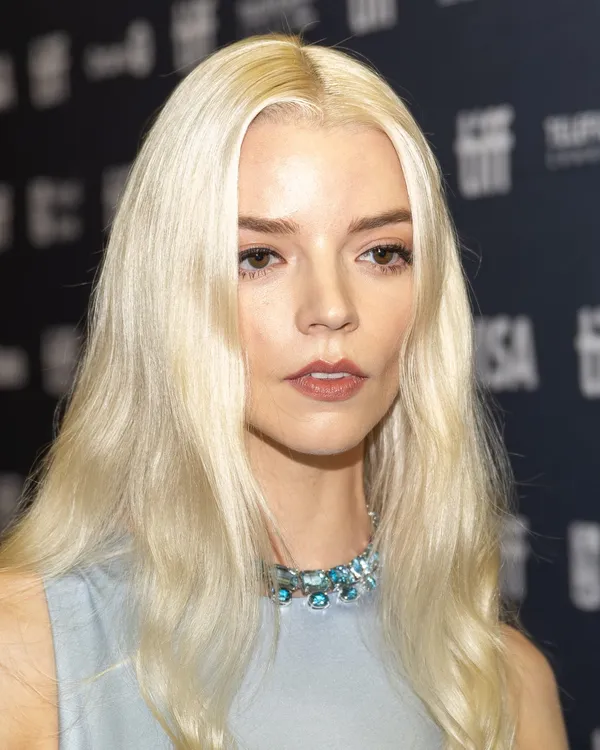 ProfileAnya Taylor-JoyAmerican-born actress
Related
Randy Quaid Slams Anne Hathaway Casting in Days of Thunder Sequel
Randy Quaid, who appeared in the original 1990 film, took to X to demand Nicole Kidman's return and dismiss the Hathaway announcement.
Eva Mendes' 'de Gosling' Tattoo Is the Only One She's Ever Wanted
Eva Mendes is showing off her wrist tattoo again — a small but meaningful piece of ink that carries a deep cultural significance.
Steven Spielberg's 'War of the Worlds' Returns to Streaming Amid Debate
Steven Spielberg's 'War of the Worlds' is hitting HBO Max next month, reigniting discussions on its mixed reception.