Joe Manganiello Reveals Deathstroke's Dark Plan in Affleck's Scrapped Batman Film

In his new memoir, Joe Manganiello details how Deathstroke would have systematically destroyed Batman's world — including killing Commissioner Gordon.

Few cancelled projects in modern superhero cinema have generated as much lingering curiosity as Ben Affleck's unmade solo Batman film, and a new memoir from co-star Joe Manganiello is finally pulling back the curtain on what audiences missed. According to Variety, Manganiello's book Bloodlines, published this week, offers the most detailed account yet of a film that, had it reached theaters, might have fundamentally redefined the Dark Knight's place in the DC Extended Universe.
A Villain With a Mission to Destroy
Manganiello, who briefly appeared as Deathstroke — the ruthless mercenary assassin Slade Wilson — in the post-credits sequence of Justice League (2017), writes that Affleck's script envisioned the character as something far more than a conventional antagonist. Rather than staging a straightforward physical confrontation, Deathstroke's plan was to methodically dismantle every pillar of Bruce Wayne's existence. The most striking detail Manganiello reveals is that Commissioner Gordon, one of Batman's oldest and most essential allies in the comic-book canon, would have been killed as part of that campaign. It is the kind of narrative ruthlessness that recalls Christopher Nolan's willingness to sacrifice beloved supporting characters in The Dark Knight — a structural choice designed to leave the hero genuinely isolated and vulnerable.
Affleck's Ambitious Four-Hat Role
What makes the project's cancellation particularly resonant is the level of creative investment Affleck brought to it. He was attached not merely as the lead actor but as writer, director, and producer — a quadruple role that signalled a deeply personal artistic vision rather than a work-for-hire obligation. Affleck has always been a filmmaker first, and his directorial track record with Gone Baby Gone, The Town, and Argo demonstrated a consistent facility with grounded, morally complex crime narratives. Translating those instincts into a superhero framework — one anchored by a villain whose weapon is psychological and logistical destruction rather than brute force — suggests a Batman film that would have sat closer to a neo-noir thriller than a conventional cape picture. It is worth remembering that Affleck's creative ambitions have continued to evolve across multiple ventures, even as his relationship with the superhero genre wound down.
The Weight of What Was Lost
For fans who watched Manganiello's brief but menacing introduction as Deathstroke and imagined where that thread might lead, Bloodlines provides a bittersweet sense of closure. The character's strategic, almost chess-like approach to villainy — targeting institutions and relationships rather than simply trading blows — is a storytelling mode that DC has rarely committed to at full feature length. Manganiello's account suggests Affleck understood this, and that the film was designed to explore Batman as a man whose greatest vulnerabilities are the people he is sworn to protect.
The project's unravelling, which coincided with broader turbulence inside the DCEU during the late 2010s, remains one of the more discussed could-have-beens in blockbuster history. Affleck has since moved on, and audiences have continued to find his earlier work in the genre — as well as outside it — worth revisiting: The Accountant resurfaced on streaming charts nearly a decade after its release, a reminder that his action-oriented performances retain genuine commercial pull.
Manganiello's Memoir as a Document of a Lost Era
Beyond the plot revelations, Bloodlines reads as a broader testament to the uncertainty that defines even the highest-profile projects in modern studio filmmaking. Manganiello prepared extensively for a role that never made it before cameras, and his willingness to detail that experience publicly adds an unusually candid chapter to the larger oral history of the DCEU's complicated evolution. For anyone drawn to the intersection of craft, commerce, and creative ambition in Hollywood, it is essential reading — and a genuine reminder of how much can disappear between a promising post-credits scene and an actual film.
Related on Ni4o: Ben Affleck's AI Venture: Netflix Acquires InterPositive for $587 Million
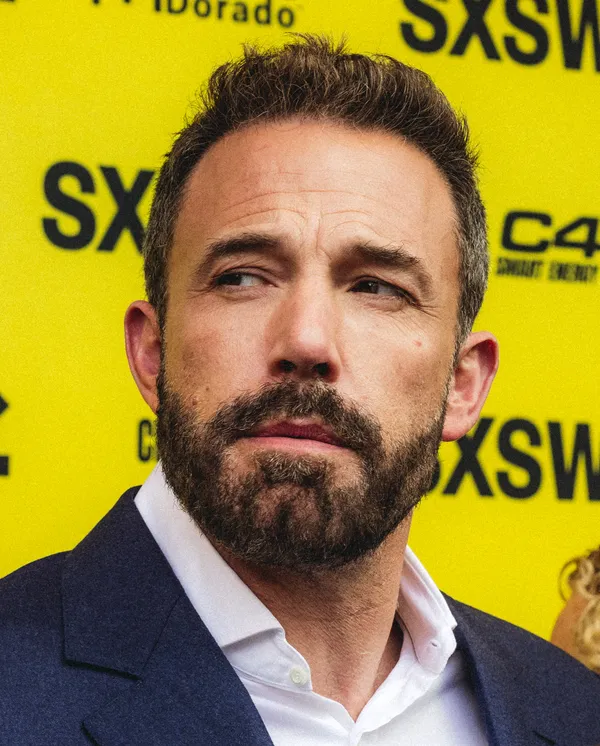 ProfileBen AffleckActor, director & producer
Related
Randy Quaid Slams Anne Hathaway Casting in Days of Thunder Sequel
Randy Quaid, who appeared in the original 1990 film, took to X to demand Nicole Kidman's return and dismiss the Hathaway announcement.

Eva Mendes' 'de Gosling' Tattoo Is the Only One She's Ever Wanted
Eva Mendes is showing off her wrist tattoo again — a small but meaningful piece of ink that carries a deep cultural significance.
Steven Spielberg's 'War of the Worlds' Returns to Streaming Amid Debate
Steven Spielberg's 'War of the Worlds' is hitting HBO Max next month, reigniting discussions on its mixed reception.