Iran's Security Chief Warns Neighbors: Back US Sanctions and Face Retaliation

Mohsen Rezaei threatens to target regional oil routes and American economic interests as Trump presses an economic isolation campaign against Tehran.
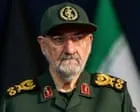
Iran's newly appointed security chief has issued a blunt warning to neighboring states: side with Washington's economic campaign against Tehran and expect to be treated as an enemy. The warning came alongside fresh threats directed at American commercial interests across the region, deepening an already volatile standoff.
Rezaei Issues Regional Warning
Mohsen Rezaei, the hardline figure now heading Iran's Supreme National Security Council, used a televised interview on state broadcaster IRIB to lay out Tehran's position in unambiguous terms, according to The Guardian World. Any neighboring country that aligns itself with what he called the US-led "economic war" against Iran would be "considered an enemy," Rezaei said, adding that Iran would move to "target their interests" and disrupt alternative oil-shipping routes out of the Gulf — routes that bypass the Strait of Hormuz entirely.
Rezaei, who commanded the Islamic Revolutionary Guard Corps for most of the 1980–88 Iran-Iraq war, was appointed to his current post this month as part of a broader reshaping of Iran's security leadership that observers widely read as a shift toward a more confrontational posture.
Threats Against US Economic Interests
Beyond the regional warning, Rezaei signaled that Iran could widen the scope of its response to include American business assets. "We have not yet attacked any American economic interests," he said, framing that restraint as deliberate rather than a matter of capability. He went on to note that the United States maintains oil operations and commercial companies in Iran's broader neighborhood, and warned those could become targets if Washington continues to press economic sanctions.
The interview represents Rezaei's most detailed public statement since taking up his role, and it arrives at a sensitive moment. Trump, who has been escalating pressure on multiple economic fronts — including threatening steep tariffs against trading partners — announced last week a renewed push to isolate Iran's economy, warning of "tremendous economic consequences" for any government that continues doing business with Tehran.
The Strait of Hormuz Question
Adding a layer of diplomatic friction to an already complicated picture, Trump has repeatedly suggested in recent days that the Strait of Hormuz — the narrow waterway through which roughly one-fifth of global oil once flowed before the current conflict — should be considered US territory. Speaking to reporters on Monday, he said he liked "the idea of declaring it a territory," and on Friday, addressing a crowd in South Carolina, he told supporters: "I view the strait of Hormuz as an American territory right now." He later amplified a social media post featuring a map labeling the strait as a "new US territory."
Rezaei, for his part, said negotiations with Oman over management of the waterway are ongoing and indicated that transit fees would be imposed — a direct counter to any US claim of sovereign control.
Diplomatic Maneuvering in Paris
As tensions over the strait mount, European and Gulf states are accelerating efforts to chart alternative logistics routes. French President Emmanuel Macron and Saudi Crown Prince Mohammed bin Salman are expected to discuss options for bypassing the Strait of Hormuz entirely during the Saudi leader's two-day visit to Paris beginning Sunday, according to officials who were not authorized to speak on the record.
Proposals under consideration include routing more trade through Omani ports outside the Gulf, expanding existing Saudi pipelines, and developing new overland rail connections. A joint French-Saudi task force focused on energy and logistics is set to convene at the ministerial level Monday, with an emphasis on identifying high-priority infrastructure projects, locking in financing, and carving out roles for French firms.
The United Arab Emirates, one of Iran's more significant trading partners, has already moved — announcing last week a suspension of all trade and financial dealings with Tehran.
For Trump, whose administration has been running what it calls Operation Economic Fury — a targeted sanctions effort to cut off Iranian oil revenues — the combined pressure of a naval blockade, multilateral economic isolation, and regional realignment represents a high-stakes gamble. Whether it produces resolution or further escalation remains, as of now, an open question. The conflict, now approaching six months with no meaningful progress toward a settlement, shows little sign of yielding to the economic tools Washington has deployed.
Related on Ni4o: Trump Stalls Bipartisan Housing Bill Over SAVE Act · Trump Meets NATO Chief Rutte Amid Europe Tensions
 ProfileDonald Trump45th and 47th President of the United States
Related
California Senate Passes Post-Production Tax Bill; Newsom Must Act
SB 2319 cleared the California State Senate 33-5, creating a dedicated post-production tax incentive as the L.A. film industry continues to shrink.
Netanyahu Condemns West Bank Attack on NBC News Team as Settler Violence Escalates
Masked settlers assaulted an NBC News crew and a Palestinian woman in Jalud, injuring four journalists and drawing condemnation from Israel's prime minister.
Park Service Backs Trump Arch Despite Threat to DC Landmark Sightlines
A federal report endorses the proposed 250-foot gilded arch while acknowledging it will disrupt the visual integrity of dozens of historic Washington sites.