Federal Judge Issues Second Block on Trump's Mail Voting Order

A Boston federal judge placed a 14-day hold on Trump's mail voting directive, reigniting a legal battle with major implications for the midterms.
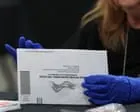
A federal judge has again moved to halt the implementation of President Donald Trump's executive order restricting mail voting, delivering the second judicial setback to the directive in as many weeks. The ruling arrives roughly one week before states are scheduled to begin dispatching the first absentee ballots ahead of the November midterm elections.
Judge Issues 14-Day Hold
U.S. District Judge Indira Talwani, sitting in Boston, issued a 14-day hold Thursday preventing the federal government from enforcing Trump's mail voting order while litigation proceeds. In her written decision, Talwani emphasized the logistical impossibility facing state election officials, noting that plaintiff states have neither the time nor the financial resources to redesign mail ballots, secure approval of new formats, update election management systems, and train personnel to comply with a new U.S. Postal Service portal — all before midterm ballots must go out.
The ruling followed the refiling of lawsuits by Democratic-led states and voting rights organizations, which restructured their legal arguments to align with a recent U.S. Supreme Court decision that had struck down an earlier injunction Talwani had issued.
Supreme Court Involvement and the Shifting Legal Landscape
The Supreme Court's conservative majority on Monday overturned Talwani's initial freeze on the order, ruling not on its underlying legality but on procedural grounds — finding that the original legal challenges were brought prematurely. The high court reasoned that the administration had not yet issued formal implementing rules at the time of the initial suits.
The administration has since published a final rule through the Postal Service, effectively re-opening the legal door for opponents to refile. That step prompted Talwani to separately lift her second injunction on Wednesday before plaintiffs could move to challenge the newly finalized rule — which they promptly did. A substantive hearing is scheduled for September 3. According to The Guardian World, the case is widely expected to return to the Supreme Court.
What the Postal Service Rule Requires
At the center of the dispute is a Postal Service directive stipulating that it will not deliver mail ballots on behalf of states unless those states provide a verified list of eligible voters and format their ballot envelopes in a prescribed manner. Critics contend those demands are not only logistically unworkable on the current timeline but also constitutionally suspect, arguing the Constitution vests election rule-making authority in the states and Congress — not in the executive branch or a federal postal agency.
This constitutional argument proved persuasive in blocking Trump's earlier executive order — issued last year — which had sought to require documentary proof of citizenship for voter registration.
Stakes for the Midterms
The practical consequences of this ongoing legal fight are significant. Approximately one-third of American voters cast their ballots by mail, and election administrators across multiple states have warned that there is simply insufficient time to overhaul their systems to meet the new federal postal requirements before votes must be sent.
A 2025 Brookings Institution report found that mail ballot fraud occurs at a rate of roughly four cases per 10 million ballots cast — a figure that undermines the administration's stated rationale for the restrictions. Trump, who votes by mail himself, has repeatedly and falsely attributed his 2020 presidential election loss to the mail voting system.
This latest judicial development is consistent with a broader pattern of courts scrutinizing the administration's unilateral use of executive authority in areas touching federal law and constitutional structure. As the Trump administration has moved aggressively on multiple policy fronts, federal courts have served as a recurring check on implementation, and Trump's revenue picture during his second term has drawn separate scrutiny from oversight observers.
With a September 3 hearing set and another Supreme Court appeal likely on the horizon, the legal conflict over mail voting access shows no sign of resolution before ballots begin their journey to millions of American households.
Related on Ni4o: Trump Stalls Bipartisan Housing Bill Over SAVE Act
 ProfileDonald Trump45th and 47th President of the United States
Related

California Senate Passes Post-Production Tax Bill; Newsom Must Act
SB 2319 cleared the California State Senate 33-5, creating a dedicated post-production tax incentive as the L.A. film industry continues to shrink.

Netanyahu Condemns West Bank Attack on NBC News Team as Settler Violence Escalates
Masked settlers assaulted an NBC News crew and a Palestinian woman in Jalud, injuring four journalists and drawing condemnation from Israel's prime minister.

Park Service Backs Trump Arch Despite Threat to DC Landmark Sightlines
A federal report endorses the proposed 250-foot gilded arch while acknowledging it will disrupt the visual integrity of dozens of historic Washington sites.