Christopher Nolan's Inception Is Now Free to Stream on YouTube

Fourteen years after its release, Nolan's genre-defying dream-heist remains one of the most accomplished blockbusters ever made — and it's free to watch.
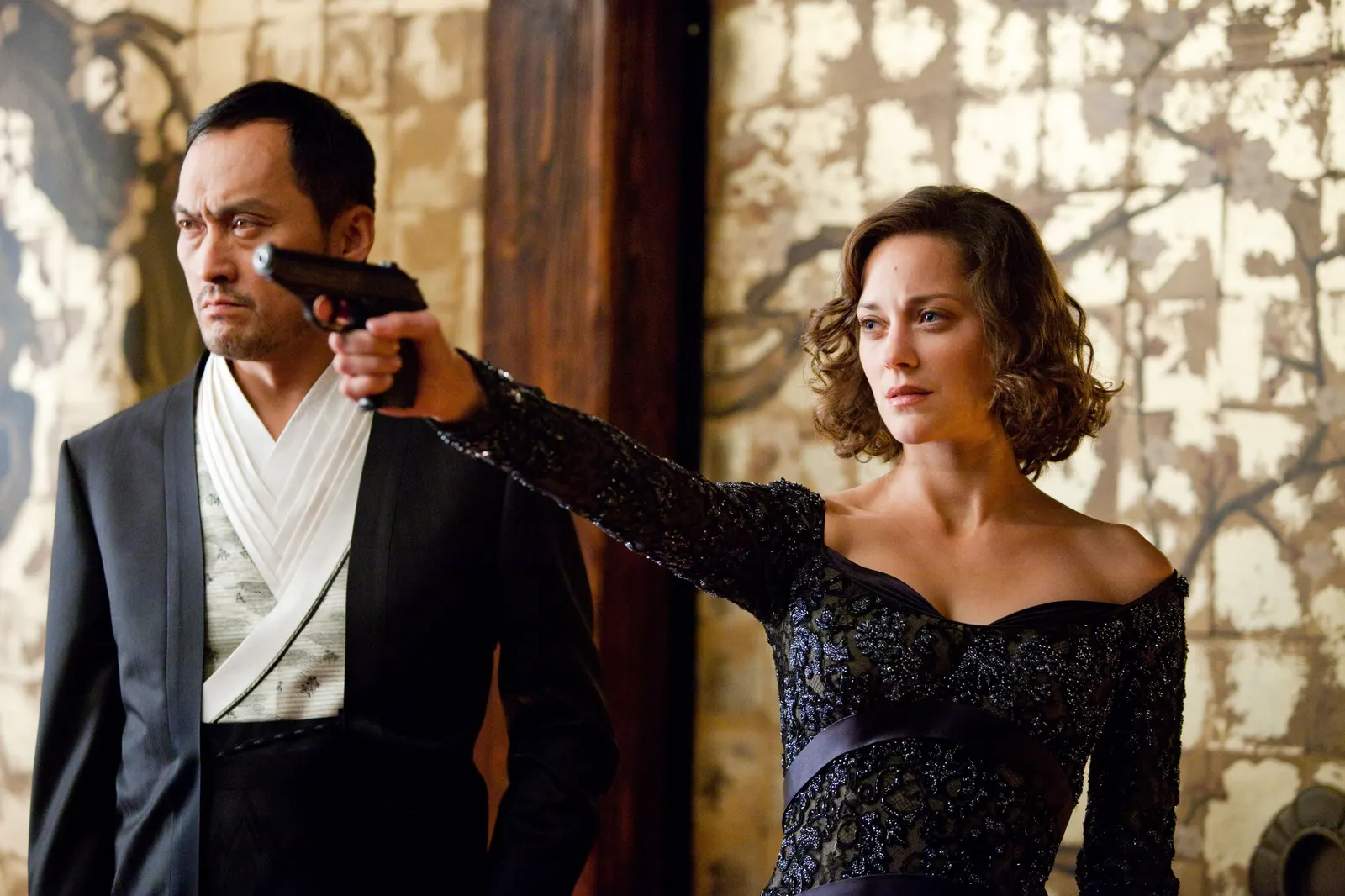
With The Odyssey generating considerable critical momentum and Tom Holland reflecting on a challenging first day on set, Christopher Nolan's status as one of contemporary cinema's most consequential directors feels more secure than ever. For those who want to trace exactly how he earned that standing, there may be no better entry point than Inception — which is now available to stream at no cost on YouTube, according to Polygon.
A Film That Redefined the Modern Blockbuster
Released in 2010, Inception arrived at a moment when studio filmmaking was increasingly leaning on franchise scaffolding and digital spectacle as substitutes for genuine ambition. Nolan did something considerably more daring: he took the tightly wound psychological energy he had developed across Memento and The Prestige and expanded it into a $160 million original concept that asked mainstream audiences to engage with nested dream layers, unreliable subjectivity, and the philosophy of grief. The result was a film that fused the architecture of classic noir with the mechanics of a heist thriller and the intellectual rigour of hard science fiction — a combination few directors would have dared attempt, let alone executed with such discipline.
The plot centres on Dom Cobb (Leonardo DiCaprio), a specialist who extracts ideas from targets by infiltrating their dreams. When the industrialist Saito (Ken Watanabe) commissions something far more complex — planting an idea rather than stealing one — Cobb assembles a team that includes the tactically precise Arthur (Joseph Gordon-Levitt), the empathetic architect Ariadne (Elliot Page), and the shape-shifting Eames (Tom Hardy) for a mission that descends through multiple stacked realities simultaneously.
Practical Craft at the Heart of a Mind-Bending Premise
What separates Inception from its imitators is Nolan's insistence on grounding the film's most extraordinary conceits in tangible, physical filmmaking. The now-iconic hotel corridor sequence — in which Gordon-Levitt's Arthur battles adversaries through a rotating passageway built to spin around the cast — was constructed as a working practical set. The result is action choreography that carries genuine kinetic weight rather than the weightlessness that so often plagues heavily composited blockbusters. A viewer can feel the steel, the momentum, the bruising effort of bodies resisting artificial gravity.
That same philosophy extends to the film's parallel climax, where a snow-fortress assault and a single falling van serve as temporal anchors for a narrative unfolding across three dream levels at once. It is precisely this commitment to in-camera physicality — the hallmark Nolan has championed throughout his career, as evidenced by his influence on how Ryan Coogler approached shooting Sinners in IMAX — that gives the film's abstract dreamscapes their enduring sense of consequence.
Emotional Architecture Beneath the Spectacle
Strip away the spectacle and Inception is fundamentally a film about a man incapacitated by loss. Cobb's psychological wound — his guilt over the death of his wife Mal (Marion Cotillard) and his exile from his children — is not a subplot. It is the engine that drives every narrative decision. The more deeply Cobb's team penetrates the dream architecture, the more his own subconscious threatens to destabilise the mission. Nolan gives the film's elaborate rule system emotional stakes, so the elaborate geometry of shared dreaming always feels like it is in service of a human story rather than a technical exercise.
Influence, Lineage, and a Debate That Never Ends
Fair discussion of Inception cannot ignore its visual and conceptual proximity to Satoshi Kon's 2006 anime Paprika, adapted from Yasutaka Tsutsui's novel, which explored dream-infiltration technology with surrealist flair years earlier. Where Kon embraced the hallucinatory chaos of the subconscious, however, Nolan restructures the concept around the rigid genre logic of a heist film — closer in spirit to Michael Mann's Heat than to anything in Japanese surrealism. The distinction matters: Inception earns its originality through the specific formal choices Nolan makes, not the premise itself.
Then there is the ending — Cobb's totem spinning as the frame cuts to black, certainty withheld, the question of waking or dreaming deliberately unresolved. It is a conclusion that functions less as an evasion and more as a thesis statement: the film is not interested in providing answers so much as demonstrating that the answers we reach say something about us. Fifteen years of debate have only reinforced how precisely calibrated that final gesture was. For a deeper dive into how Nolan constructs ambiguous endings, our analysis of his approach to The Odyssey's conclusion offers a useful parallel.
With YouTube now offering Inception for free, there has never been a lower barrier to experiencing one of the defining cinematic achievements of the twenty-first century.
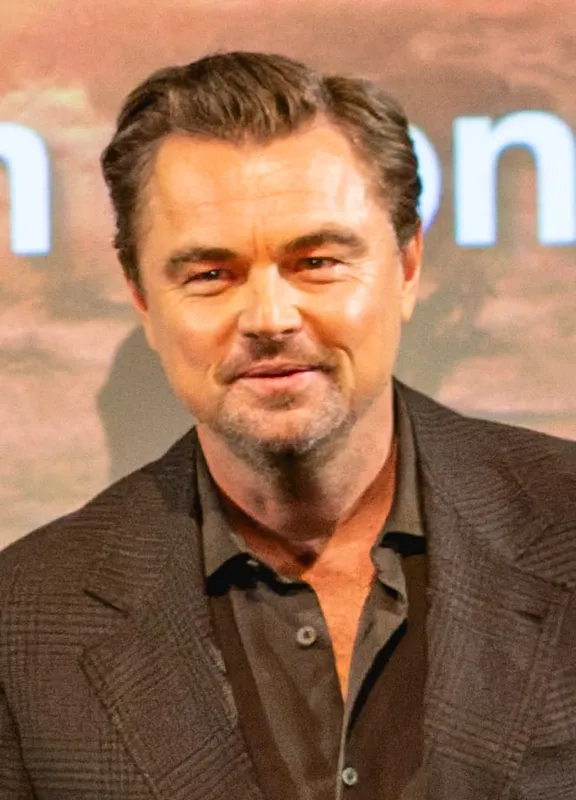 ProfileLeonardo DiCaprioOscar-winning actor and environmental advocate
Related
Randy Quaid Slams Anne Hathaway Casting in Days of Thunder Sequel
Randy Quaid, who appeared in the original 1990 film, took to X to demand Nicole Kidman's return and dismiss the Hathaway announcement.

Eva Mendes' 'de Gosling' Tattoo Is the Only One She's Ever Wanted
Eva Mendes is showing off her wrist tattoo again — a small but meaningful piece of ink that carries a deep cultural significance.
Steven Spielberg's 'War of the Worlds' Returns to Streaming Amid Debate
Steven Spielberg's 'War of the Worlds' is hitting HBO Max next month, reigniting discussions on its mixed reception.