Albanese Champions Climate Security at UN Event Amid Fossil Fuel Criticism

The Australian prime minister delivered a high-profile climate address in New York, but advocates say his government's record on fossil fuels tells a different story.
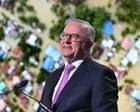
Australian Prime Minister Anthony Albanese took the stage at a Climate Week event in New York on Monday, declaring that climate security has become inseparable from national security — just days before the United Nations General Assembly convened. The address drew both attention and sharp criticism, with climate advocates arguing the speech lacked concrete commitments on fossil fuel reduction.
Albanese's Central Argument
Speaking at the opening of Climate Week, Albanese framed Australia's position as one forged by lived experience. He pointed to the devastating bushfires and floods that have struck Australia over the past several decades as evidence that his country grasps the urgency of climate action as well as any nation on earth. "We need to come together, to meet the problem head on," he told the assembled audience. "There's no avoiding the scale of our responsibility, or the cost of inaction."
The prime minister outlined an emissions reduction target of between 62% and 70% below 2005 levels by 2035, describing it as ambitious yet achievable. He cited Australia's renewable energy expansion — with renewables now supplying roughly 50% of electricity across the country's main power grid — as evidence of meaningful progress. He also noted that Australians are installing approximately 10,000 home batteries per week, with more than half a million units deployed in the past year alone.
On the international front, Albanese highlighted Australia's financial commitments to the Pacific, including A$100 million contributed to the Pacific Resilience Facility and a further A$350 million directed toward climate-resilient infrastructure across the region. "A promise to our Pacific family that they will not face the climate crisis alone," he said.
Critics Call Out the Fossil Fuel Gap
Despite the optimistic framing, climate advocates were quick to identify what they saw as a glaring omission, according to The Guardian World. Albanese made no mention of reducing fossil fuel production — a point of contention given that his government has approved 37 new or expanded fossil fuel projects since taking office in 2022, most of them export-oriented.
The timing is particularly pointed: Australia is set to chair negotiations at the COP31 climate summit in Antalya, Turkey, in less than two months. Catherine Abreu, executive director of the International Climate Politics Hub, described the address as "long on rhetoric and short on substance," arguing that acknowledgment of the climate crisis does not substitute for a credible action plan.
Retired Admiral Chris Barrie, former chief of the Australian Defence Force and a member of the Australian Security Leaders Climate Group, was more direct. He questioned whether Albanese's security framing could hold up without a comprehensive climate-security framework spanning defence strategy, foreign policy and intelligence — none of which, he argued, the government has yet produced.
Larissa Baldwin-Roberts of the First Nations-led organisation Common Threads called the speech an act of "green-washing," arguing it was contradictory for Australia to claim climate leadership internationally while continuing to approve coal and gas developments at home.
Context and Political Stakes
The New York appearance comes as Albanese navigates a crowded international agenda. His government has faced scrutiny on several security and foreign policy fronts, including Albanese's response to China's missile test amid regional concerns, which underscored the complex strategic environment Australia is operating in.
Domestically, the renewable energy push has not been without friction. Queensland and the Northern Territory have pushed back against Albanese's renewable energy mandates, complicating the federal government's ability to present a unified national front on climate policy.
With COP31 approaching and Australia in the chair, the gap between Albanese's rhetoric and his government's fossil fuel approvals is likely to remain a flashpoint. Critics argue that leading global climate negotiations while continuing to expand coal and gas production is a contradiction that diplomacy alone cannot paper over. Whether the prime minister can reconcile those two positions before the summit opens remains an open question.
Related on Ni4o: Albanese Vows to Toughen Australia's Under-16 Social Media Ban
 ProfileAnthony AlbanesePrime Minister of Australia
Related
California Senate Passes Post-Production Tax Bill; Newsom Must Act
SB 2319 cleared the California State Senate 33-5, creating a dedicated post-production tax incentive as the L.A. film industry continues to shrink.

Netanyahu Condemns West Bank Attack on NBC News Team as Settler Violence Escalates
Masked settlers assaulted an NBC News crew and a Palestinian woman in Jalud, injuring four journalists and drawing condemnation from Israel's prime minister.

Park Service Backs Trump Arch Despite Threat to DC Landmark Sightlines
A federal report endorses the proposed 250-foot gilded arch while acknowledging it will disrupt the visual integrity of dozens of historic Washington sites.